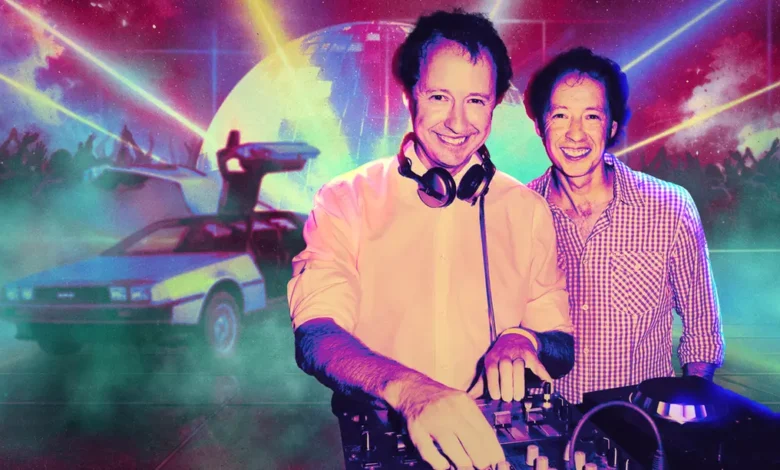
The second installment of the documentary series Club-Legenden, produced by Jonas Kühlberg and Ralf Dörwang, has officially premiered on the ARD Mediathek, offering an immersive deep dive into the formative years of North German club culture. By revisiting the vibrant nightlife landscape of the 1980s and 1990s, the series serves as both a cultural archive and a nostalgic tribute to the venues that paved the way for the modern electronic music scene in Germany. Following the initial success of the series’ debut in early 2026, which explored pioneering venues like the Zeppelin and Hamburg’s UNIT, this new chapter expands the scope to highlight four distinct locations that defined regional youth culture.
A Journey Through Northern Nightlife
The documentary series was born out of a massive public response, with the production team sorting through more than 300 viewer submissions detailing personal anecdotes and historical data regarding legendary venues. This meticulous selection process resulted in a feature-length exploration of four specific clubs: the Hamburg-based Voilà, the Ziegelei in Groß Weeden, the Fiz Oblon in Bippen, and the Gummibärchen in Schwerin.
The centerpiece of the episode is undoubtedly the Voilà in Hamburg-Eilbek. Originally established in 1983 as a "music gallery," the venue underwent a significant transformation to become a primary anchor for the nascent house and techno movements in the 1990s. Under the stewardship of twins Frederik and Gerrit Braun, the Voilà achieved mythic status. Archival footage and testimonials included in the documentary confirm the club’s influence, noting that international luminaries such as Sven Väth graced the decks as early as 1987. The venue’s ability to transition from a niche cultural space into a full-fledged electronic institution illustrates the broader shift in German club culture during the post-reunification era.
Historical Context and Chronological Significance
To understand the importance of these venues, one must look at the sociocultural environment of the 1980s and 90s in Northern Germany. The rise of the discotheque was not merely a commercial phenomenon but a response to a changing society. The "Club-Legenden" series provides a chronological framework that tracks this evolution:
- Early 1980s: The birth of the "music gallery" concept, where venues like the original Voilà prioritized artistic experimentation over conventional dance hits.
- Late 1980s: The infiltration of early house and acid house sounds from the UK and the US into German clubs, characterized by appearances from trailblazing DJs like Sven Väth.
- Early 1990s: The "Techno Boom." As the wall fell, the desire for unified, high-energy dance spaces exploded. Clubs like the UNIT in Hamburg became essential hubs for the emerging youth movement, setting the blueprint for the contemporary club landscape.
- Mid-1990s to 2000s: The professionalization of club culture, where venues began to implement more sophisticated light and sound production, eventually giving way to the massive electronic music festivals and professionalized nightlife industries we recognize today.
Analytical Overview of Featured Venues
The documentary does not simply list clubs; it analyzes the structural and social factors that allowed them to thrive. The "Ziegelei" in Groß Weeden, for instance, represents the "rural club" phenomenon—a vital aspect of Northern German nightlife where large, repurposed industrial or agricultural spaces allowed for an escape from urban constraints. Similarly, the "Fiz Oblon" in Bippen and "Gummibärchen" in Schwerin represent regional hubs that acted as primary socialization points for youth in areas where nightlife infrastructure was otherwise scarce.
Data suggests that these clubs were more than just dance floors; they were economic engines for their local municipalities. By operating on a scale that drew crowds from neighboring towns and provinces, these venues provided the initial infrastructure for what is now a multi-billion-euro industry in Germany. The documentary implies that the closure or evolution of these spaces represents a loss of "third places"—social environments separate from the home and the workplace that are essential for the development of local identity and subcultural cohesion.
Official Responses and Media Reception
The NDR’s decision to commission a second season reflects a broader trend of public broadcasters leaning into "archival storytelling." By focusing on the 1980s and 90s, the network is capturing a demographic of viewers who are now in their late 40s to early 60s, a cohort that has significant cultural and economic influence.
"The resonance we received from the first season was overwhelming," noted a representative from the production team during the launch of the second series. "There is a deep-seated desire in the public to document these histories before the oral accounts fade away. We are not just making a music documentary; we are mapping the geography of a generation."
Critically, the series has been praised for its refusal to romanticize the era without acknowledging the challenges. The documentary touches upon the logistical difficulties, the drug culture associated with the early rave scene, and the inevitable legal and financial pressures that led to the eventual shuttering of many of these iconic establishments.
The Broader Impact on Club Culture
The significance of "Club-Legenden" extends beyond nostalgia. By elevating these spaces to the status of cultural heritage, the series plays a role in the ongoing legal and political debates regarding the status of clubs in Germany. In recent years, there has been a concerted effort by cultural institutions and government bodies to classify nightclubs not as mere entertainment venues, but as "cultural institutions" worthy of subsidies and state protection.
When a documentary series highlights how a club like the Voilà acted as a catalyst for electronic music innovation, it provides the historical evidence needed to justify such status. The impact of these clubs on the global reputation of German nightlife—often cited as the best in the world—cannot be overstated. The technical innovations, the curation of music, and the social atmosphere developed in these regional venues formed the foundation upon which modern Berlin and Hamburg clubs were built.
Implications for Future Archiving
The reliance on over 300 public submissions suggests a new model for journalistic production: crowdsourced historiography. By allowing the public to contribute to the narrative, the producers ensured that the documentary felt authentic and grounded in the lived experiences of those who were actually on the dance floor. This methodology, while challenging to verify, offers a more intimate and nuanced perspective than an academic history could provide.
As the series continues to explore these "forgotten" spaces, it raises questions about what constitutes a "legendary" club. Is it the longevity of the venue? Is it the famous DJs who played there? Or is it the impact the venue had on the individuals who frequented it? The "Club-Legenden" team argues it is a combination of all three, coupled with the unique architectural and social conditions of the time.
Conclusion and Availability
The documentary serves as a vital reminder that club culture is a transient, fragile entity. Once a venue closes, the specific energy that defined it is often lost to time, surviving only in the memories of those who were present. By capturing these accounts now, the NDR is preserving a vital chapter of North German social history.
The second episode of Club-Legenden is now available to stream in its entirety on the ARD Mediathek. For those preferring a linear television experience, the episode is scheduled to air on NDR on Monday, October 26, 2026, at 10:45 PM. As interest in the history of electronic music continues to grow, both domestically and internationally, this series stands as an essential reference point for anyone seeking to understand the origins of the contemporary dance scene.
The broader conversation regarding the preservation of nightlife culture continues to evolve. As seen in other recent industry developments—such as the emergence of new, specialized equipment like the Technics SL-1210MKX, or the ongoing debates surrounding the rebranding of established clubs like Munich’s DNA—the industry is in a constant state of flux. Documentaries like Club-Legenden provide the necessary context to navigate these changes, reminding audiences that every major shift in music culture has its roots in the humble, dimly lit dance floors of the past. Whether it is the legacy of the Voilà or the grit of the Ziegelei, these stories are the building blocks of the modern musical landscape, and they deserve the platform they are currently receiving.