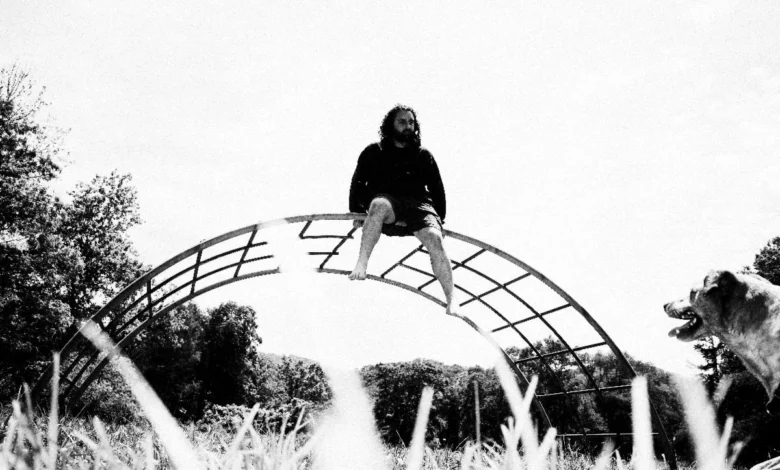
The experimental bedroom pop project known as i give my friends flowers, spearheaded by lo-fi hip-hop artist and producer Jacob Klein, has officially marked the beginning of a new artistic chapter with the release of his latest single, “FEEL LIKE.” This new offering serves as Klein’s first piece of recorded material since the release of his debut full-length album, DOGSTAR 1, earlier this year. Blending organic indie instrumentation—including acoustic drums and guitars—with eccentric, textured synthesizers, the single establishes an atmospheric soundscape that feels simultaneously uncertain and quietly hopeful as it navigates the unknown terrain of the future.
The creation of “FEEL LIKE” is deeply rooted in a period of profound personal and environmental upheaval. The track was the very first piece of music Klein wrote in the aftermath of the catastrophic "1,000-year flood" brought on by Hurricane Helene, a natural disaster that devastated entire towns and ecosystems around Asheville, North Carolina. Amidst the wreckage, Klein discovered a rescued piano and began composing, channeling a headspace suspended somewhere between the arduous process of physical and emotional recovery and the daunting prospect of whatever lies ahead.
The song opens with a warped guitar sample contributed by a close friend and frequent collaborator who had spent the summer months leading up to the flood working on his own record inside a local studio. This sonic texture sets a melancholic yet resilient tone for the rest of the track. Discussing the lyrical composition of the single, Klein highlights the deliberate linguistic choices woven into the chorus.
"The hook (‘what’s it feeling that like / what’s that feeling that like’) is grammatically unstable on purpose: a somatic reach toward a question that won’t quite form," Klein explains regarding the new track. "What does it feel like to live your own life in the middle of chaos—and what are those who’ve moved out of your life feeling now, in theirs? The song doesn’t answer. It holds the question open, closing on ‘after all we’ve been through…’"
Origins and Production Evolution
Originally conceptualized as a demo that was ultimately left off the final tracklist for DOGSTAR 1, “FEEL LIKE” underwent a significant metamorphosis before arriving at its final, kaleidoscopic form. To bring the single to life, Klein reunited with several long-time collaborators who played pivotal roles in the production of his debut album. Co-producers Mike Johnson and Harrison Wargo joined Klein back in the recording booth to refine the track’s intricate layers. The mixing duties were handled by Harper James in Brooklyn, while the mastering was completed by industry veteran Chris Gehringer at Sterling Sound, ensuring a polished, high-fidelity finish that still honors the project’s lo-fi origins.
Accompanying the single’s release is a visually striking music video co-directed by Klein and filmmaker Yehuda Katz. Drawing heavy inspiration from surrealist cinema and the intrinsic, untamed magic of the natural world, the narrative follows a groundskeeper dedicated to maintaining the land who voluntarily assists Klein in tracking down and reattaching his lost shadow.
"We incorporated all four elements into the video, pulling from our shared devotion and appreciation of the natural world," Katz elaborates. "It’s rich with symbolism, dualism, meaning, and real-life revealed—the subconscious threads, fueled by our conscious actions and experiences, finding purchase before us."
A Lifelong Journey in Sound
Jacob Klein’s trajectory as a musician and producer is built upon a lifetime of immersion in auditory environments. Growing up between his father’s high-fidelity audio equipment shop and his mother’s garden, Klein developed a hypersensitivity to sound, acoustic space, and emotional resonance from an early age. This foundational appreciation translated into early professional opportunities; by the time he reached high school, Klein was already touring and performing as a supporting act for prominent mainstream artists including Mac Miller, Selena Gomez, and Maroon 5.
Following his high school years, Klein pursued formal education at Duquesne University and Belmont University. During this period, he actively sought out mentorship, apprenticing alongside notable industry figures such as Jules Shear and Larry Crane. Over the better part of the following decade, Klein immersed himself in the music scenes of Nashville, Pittsburgh, New York, and Asheville, operating as both a producer and audio engineer to master every technical and creative facet of record-making.
The culmination of these years of artistic development and nomadic studio work resulted in DOGSTAR 1, a sprawling, 12-track debut LP. Non-linear, kaleidoscopic, and densely immersive, the album derives its name from Sirius, the brightest star visible in the night sky. In keeping with its celestial moniker, the record traverses a diverse sonic landscape, seamlessly shifting between dream pop, alternative pop, electronic soul, and lo-fi folk. The thematic core of the album explores the multifaceted nature of loss—whether through death, physical distance, or the natural progression of time and change—while ultimately affirming a deliberate choice to embrace love in spite of grief.
"DOGSTAR 1 was the first half of a story about being stuck in a tangent universe where everything keeps changing yet looks, sounds, smells, feels almost exactly the same," Klein reflects.
The Chronology of Crisis and Creation
The timeline of DOGSTAR 1 and its subsequent offshoots is inextricably linked to a harrowing series of life events that unfolded around 2024. In addition to the societal and environmental devastation wrought by Hurricane Helene across Asheville and surrounding North Carolina regions, Klein navigated a compounding series of personal trials. These included years of demanding caretaking responsibilities for aging family members, the sorrow of watching close friends pass away prematurely, the loss of a young dog to cancer, and the dissolution of a decade-long romantic relationship amidst the mounting wreckage of these overlapping griefs.
It was out of this crucible of trauma that the foundational elements of his recent discography were born. Returning to the piano rescued from the disaster’s aftermath, Klein found a conduit for processing the surreal nature of survival.
"The people seem the same; the streets look the same," Klein notes, describing the psychological landscape of that period. "But a dog answers to the wrong name, a friend’s wedding vows sound like something you swear you’ve heard before, and the house you grew up in feels one degree off true when you visit. Then the changes start happening to you."
The production of DOGSTAR 1 mirrors this collaborative, itinerant lifestyle, having been recorded across multiple cities including Pittsburgh, Asheville, and the New River Gorge. Klein enlisted a wide network of co-producers for the album, featuring contributions from Harrison Wargo, foraging, 34k.beam, Julian Klein, Julius Tunstall, Evan Black, and Mike Johnson. Much like his latest single, the mastering for the album was finalized by Chris Gehringer at Sterling Sound.
Broader Impact and Implications in the Indie Scene
The release of “FEEL LIKE” and the continued momentum of the i give my friends flowers project highlight a growing movement within contemporary indie and bedroom pop music: the embrace of radical vulnerability and geographic trauma as narrative catalysts. Artists operating outside major label machinery are increasingly utilizing lo-fi aesthetics not merely as a stylistic preference, but as a documentary tool to capture real-world instability.
In the wake of climate-related disasters like Hurricane Helene, creative communities in regions such as Southern Appalachia have experienced profound disruptions to their physical infrastructure and collaborative spaces. For artists like Klein, the studio has transformed from a mere workplace into a site of psychological restoration. By channeling the physical destruction of their ecosystems into critically acclaimed art, these producers are redefining the boundaries of regional American music scenes, proving that innovative production can emerge from localized devastation.
Furthermore, the cross-pollination of talent evident in the production credits of both DOGSTAR 1 and “FEEL LIKE” underscores the collaborative ethos sustaining modern independent music. By relying on a tight-knit network of engineers, co-producers, and visual artists—ranging from New York mixing engineers to North Carolina studio partners—Klein demonstrates a sustainable model for creative output that prioritizes artistic community over corporate homogenization.
As i give my friends flowers moves beyond the release of his debut album and into this new era defined by “FEEL LIKE,” listeners are presented with an artist actively mapping the contours of recovery. By keeping his structural and lyrical questions deliberately open-ended, Klein invites his audience to share in the uncertainty, offering a soundtrack for those navigating their own periods of transformation and survival.