Sam Gendel Releases Advanced White Trash, an Experimental Exploration of Plasticity and Digital Decay in Modern Pop Music

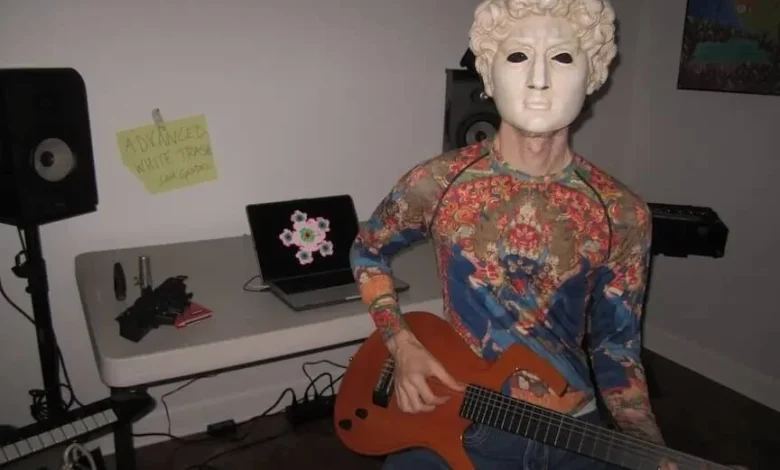
Los Angeles — In an era defined by high-definition streaming, pristine digital production, and algorithms engineered for frictionless listening, experimental musician and multi-instrumentalist Sam Gendel has chosen to look toward the margins of audio fidelity with his latest release, Advanced White Trash. The album, which has quickly drawn critical attention across independent music circles, embraces the aesthetic of digital degradation, cheap synthesis, and the malleable nature of contemporary pop culture.
The core of the artistic framework surrounding Advanced White Trash draws unexpected parallels to mid-century semiotics. In his classic 1957 collection of essays Mythologies, French philosopher and literary theorist Roland Barthes famously critiqued plastic as a substance of infinite transformation. Barthes argued that because plastic could be endlessly molded, dyed, and cheapened into faux-luxury surfaces, it represented a fundamental shift in how humanity interacted with manufactured goods—moving away from the inherent honesty of raw materials toward a culture of endless imitation and superficial substitution.
Gendel’s latest musical project applies this exact philosophical lens to contemporary popular music. The album operates on the premise that modern pop is constructed from the sonic equivalent of plastic: easily manipulated, endlessly reproducible, brightly colored, and utterly ubiquitous. Rather than dismissing this manufactured landscape as soulless, Advanced White Trash makes a compelling case for the hidden beauty, and even the liberating potential, found within these synthetic constraints.
Main Facts and Sonic Architecture
Advanced White Trash challenges traditional notions of musicianship and production values. Listeners navigating the record are immediately struck by its intentionally frayed texture. The album has been widely described by early reviewers as sounding akin to an audio file uploaded anonymously to SoundCloud in the dead of night, plagued by the artifacts of digital compression and buffering issues.
The instrumentation heavily features the nostalgic, synthetic timbres of vintage MIDI modules and software emulators—specifically invoking the digital presets of devices like the Roland Sound Canvas. These sounds are filtered through an aesthetic reminiscent of a dying smartphone recovered from a big-box store parking lot. Yet, despite the deliberate sonic decay, lo-fi distortion, and structural unpredictability, the resulting compositions possess a strangely compelling, almost hypnotic quality that draws the listener deep into Gendel’s surreal sonic universe.
The project reinforces Gendel’s reputation as one of modern jazz and ambient music’s most unpredictable figures. Known for his unorthodox saxophone playing and penchant for genre-agnostic collaboration, Gendel treats audio fidelity not as a standard to be rigidly maintained, but as a flexible variable to be manipulated, degraded, and reassembled in service of emotional resonance.
Chronology and Background Context
Sam Gendel has steadily built a reputation as a restless sonic innovator within the Los Angeles underground music community. Over the past decade, his career has been marked by a relentless output of solo recordings, collaborative projects, and live improvisational performances that refuse to adhere to conventional genre boundaries.
Chronologically, Advanced White Trash arrives on the heels of a prolific period for the artist, who has spent recent years exploring various facets of electronic manipulation, acoustic deconstruction, and re-interpretations of traditional song forms. His previous works—spanning jazz-inflected ambient albums, saxophone-heavy reinterpretations of R&B classics, and sprawling modular synthesizer experiments—have consistently pushed against the boundaries of standard recording practices.
The genesis of Advanced White Trash can be traced back to a broader cultural shift within independent music, where artists increasingly reject the hyper-polished sheen mandated by major streaming platforms. As digital audio workstations (DAWs) have democratized music production, the pursuit of pristine technical perfection has given way to a counter-movement celebrating digital imperfections. Glitches, bit-crushing, lossy compression artifacts, and the simulated warmth of obsolete technology have become primary artistic mediums. Gendel’s latest work places him at the vanguard of this movement, bridging the gap between high-concept academic music theory and the chaotic, democratic sprawl of internet culture.
Supporting Data and Industry Context
The release of Advanced White Trash highlights evolving consumption patterns within the contemporary music industry. According to recent data from digital music analytics firms, independent releases that embrace lo-fi or unconventional production styles have seen a steady increase in niche engagement, particularly among younger demographics who consume the majority of their audio via compressed streaming formats and video-sharing platforms.
While major label releases continue to invest heavily in mastering standards designed to maximize loudness and clarity across smartphone speakers and commercial earbuds, the underground sector has experienced a parallel renaissance of intentional degradation. Sales and streaming metrics for experimental ambient, vaporwave, and glitch-oriented genres indicate that listeners are increasingly drawn to music that reflects the digital friction of modern life. Gendel’s utilization of emulated Roland hardware taps directly into a multi-billion-dollar market for vintage software instruments and nostalgia-driven sound design, subverting corporate tools to create highly personalized, avant-garde statements.
Critical Analysis and Reactions
Music critics and cultural theorists have been quick to dissect the implications of Advanced White Trash, noting that its title alone serves as a provocative commentary on class, taste, and the hierarchy of cultural artifacts. By pairing high-brow literary references—such as Barthes’ semiotic analysis of synthetic materials—with a title that evokes low-brow Americana and internet subcultures, Gendel deliberately destabilizes traditional critical distance.
Industry observers have pointed out that Gendel’s willingness to court discomfort through dissonant frequencies and degraded audio stems from a broader fatigue with algorithmic homogenization. In a marketplace where recommendation engines constantly push safe, predictable sonic profiles designed to maintain passive background listening, Advanced White Trash demands active attention precisely because of its abrasive edges.
Reactions from fellow musicians and producers highlight the record’s success in redefining what constitutes "good" sound in the digital age. Rather than hiding the seams of digital production, Gendel lays them bare, transforming technological limitations into expressive features. This approach has resonated strongly with a community of avant-garde artists who view software glitches and bandwidth limitations not as technical errors, but as the legitimate texture of twenty-first-century life.
Broader Impact and Implications
The long-term cultural and artistic implications of Advanced White Trash extend far beyond the confines of experimental jazz or electronic music. As artificial intelligence and advanced machine-learning algorithms begin to automate the creation of clean, generic pop music, human artists are increasingly forced to find value in what machines cannot easily replicate: genuine idiosyncrasy, accidental beauty, and the embrace of structural decay.
Gendel’s latest work suggests that the future of avant-garde music may lie not in the pursuit of ultra-high-definition perfection, but in a radical acceptance of the discarded, the cheap, and the broken. By finding a hypnotic, haunting beauty within the digital detritus of a dying smartphone and obsolete synthesizers, Advanced White Trash reframes our relationship with modern technology. It reminds audiences that creativity often flourishes precisely at the moments where systems break down, offering a blueprint for how art can reclaim corporate tools and mold them into something entirely unexpected, enduring, and free.