Eric Jerardi Confronts Mortality and Artistic Evolution in His Introspective New Album The Game

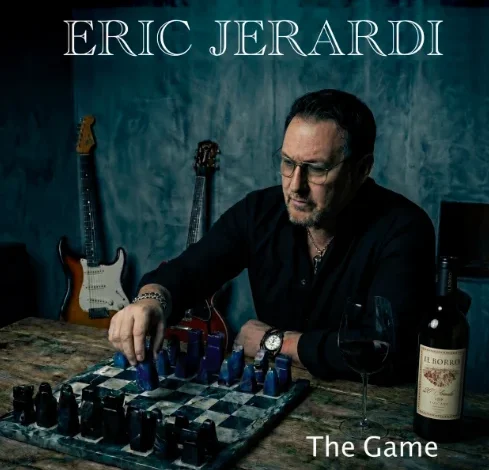
What began as a structured creative exercise—a challenge to compose 12 original songs in 12 weeks—has culminated in the most profound and introspective work of blues-rock guitarist Eric Jerardi’s career. Scheduled for release on October 30, 2026, the album titled The Game serves as a poignant exploration of the human condition, blending the raw emotional weight of the blues with the sophisticated storytelling traditions associated with iconic songwriters like Tom Waits and John Hiatt. For Jerardi, a veteran performer with over three decades in the industry, this project represents a significant departure from his previous work, shifting from a focus on technical guitar prowess to a disciplined exploration of narrative depth, vocal nuance, and the existential realities of aging.
The Genesis of the Challenge: A Pandemic-Era Catalyst
The conceptual origins of The Game can be traced back to the onset of the COVID-19 global pandemic. As public health restrictions necessitated the widespread cancellation of live music tours and club appearances, musicians worldwide found themselves in a period of unprecedented professional stagnation. Facing a vacuum where his touring schedule once existed, Jerardi turned to his long-time friend and confidant, Todd Clemmer, for creative direction. It was Clemmer who proposed the 12-week songwriting challenge, a regimen designed to sharpen Jerardi’s craft and maintain his productivity during the isolation of the pandemic.
What started as a pragmatic effort to keep his creative engine running soon transformed into a deep psychological excavation. By forcing a stream-of-consciousness approach to composition, the challenge bypassed the artist’s usual editorial filters, allowing dormant emotions and long-suppressed memories to surface. This methodology resulted in a collection of tracks that are not merely exercises in composition, but rather cathartic reflections on loss, the fragility of life, and the perspective shift that occurs when an artist enters their late 50s.
A Shift in Narrative: From Autobiography to Fiction
Historically, Jerardi’s songwriting has been almost entirely autobiographical, drawing heavily from his own life in Dayton, Ohio, and his experiences on the road. However, The Game introduces a notable structural shift: the incorporation of fictional characters to anchor the narrative arc of the album. Jerardi estimates that approximately 60% to 70% of the project remains rooted in his own life, but the introduction of external perspectives allowed him to explore themes that might have been too narrow had they remained strictly confined to his personal history.
This expansion of the narrative palette is best exemplified by the track "Thorns and Roses." Initially, the prompt for the song felt foreign to Jerardi, who found the title somewhat cliché for his established style. Rather than forcing a personal narrative that felt inauthentic, he created a fictional character, allowing himself the creative freedom to inhabit a perspective outside of his own lived experience. The result is one of the standout tracks on the album, proving that the constraints of the challenge actually served to broaden his artistic range.
Confronting Grief and the Passage of Time
The emotional core of The Game is undeniably tied to the loss of close personal connections. Jerardi speaks candidly about the impact of losing his brother to cancer and, subsequently, the loss of his two closest friends within a short span of time. These tragedies acted as the primary drivers for the album’s thematic focus on mortality.
"Hard Being Here," a song written in just five minutes, serves as a direct response to the passing of his friend, Rob, who succumbed to pancreatic cancer. The track captures the paralyzing nature of grief and the specific trauma of watching someone suffer through a terminal illness, a memory that was inextricably linked to the earlier death of his brother. By confronting these memories through the medium of songwriting, Jerardi has managed to articulate a sense of loss that is both deeply personal and universally resonant.
Evolution of a Sound: The Intersection of Soul, Rock, and Blues

To understand the sound of The Game, one must consider Jerardi’s eclectic musical lineage. Growing up in the vibrant cultural landscape of Dayton, his formative years were defined by a diverse array of influences ranging from the foundational blues of Jimmy Reed and B.B. King to the hard rock intensity of Led Zeppelin and Black Sabbath. His initiation into the guitar began in high school, and he quickly moved from local talent shows to forming his own band, The 18th Emergency, while attending Ohio University.
Over the years, Jerardi has consistently resisted the limitations of being labeled strictly as a "blues guitarist." His 2019 album, Occupied, was critically noted for its infusion of soul-blues elements. Jerardi attributes this sound to a natural inclination toward the chord progressions found in Philadelphia soul and the output of Stax Records, particularly the work of Otis Redding. "It just seems every time I would pick up the guitar, that’s what would always come out," he notes. "This hybrid rock with blues and soul influences, and it was never intentional."
A New Philosophy: Restraint and Songcraft
Perhaps the most striking change in The Game is the evolution of Jerardi’s relationship with the guitar itself. Reflecting on his earlier career, he admits that 20 years ago, his primary objective was to be a "blazing killer guitar player," focusing on high-octane solos and extended, eight-minute compositions. Today, his focus has shifted toward songcraft and vocal delivery.
On this record, the guitar work is markedly more restrained. There are fewer opportunities for extended improvisation, and the solos are intentionally short, sweet, and subservient to the song’s overall message. This shift is a calculated move toward maturity; Jerardi views this as his finest work on the instrument precisely because it is the most thoughtful. By prioritizing the composition over the display of technical agility, he has created an album that feels more cohesive and emotionally accessible.
Implications and Future Outlook
The release of The Game carries significant implications for Jerardi’s trajectory. By successfully integrating complex emotional storytelling with a refined, genre-bending sound, he has effectively positioned himself among the ranks of singer-songwriters who prioritize the "story" over the "noodle." His stated admiration for Tom Waits and John Hiatt underscores this shift in focus, as he seeks to emulate their ability to use music as a vehicle for narrative.
The logistical transition from the studio to the stage is the next phase of the project. While Jerardi is currently preparing to perform the material from the album live, he acknowledges that the pace of the music industry has changed for him since the pandemic. Having previously maintained a rigorous schedule of three or four shows per week, he has since slowed his touring cadence. This change, while necessary, presents its own challenges—most notably, the return of performance anxiety. Even with over three decades of stage experience, Jerardi admits that the "jitters" return when he is away from the stage for extended periods, highlighting the physical and psychological toll of a lifetime on the road.
Industry Reception and Self-Reflection
Early listening sessions have yielded positive indicators for the album’s reception. Among a select group of 15 industry insiders and peers who received advance copies, every single one of the 12 tracks was identified as a favorite by at least one listener. This suggests a high degree of variety and depth within the album, appealing to different facets of his audience.
For Jerardi, the most important outcome of the process has been the boost in self-confidence. The experience of the 12-week challenge served as a mirror, forcing him to evaluate his capabilities as both a songwriter and a vocalist. With the aid of production techniques and a renewed sense of discipline, he has emerged from the recording process with a clearer understanding of his own artistic identity. "I realized that I’m a lot better writer than I probably thought I was," he concludes. As The Game reaches the public, it stands as a testament to the idea that creative constraints can often lead to the most liberating artistic breakthroughs, marking a new chapter for an artist who continues to evolve long after many of his peers have settled into a static sound.
Related posts: