A Great Day in Soho: Recreating the Iconic Harlem Jazz Gathering in the Heart of London

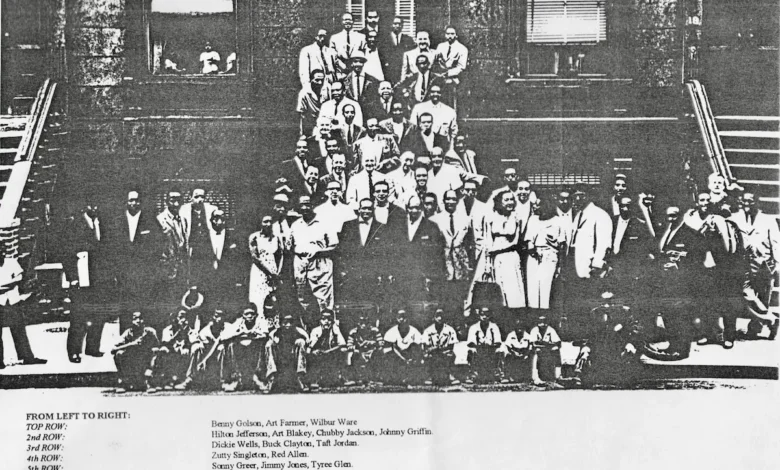
The summer of 1958 remains etched in the collective memory of jazz enthusiasts as the moment Art Kane, a young freelance photographer, captured one of the most significant images in music history. What began as a tentative outreach to a handful of Harlem-based musicians culminated in a surreal scene: 60 titans of the genre, including Count Basie, Thelonious Monk, Dizzy Gillespie, and Lester Young, assembled on a stoop in Harlem at the unearthly hour of 10:00 a.m. This photograph, later immortalized in Jean Bach’s Academy Award-nominated documentary, became a touchstone for the American jazz canon. Decades later, the spirit of that morning was transported across the Atlantic, manifesting in a British tribute that sought to replicate the magic of the original while honoring the unique landscape of the London jazz scene.
The Genesis of the Harlem Prototype
To understand the weight of the Soho recreation, one must first appreciate the logistical miracle of the original "A Great Day in Harlem." In 1958, Art Kane, then a designer for Esquire magazine, sought to document the era’s jazz greats. He sent out letters to musicians, many of whom were notoriously nocturnal, requesting their presence on a Harlem brownstone step. Against all expectations, the industry heavyweights arrived in droves. The resulting photograph did more than capture a roster of talent; it created a visual manifesto of the bebop and hard-bop eras. The documentary film, released in 1994, provided the historical narrative that elevated the photo from a journalistic artifact to an essential cultural document.
The London Initiative: Organizing the Great Day in Soho
The concept of a British homage originated with Ray Bolden, a dedicated jazz enthusiast who recognized that the London scene possessed a vibrancy and historical depth worthy of its own iconic documentation. Bolden set his sights on the grounds of St. Anne’s Church on Wardour Street, located in the heart of Soho—a district synonymous with the British jazz revival.
The date was set for June 24, a Sunday morning chosen to maximize the likelihood of musician availability. The logistical plan was ambitious: invite as many prominent British jazz practitioners as possible to congregate in the churchyard. The "call" time was set for 11:15 a.m., with the actual photography scheduled for 11:30 a.m. However, the organic nature of the jazz community dictated a different reality. By 11:00 a.m., the churchyard was already bustling. Unlike the Harlem shoot, which had the benefit of a professional studio team, the Soho event was an exercise in organized chaos.
Navigating the Logistics of Creative Chaos
Organizing nearly 200 musicians requires more than a call sheet; it requires the kind of presence and authority typically reserved for film sets or political rallies. As the crowd swelled, the logistical challenges became apparent. The churchyard was not a controlled environment; it was a public space where, much like the original Harlem event, local residents and curious children drifted in to observe the spectacle.
To manage the logistics, the organizers utilized a first-floor window in the church tower as a makeshift elevated photography platform. This provided the necessary wide-angle perspective to capture the gathering, though it limited the photographer’s ability to interact directly with the participants below. The coordination effort was bolstered by the use of a loudhailer. Observers noted that the scene felt less like a formal portrait session and more like a police operation, with the organizer’s booming voice directing brass, reed, and rhythm sections to group themselves for the frame. Despite the shifting composition of the crowd, several successful group shots were captured, framing the historical architecture of Wardour Street against the faces of the British jazz establishment.
Quantitative Analysis: Assessing the Turnout
The exact attendance at the Great Day in Soho remains a subject of minor historical debate, though all parties agree the turnout exceeded initial projections. While official records of a formal RSVP list were not strictly maintained, subsequent analysis of the group photographs suggests an attendance figure between 150 and 200 individuals.

This level of participation is statistically significant when viewed against the backdrop of the mid-period British jazz scene. It represented a cross-generational assembly, bringing together established bandleaders, session players, and emerging talent from the London conservatoires. A final wide-angled shot, taken by Peter Symes, serves as the definitive record of the event. While it does not include every single individual who passed through the churchyard that morning, it provides a comprehensive view of the density of the assembly, with the historic Archer Street visible in the upper right corner—a geographic detail that grounds the event firmly in its London heritage.
Official Correspondence and Post-Event Reflections
In the September issue of the following year, the publication’s "One Sweet Letter" column featured a message from Ray Bolden. In his correspondence, titled "Swinging Day In Soho," Bolden expressed profound gratitude to the musicians who had dedicated their Sunday morning to the project. The letter served as a formal acknowledgment of the collective effort required to move nearly 200 people into a coherent formation.
A minor point of nomenclature emerged during the archiving process. While Bolden titled his initial account "Swinging Day In Soho," the files maintained by the journal, which include the primary photographs by Peter Symes, often refer to the event as "The Great Day in Soho." This discrepancy is common in historical documentation, where the participants’ intent often competes with the shorthand used by archivists. The official record, however, has coalesced around the latter title, acknowledging the event as a deliberate and successful invocation of the Harlem legacy.
Historical Implications and Cultural Context
The legacy of the Great Day in Soho extends beyond the photographs themselves. It serves as a study in how subcultures preserve their history. By replicating the 1958 Harlem shoot, the British jazz community performed an act of institutional memory, affirming its place within the global jazz tradition.
The event also highlighted the importance of Soho as a geographic anchor for British jazz. Archer Street, visible in the background of the photographs, was historically known as the "musicians’ street," where jazz performers would congregate to find work and trade stories. By staging the photograph at St. Anne’s Church, just steps away from these traditional hubs, the organizers ensured that the photograph was not just a gathering of people, but a gathering of place and tradition.
From an archival perspective, the event provided a rare snapshot of a specific demographic at a specific point in time. Much like the Harlem photograph, which is now analyzed for the placement of every figure, the Soho photograph has become a vital resource for jazz historians. It provides visual data on the hierarchy, social structures, and stylistic trends of the British scene.
Conclusion: A Lasting Legacy
The Great Day in Soho proved that the spirit of jazz is not confined by geography. By embracing the logistical challenges of a spontaneous gathering, Ray Bolden and his peers successfully translated a moment of American history into a British context. The resulting documentation—both the photographic evidence and the subsequent correspondence—serves as a testament to the dedication of the jazz community.
Today, as the original Harlem photograph continues to be studied and celebrated, the Soho recreation occupies a unique niche in the archives. It remains a reminder that the history of jazz is not only written in sheet music and studio recordings, but in the moments when the players themselves step out from the shadows of the club and into the light of the morning, if only to be captured for a brief, immortal second in the eyes of history. The event stands as a model for how modern communities can engage with, and pay homage to, the cultural touchstones of the past, ensuring that the legacy of those 10:00 a.m. gatherings continues to resonate for future generations of musicians and historians alike.