Lily Allen Pokes Fun at Tour Ticket Sales Controversy by Dressing as a Ticketmaster Seating Map for Halloween

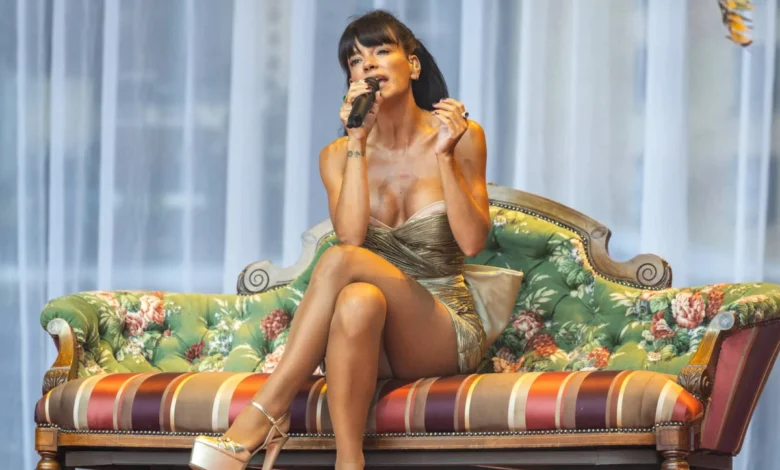
British pop artist Lily Allen has leaned into the internet discourse surrounding her recent North American concert tour by debuting a self-deprecating Halloween costume styled after a Ticketmaster seating map littered with unsold seats.
The singer, who faced widespread scrutiny and logistical hurdles earlier this year when ticket sales for her live performances fell short of expectations, shared the humorous look across her official social media channels. The costume highlights an increasingly common phenomenon within the modern live music industry colloquially known as "blue dot fever," referencing the digital markers used by primary ticketing platforms to designate available inventory.
By weaponizing her own career setbacks for comedic effect, Allen has reignited conversations regarding the volatile nature of contemporary concert promotion, the opaque economics of live entertainment, and the mounting pressure placed on heritage and returning artists navigating a drastically shifted post-pandemic touring landscape.
Anatomy of a Viral Costume and the "Blue Dot Fever" Phenomenon
The costume, revealed via Instagram, consisted of a white puffer jacket and a matching bodysuit meticulously dotted with circular blue appliqués. To complete the look, Allen wore a black top emblazoned with the word "Stage" and posed holding a medical thermometer, drawing a direct parallel between her satirical ensemble and the viral industry term.
"Blue dot fever" has emerged throughout 2026 as shorthand for the anxiety surrounding sluggish ticket sales across the concert sector. On interactive seating diagrams provided by ticketing monoliths like Ticketmaster, blue dots signify seats that have yet to find buyers. When high-profile tours are plagued by an overwhelming proliferation of these blue indicators, it serves as a public, real-time metric of disappointing demand and, frequently, the miscalculation of venue capacities by booking agents and promoters.
In her accompanying social media caption, Allen embraced the controversy head-on, writing, "Never beating the allegations. #bluedotfever." The post quickly circulated across mainstream pop culture aggregation channels, garnering widespread praise from fans and industry observers alike for her willingness to laugh at a situation that has historically proven damaging to artists’ public profiles.
A Chronology of the North American Tour Retrenchment
The Halloween costume serves as a capstone to a tumultuous year of touring for Allen, whose return to the live stage followed the release of her critically acclaimed 2025 confessional album, West End Girl. The record, which explores the emotional fallout and ultimate dissolution of her marriage to Stranger Things actor David Harbour, earned widespread critical acclaim for its raw vulnerability. However, translating the deeply personal project into a lucrative live arena and amphitheater circuit proved significantly more challenging than anticipated.
The logistical friction became publicly apparent in July, when Allen’s management team announced a sweeping structural overhaul of the North American leg of the "West End Girl" tour. Facing vast sections of unsold inventory, organizers were forced to downsize capacities across multiple major metropolitan areas and scrap at least one major date entirely.
The chronology of the tour’s downsizing underscores the severity of the miscalculations:
- March: Allen launches the theatrical production of West End Girl with a critically well-received run at the London Palladium, establishing a minimalist format featuring backing tracks and a deliberate lack of conversational crowd interaction.
- July: Plagued by low initial velocity in ticket sales, management confirms major venue downgrades. Most notably, a planned concert at Chicago’s sprawling 23,500-capacity United Center is relocated to the intimate 3,500-capacity Chicago Theatre.
- July: Similarly, a scheduled arena appearance at San Francisco’s Chase Center is downsized to the historic Paramount Theatre in Oakland. Additional schedule adjustments affect dates in Los Angeles and other key markets, while a high-profile concert in Montreal is cancelled outright.
Reflecting on the forced adaptations during an interview last month, Allen was candid about the commercial realities that dictated the changes. "The ticket sales weren’t there," she admitted plainly.
She elaborated on the disconnect between creative ambition and corporate forecasting, revealing that the initial bookings were driven entirely by the optimistic projections of her promotion team. "I said to my manager, ‘Are you sure? This seems like a stretch.’ And he was like, ‘This is what they’re telling me.’ So we accepted it," she recalled.
Despite the financial and logistical incentives to pull the plug entirely, Allen resisted a complete cancellation of the tour. She noted that a touring crew of approximately 50 personnel relied on the scheduled dates for their livelihoods, compelling her and her team to find a viable middle ground through aggressive venue rightsizing.
Behind the Curtains of Modern Live Ticketing
Allen’s public frankness has also shed light on systemic grievances regarding transparency within the global touring industry. Beyond the issue of over-ambitious venue sizing, the singer voiced frustration over the opaque mechanics governing ticket distribution, secondary markets, and phantom sell-outs.
Recounting instances where fans managed to secure inexpensive last-minute tickets for shows that she had been officially informed were completely sold out, Allen highlighted a persistent informational barrier between performers and the business operations surrounding them.
"I think the live industry is a minefield, and I don’t know how it works," Allen remarked candidly. "Someone knows, but it ain’t the artist."
Her comments echo broader concerns raised by musicians, consumer advocacy groups, and lawmakers regarding dynamic pricing models, hidden fees, and the concentration of power within ticketing conglomerates. While headlining artists often bear the brunt of public embarrassment when arenas show vast blocks of empty seats, industry insiders note that tour routing decisions are frequently calculated by algorithms, historical data sets, and promoter guarantees that fail to account for shifting consumer spending habits and post-pandemic economic pressures.
Artistic Integrity Versus Commercial Expectations
The commercial friction surrounding the "West End Girl" tour has also forced a broader conversation about the nature of modern pop performance. Allen’s live presentation of the album intentionally breaks from conventional pop concert traditions. Relying on a tightly choreographed theatrical staging, a lack of standard crowd-work or banter, and a strict adherence to the "fourth wall," the show is designed as a dramatic narrative arc rather than a high-energy sing-along party.
When early attendees and internet commentators criticized the unconventional format, Allen firmly defended her creative vision. "It’s my artistic choice not to talk to the audience, the fourth wall helps with the storytelling," she explained in a previous statement addressing the critique. "Everyone on this tour is really working very hard to give people the best show we possibly can, and I’m extremely proud of it."
Reviewers who experienced the performance largely validated her artistic stance. NME awarded the London Palladium engagement three stars, praising the production as "a powerful retelling of one of pop’s most gut-wrenching albums." This followed the outlet’s four-star review of the source material itself, which lauded West End Girl as a "vicious, vulnerable and victorious comeback" following a prolonged break from releasing new music.
Broader Implications for the Touring Industry
Lily Allen’s playful response to her tour’s structural downsizing points to a larger, necessary evolution in how artists manage public relations crises in the digital age. Rather than maintaining a defensive silence or attempting to obscure commercial miscalculations, leaning into the reality of the situation has allowed Allen to neutralize online mockery while keeping the focus on her art.
As the live music market faces a correction following the post-lockdown touring boom of previous years—marked by inflated ticket prices, oversaturated schedules, and cautious consumer spending—more artists are likely to encounter the realities of "blue dot fever." Allen’s willingness to wear her unsold seats quite literally on her sleeve demonstrates that self-awareness and dark humor can successfully disarm industry-wide challenges, transforming a public relations stumbling block into a memorable pop-culture moment.
Related posts: