A Decade of Discord: Inside the High Court Battle Between Irish Music Collecting Societies PPI and RAAP Over Millions in Performer Royalties

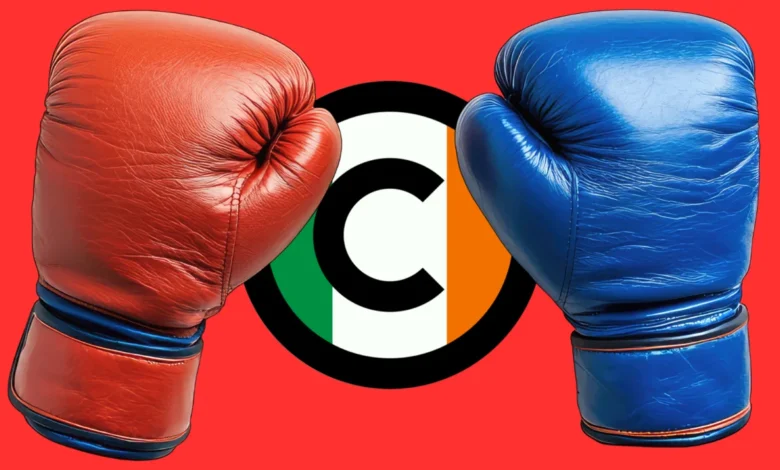
The High Court of Ireland in Dublin has become the epicenter of a high-stakes, multi-million-euro legal showdown that threatens to reshape the landscape of music licensing and royalty distribution across Europe. The courtroom battle pits Phonograph Performance Ireland (PPI)—representing the commercial interests of record labels and self-releasing rightsholders—against the Recording Artists Actors and Performers (RAAP), the primary society advocating for session musicians, vocalists, and featured artists.
This monumental trial, projected to last eight grueling weeks, marks the culmination of more than ten years of friction, administrative missteps, and ideological warfare regarding how revenues generated from public broadcasting and performance are divided. At the heart of the dispute is "performer equitable remuneration" (ER), a statutory right ensuring that performers receive a direct share—traditionally set at 50%—of the royalties collected whenever recorded music is played publicly on the radio, television, in pubs, shops, or via streaming and background music services.
However, beneath the legal arguments of statutory interpretation and contractual compliance lies a messy reality that plagues the collective management organizations (CMOs) of the global music industry: catastrophic data degradation. The opening statements before the High Court revealed an array of database anomalies, including an imaginary studio collaboration between Swedish pop royalty ABBA and veteran Irish traditional icon Daniel O’Donnell. These glaring errors have amplified an already contentious debate over transparency, accountability, and the fundamental mechanics of how creative labor is compensated in the digital age.
The Mechanics of Collective Licensing and the Roots of the Division
To understand the friction between PPI and RAAP, one must examine how collective rights management operates globally. When a sound recording is broadcast or played in public, copyright law dictates that two distinct sets of rights must be cleared: the rights in the sound recording itself (traditionally owned by record labels) and the rights of the performers who breathed life into the track.
In many jurisdictions, such as the United Kingdom, a single unified collecting society handles both domains. PPL, the UK’s equivalent organization, represents both labels and performers, streamlining the collection and distribution process under one roof. Ireland, conversely, adopted a dual-society framework. PPI acts as the guardian for sound recording rightsholders, while RAAP was established to advocate exclusively for the performers.
Historically, this dual structure relied on a streamlined cooperative pipeline. PPI served as the primary collection agency, gathering licensing fees from commercial establishments, broadcasters, and public venues across Ireland. From its inception in 2002 until 2012, PPI operated under a straightforward formula, transferring 50% of the aggregate collections directly to RAAP, which subsequently distributed the funds to its roster of recording artists and session players.
The harmonious partnership began to fracture in 2013 when PPI introduced a series of complex financial adjustments. Asserting rights embedded within their foundational 2002 agreements, PPI applied deductions that systematically reduced RAAP’s share below the traditional 50% threshold. These deductions included administration overheads categorized by RAAP as "inflated," alongside a 15% skim from broadcast income designated to cover "dubbing"—the internal duplication processes broadcasters execute prior to airing tracks. RAAP’s legal counsel, Andrew Fitzpatrick, argued before the court that performer ER is legally mandated strictly for the act of broadcasting, rendering pre-broadcast copying deductions illegitimate.
A Catalogue of Errors: The Great Database Debacle
As the legal arguments unfolded in the Dublin courtroom, both legal teams weaponized database discrepancies to undermine the operational competence of their opponents. In collective rights management, accurate metadata is the lifeblood of distribution; without clean data, millions of euros in royalties risk remaining unallocated or landing in the wrong hands.
RAAP’s legal representatives highlighted a critical operational pivot made by PPI in 2016. In an attempt to bypass RAAP’s internal administrative framework, PPI partnered with the UK’s PPL to manage the distribution of Irish performer payments. According to Fitzpatrick, this cross-border delegation resulted in catastrophic data mismatches. Remuneration was allegedly withheld from a roster of Ireland’s most celebrated musical exports—including The Chieftains, The Boomtown Rats, The Saw Doctors, Joe Dolan, and Daniel O’Donnell—because the PPL database failed to properly cross-reference these legendary names with the master recordings they authored.
In a swift and theatrical rebuttal, PPI’s counsel, Paul Gallagher, dismissed the assertions regarding PPL’s database capabilities as "plainly wrong." Instead, Gallagher turned the spotlight onto RAAP’s own data repository, characterizing it as a minefield of "extraordinary and obvious errors."
To substantiate this claim, Gallagher presented the court with two striking metadata anomalies involving Swedish pop icons ABBA. According to PPI’s evidence, RAAP’s database completely omitted founding member Björn Ulvaeus as a performer on a canonical ABBA track. More bizarrely, another entry in the RAAP database listed ABBA vocalist Agnetha Fältskog as a backing vocalist on Daniel O’Donnell’s 2011 sentimental recording of "The Boys From Killybegs."
While courtroom observers chuckled at the prospect of a late-career folk-pop crossover between Agnetha Fältskog and Ireland’s favorite cardigan-clad balladeer, the underlying reality is sobering. Such glaring database corruption illustrates the systemic vulnerabilities plaguing global music rights infrastructure, where billions of data points are processed annually with insufficient verification protocols.
The European Context and the Seismic "RAAP Ruling"
The timing of the current High Court trial is inextricably linked to a broader European legal saga that has consumed the collective licensing sector for half a decade. When RAAP originally filed its lawsuit against PPI in 2016, the proceedings were soon paused to accommodate a monumental referral to the Court of Justice of the European Union (CJEU).
The resulting judgment, which quickly became known throughout the international music community as the "RAAP ruling," fundamentally shifted the balance of power. The CJEU ruled largely in favor of performer societies, determining that non-EU performers must be granted the same rights to equitable remuneration as domestic and European artists when their music is broadcast within member states, regardless of national reciprocity laws.
While celebrated by performer advocacy groups as a historic victory for session musicians and global artists, the judgment sent shockwaves through major record labels and independent publisher associations across Europe. Industry stakeholders warned that the ruling exposed European broadcasters and collecting societies to massive, unbudgeted retroactive liabilities, potentially funneling millions of euros away from domestic creators and into the hands of major US-backed rightsholders. Consequently, music industry coalitions have spent the intervening years lobbying the European Commission to enact legislative remedies to neutralize or clarify the precedent set by the ruling.
In Dublin, RAAP’s legal team argued that PPI’s administrative maneuvers—beginning with the unilateral imposition of deductions in 2013 and culminating in the 2016 partnership with PPL—were designed to circumvent mounting financial obligations and undermine RAAP’s institutional autonomy. Fitzpatrick contended that PPI’s reliance on contractual clauses to justify deviations from the historic 50/50 split was a post-hoc rationalization for "unilaterally trying to change the deal." Furthermore, RAAP members viewed the collaboration with PPL—an organization heavily influenced by major record labels—as a direct affront to performers’ rights to self-determination through an independent representative body.
Broader Implications for the Global Music Industry
As the PPI v. RAAP trial marches through its projected eight-week schedule, the implications extend far beyond the borders of Ireland. The case serves as a cautionary tale for the international collective management sector, highlighting the systemic vulnerabilities inherent in dual-society models.
When rightsholder organizations and performer societies operate under adversarial conditions, the friction invariably impacts the creators at the end of the supply chain. Administrative redundancy, disputed metadata, opaque deduction structures, and cross-border outsourcing strategies ultimately delay payouts to the artists who rely on performance royalties for their livelihoods.
Furthermore, the trial underscores the urgent need for a technological overhaul within royalty collection agencies. As the volume of digital audio streaming, terrestrial broadcasting, and public performance data multiplies exponentially, traditional administrative frameworks are buckling under the weight. The comedic absurdity of database errors like the fictitious Agnetha Fältskog and Daniel O’Donnell collaboration masks a systemic crisis of transparency and data integrity that institutional collecting societies must urgently resolve.
For now, performers, labels, and legal observers across Europe remain fixed on Dublin. The final verdict of the High Court will not only dictate the financial future of Irish collective licensing and redraw the boundaries of performer equitable remuneration, but it will also set a crucial precedent for how institutional collecting societies manage the delicate balance between commercial capital and creative labor in the modern era.
Related posts: