Arte Documentary Explores the Revolutionary Legacy of Donna Summer’s "I Feel Love" and the Birth of Electronic Dance Music

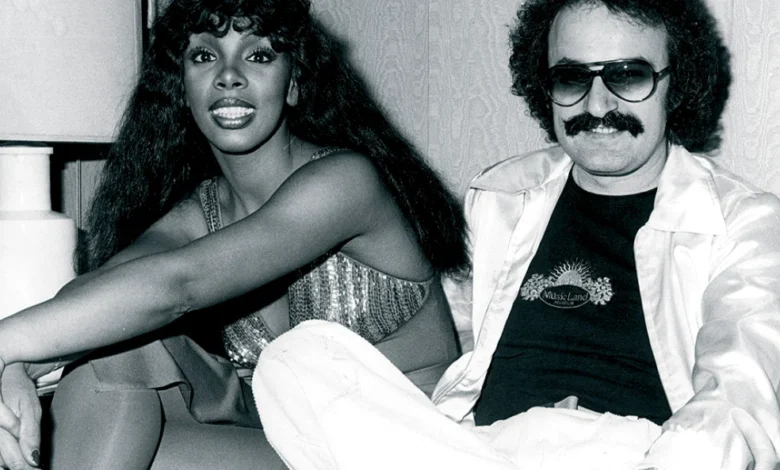
A new 52-minute documentary by Arte, titled I Feel Love – Giorgio Moroder & Donna Summer, delves into the extraordinary narrative behind one of music history’s most pivotal tracks: Donna Summer’s "I Feel Love." Released in 1977, this song was not merely a hit; it was a sonic prophecy, a radical departure from the prevailing musical landscape that would irrevocably alter the trajectory of popular music. At a time when disco was still largely defined by orchestral arrangements, funk guitars, and brass sections, "I Feel Love" emerged as a stark, futuristic anomaly, built upon the hypnotic precision of synthesizers and a relentlessly pulsing beat that continues to resonate with modern audiences.
A Musical Paradigm Shift: The Genesis of "I Feel Love"
The mid-1970s disco scene was a vibrant, often opulent, phenomenon. From the glittering dance floors of Studio 54 to the global charts, disco dominated, characterized by its joyous, expansive soundscapes. Tracks by artists like Earth, Wind & Fire, Chic, and the Bee Gees epitomized this era with their rich instrumentation and soulful vocals. However, "I Feel Love" shattered these conventions. Spearheaded by Italian producer Giorgio Moroder, the track embraced an almost entirely electronic palette, stripping away the organic warmth of traditional instruments in favor of a synthetic, yet deeply compelling, groove. This audacious choice positioned the song not just as a successful record, but as a foundational text for genres that would define the decades to come, including synth-pop, house, techno, and the vast expanse of modern electronic music.
The documentary meticulously reconstructs this moment of musical revolution, highlighting the creative synergy between Moroder, the American vocalist Donna Summer, and British songwriter Pete Bellotte. Their collaborative efforts in Munich, Germany, gave birth to what became known as the "Munich Sound," a distinct blend of European electronic sophistication and American vocal prowess. It was in this unlikely hub that a studio experiment blossomed into a global phenomenon, forever stamping its mark on popular culture.
The Architects of Sound: Giorgio Moroder and Donna Summer’s Collaboration
Giorgio Moroder’s journey to becoming a pioneering figure in electronic music production was marked by an early fascination with synthesizers and a relentless pursuit of innovative sounds. Born in Urtijëi, Italy, Moroder initially found success in the German music scene, producing a string of European pop hits. His vision, however, extended beyond conventional pop. He harbored a desire to create music that sounded like "the future," an aspiration that found its perfect vessel in Donna Summer.
Donna Summer, born LaDonna Adrian Gaines in Boston, Massachusetts, possessed a voice of extraordinary power, versatility, and emotional depth. Before her meteoric rise as the "Queen of Disco," Summer honed her craft in musical theater, performing in productions like Hair in Germany. It was during this period that she crossed paths with Moroder in Munich. Their initial collaborations, alongside Bellotte, had already yielded significant international success, most notably with the sensuous and groundbreaking 1975 hit "Love to Love You Baby." That track, with its extended, breathy vocals and hypnotic beat, hinted at the experimental spirit that would fully manifest in "I Feel Love."
The trio’s creative process was characterized by an open-minded approach to sound and structure. Moroder, with his technical acumen, would often lay down instrumental tracks, inviting Summer to improvise and infuse them with her unique vocal interpretations. Bellotte acted as a crucial bridge, often translating lyrical concepts and refining the song’s narrative. This dynamic collaboration fostered an environment ripe for innovation, where traditional songwriting rules were secondary to the pursuit of a novel sonic experience.
Technical Innovation: The Moog Synthesizer and the Munich Sound
Central to the revolutionary sound of "I Feel Love" was Moroder’s intensive experimentation with the Moog synthesizer. In the mid-1970s, synthesizers, particularly modular systems like the Moog, were still relatively niche instruments, often associated with experimental music or progressive rock. They were complex, temperamental machines, requiring significant technical expertise to operate. Moroder, however, saw their potential to create a rhythmic and melodic foundation that was impossible with traditional instruments.
For "I Feel Love," Moroder utilized the Moog’s sequencing capabilities to create the song’s iconic, pulsating bassline. Unlike a human bassist, the Moog could generate a perfectly precise, unvarying sequence of notes, creating a relentless, almost mechanical groove that was both alien and incredibly danceable. This was a radical departure from the organic, often improvisational basslines prevalent in disco. The Moog’s oscillators generated the arpeggiated synth line, while its filters shaped the timbre, giving the sound its distinctive, almost liquid quality. This machine-like precision, combined with a driving drum machine beat (possibly a Roland CR-78 or similar analog drum machine of the era), created a rhythmic backbone that felt entirely new.
The "Munich Sound" itself was a broader phenomenon, encompassing the work of Moroder and other producers in the city, but "I Feel Love" became its undeniable pinnacle. It fused the warmth and emotionality of Summer’s voice with the cold, precise, and futuristic textures of electronic instrumentation. This wasn’t merely a technological trick; it was an artistic statement that proved electronic instruments could convey profound emotion and drive a dance floor with unprecedented energy. The studio environment at Musicland Studios in Munich, a hub of musical innovation in its own right, provided the ideal backdrop for these groundbreaking experiments. The facility was known for its state-of-the-art equipment and willingness to embrace new recording techniques, allowing Moroder to push the boundaries of what was sonically possible.
Chronology of a Revolution: From Studio Idea to Global Phenomenon
The genesis of "I Feel Love" can be traced back to 1977, as Moroder, Summer, and Bellotte were working on Summer’s fifth studio album, I Remember Yesterday. The concept for the album was to feature songs in various styles, representing different eras. Moroder proposed a track that would represent "the future." This ambitious vision led to the creation of the song’s instrumental track, almost entirely composed on the Moog modular synthesizer. Moroder famously told Bellotte and Summer, "This is it, the sound of the future."
- 1977 (Early Spring): The instrumental track for "I Feel Love" is recorded in Musicland Studios, Munich, primarily by Giorgio Moroder on a Moog modular synthesizer.
- 1977 (Spring): Donna Summer records her vocals, meticulously layered to create a rich, ethereal quality that perfectly complements the electronic backing.
- July 1977: "I Feel Love" is released as the second single from the album I Remember Yesterday.
- August 1977: The single rapidly ascends the charts, reaching number one in the UK and number six on the Billboard Hot 100 in the United States. Its success was immediate and undeniable, despite its radical sound.
The initial reception was mixed among some traditionalists, but overwhelmingly enthusiastic among forward-thinking musicians, DJs, and audiences. Legendary producer Brian Eno famously burst into David Bowie’s studio, declaring, "I have heard the sound of the future." Bowie himself would later cite the song as a major influence on his Berlin Trilogy, particularly the album Low. Its impact on dance floors was profound; DJs found its relentless beat and hypnotic synth lines irresistible, pushing crowds into a new kind of ecstatic trance.
Enduring Influence: Shaping the Future of Electronic Music
The reverberations of "I Feel Love" extended far beyond the disco era. Its influence is demonstrably woven into the fabric of virtually every electronic music genre that followed.
- Synth-Pop and New Wave: Artists like The Human League, Soft Cell, and Eurythmics directly adopted the synthesizer-driven melodic and rhythmic structures pioneered by Moroder. The cold, yet emotional, aesthetic of many 1980s synth-pop hits can be traced back to "I Feel Love."
- House Music: The repetitive, four-on-the-floor beat, the hypnotic bassline, and the emphasis on synthesized sounds laid a clear groundwork for the emergence of Chicago house music in the early 1980s. DJs and producers like Frankie Knuckles and Larry Levan, who were instrumental in developing house, played "I Feel Love" frequently, recognizing its foundational elements.
- Techno Music: The stark, mechanical precision and futuristic atmosphere of "I Feel Love" were profoundly influential on the Belleville Three (Juan Atkins, Derrick May, Kevin Saunderson), the pioneers of Detroit techno. They sought to create "machine music" that reflected their industrial environment, and Moroder’s work provided a crucial blueprint. The song’s relentless, almost inhuman rhythm became a cornerstone of techno’s aesthetic.
- Trance and Electro: The arpeggiated synth lines and atmospheric qualities found in "I Feel Love" can be heard in the development of trance music, with its soaring melodies and hypnotic repetitions. Similarly, the electro movement drew inspiration from its electronic minimalism and robotic precision.
- Modern Pop and EDM: Even contemporary pop music and Electronic Dance Music (EDM) bear the fingerprints of "I Feel Love." The widespread use of synthesizers as lead instruments, the reliance on sequenced basslines, and the overall emphasis on electronic production techniques are direct descendants of Moroder’s trailblazing work. Artists from Daft Punk to Madonna have openly acknowledged its significance.
The song fundamentally shifted perceptions of electronic music. It demonstrated that synthesizers were not merely novelty instruments or tools for abstract experimentation, but powerful devices capable of creating commercially successful, emotionally resonant, and utterly danceable popular music. It legitimized the use of purely electronic soundscapes in mainstream contexts, paving the way for countless artists to explore new sonic territories.
The Arte Documentary: Unpacking the Legacy
Arte’s documentary, I Feel Love – Giorgio Moroder & Donna Summer, serves as an essential exploration of this cultural and musical landmark. Running for approximately 52 minutes, the film aims to provide a comprehensive account of the song’s creation, impact, and enduring legacy. It goes beyond mere biographical details, instead focusing on the confluence of creative vision, technological innovation, and cultural timing that made "I Feel Love" so revolutionary.
The documentary likely features a rich tapestry of archival footage, including rare studio sessions, live performances, and interviews with Donna Summer and Giorgio Moroder themselves (drawn from historical records). Crucially, it incorporates perspectives from contemporaries and music historians, offering expert analysis and contextualizing the song within the broader socio-cultural landscape of the 1970s. These voices explain why "I Feel Love" was so groundbreaking at the time and how its influence continues to be felt decades later.
By tracing Donna Summer’s path from musical theater performer to disco icon, and Moroder’s evolution as a producer, the film illustrates how their individual talents converged to produce something greater than the sum of its parts. It highlights the often-overlooked role of Pete Bellotte in shaping the lyrical and structural elements of their collaborations. Furthermore, the documentary sheds light on the technical details, such as Moroder’s meticulous work with the Moog synthesizer, making the intricacies of its creation accessible to a wider audience. Arte, known for its high-quality cultural programming, positions this documentary as a vital piece of music journalism, ensuring that the story of "I Feel Love" is preserved and understood for future generations.
Cultural and Societal Context of the 1970s
To fully grasp the magnitude of "I Feel Love," one must consider the cultural backdrop of the mid-to-late 1970s. Disco, initially an underground movement embraced by marginalized communities—LGBTQ+ individuals, African Americans, and Latinos—had exploded into mainstream popularity. It offered an escape, a space for liberation and self-expression, particularly after the social and political upheavals of the 1960s and early 70s. However, as disco became more commercial, it also faced a backlash, often characterized by thinly veiled homophobia and racism.
"I Feel Love" transcended this cultural debate by offering something entirely new. It wasn’t just another disco song; it was a vision of the future, a sound that seemed to emanate from a technologically advanced utopia. In an era grappling with the aftermath of the Vietnam War, the energy crisis, and social conservatism, the song offered a thrilling glimpse into a technologically optimistic future. Its machine-driven precision felt impersonal yet deeply communal, a perfect paradox for a generation on the cusp of the digital age. It pushed boundaries not just musically, but culturally, suggesting new ways of experiencing joy and liberation through sound.
The song’s radical nature meant it appealed to a diverse audience, from dance floor enthusiasts to avant-garde musicians. It broke down genre barriers and demonstrated that electronic music could be both intellectually stimulating and viscerally engaging. Its influence on dance culture, in particular, was transformative, laying the groundwork for the global club scene that would flourish in subsequent decades.
In conclusion, Donna Summer’s "I Feel Love," a product of the visionary collaboration between Summer, Giorgio Moroder, and Pete Bellotte, stands as a monumental achievement in music history. It was a song that dared to sound different, embracing electronic technology to forge a path into the future. Arte’s documentary not only celebrates this iconic track but also meticulously unpacks the creative genius, technical innovation, and profound cultural impact that ensured its place as a perennial masterpiece and a cornerstone of modern electronic music. The film provides a timely reminder of how a single song, conceived in a Munich studio, could ignite a global musical revolution, inspiring countless artists and shaping the soundscape of generations.