Chasing Dreams and Healing Rifts: Composer Huang Ruo and Librettist David Henry Hwang on Their Vietnam Veterans Memorial Opera

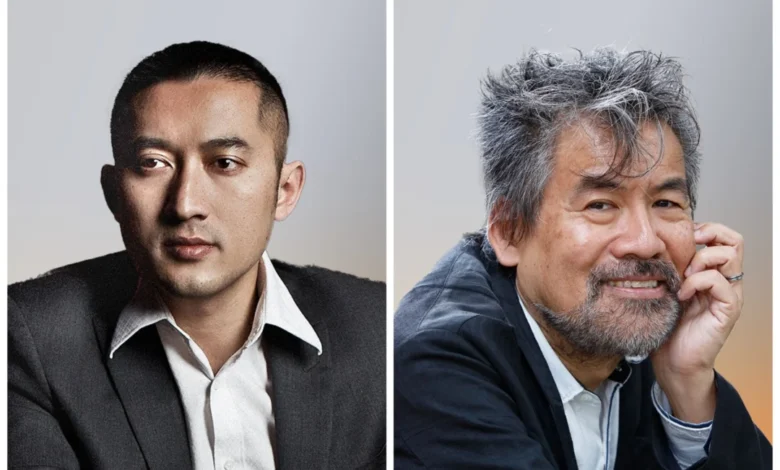
The complex intersections of art, political history, and national identity take center stage in the upcoming China Now Music Festival 2026, headlined by the presentation of the chamber opera The Rift. Featuring a score by contemporary composer Huang Ruo and a libretto by renowned playwright David Henry Hwang, the work explores the turbulent genesis of the Vietnam Veterans Memorial in Washington, D.C., designed by Maya Lin. Conceived initially as part of the John F. Kennedy Center for the Performing Arts’ 50th-anniversary celebrations under the direction of Francesca Zambello, the opera examines how creative vision can act as a catalyst for reconciliation in a fractured society.
Set against the backdrop of the United States’ approaching 250th-anniversary observances and the overarching festival theme of "Chasing Dreams," the production expands upon historical events to probe how historical architecture continues to shape contemporary civic life. Through an exclusive interview with OperaWire, the creative team detailed the developmental timeline, musical structure, and thematic architecture of a work that uses the language of opera to bridge ideological divides.
Genesis of the Project: From Monument to Musical Drama
The conceptual framework for The Rift originated prior to the COVID-19 pandemic, when Washington National Opera Artistic Director Francesca Zambello approached Huang Ruo regarding a special vocal commission to mark the Kennedy Center’s golden anniversary. Recalling the center’s inaugural opening 50 years prior with Leonard Bernstein’s Mass, leadership sought a contemporary vocal work that engaged with the architectural landscape of the nation’s capital. Zambello’s core proposition—exploring the human narratives behind Washington’s marble and stone monuments—prompted Huang to collaborate immediately with long-time creative partner David Henry Hwang.
Hwang, who has shared a professional and personal acquaintance with Maya Lin since their early twenties, suggested focusing on the Vietnam Veterans Memorial. The monument itself consists of two polished black granite walls, each measuring 246.75 feet in length, converging in a sharp V-shape carved into the earth. The structure lists the names of more than 58,000 fallen and missing service members in chronological order of their casualties, rather than alphabetically.
Commissioned and written largely during the height of the pandemic between 2020 and 2021, the opera’s development coincided with a surge in anti-Asian sentiment globally and domestically. Huang noted that the societal hostility of that period initially hindered his creative output. However, consultations with Hwang provided necessary perspective, framing the opera’s core thesis—the navigation of national division and the pursuit of healing—as increasingly urgent for modern audiences. The title itself derives from Lin’s own description of the memorial as a physical and symbolic rift in the earth.
Chronology of Controversy and Creation
The historical timeline surrounding the memorial provides essential dramatic tension for the opera. In 1981, Maya Lin—then a 21-year-old undergraduate student at Yale University enrolled in a course on memorial architecture—submitted her design to an anonymous national competition. Selected by a blind jury of professional artists and architects from over 1,400 entries, Lin’s minimalist, non-traditional design immediately ignited a firestorm of political and aesthetic controversy.
Critics, including several veterans and politicians, decried the subterranean, black-granite design as a "black scar" or a "tribute to defeat." Lin faced intense public scrutiny, navigating the intersecting prejudices of youth, gender, and her Chinese-American heritage. Despite the initial backlash, the memorial opened in November 1982 to immense public resonance, ultimately evolving into one of the most visited and culturally unifying sites in Washington, D.C.
By structuring the opera around this narrative arc, Hwang and Huang trace how a young artist’s singular vision weathered intense sociopolitical resistance to transform public grieving into a site of collective national reflection.
A Four-Voice Exploration of Diverse Perspectives
To translate these complex historical currents onto the operatic stage within logistical and artistic constraints, the creators devised a four-character structure. Utilizing a multi-role casting approach common in theatrical traditions, the four singers portray a wide spectrum of perspectives connected to the Vietnam War and its aftermath.
The vocal lineup and character tracks are distributed across specific vocal classifications to delineate psychological and generational depths:
- Soprano (Maya Lin and supporting tracks): Portrays the young architect alongside multiple roles, including a Vietnamese refugee’s daughter, a contemporary news reporter, and a foundational soldier. The lyric soprano voice captures both the youthful tenacity and profound contemplation of Lin’s early twenties.
- Tenor (The Vietnam Veteran): Represents a service member returning from the battlefield grappling with post-traumatic stress disorder, survivor’s guilt, and the burdens of unexpressed trauma.
- Mezzo-Soprano (The Vietnamese Mother): Represents the immigrant experience and the profound grief of families who suffered losses not officially recognized on the American monument.
- Bass-Baritone (Robert McNamara and supporting tracks): Embodies the former Secretary of Defense and chief architect of the Vietnam escalation, alongside a Yale professor figure. The deeper vocal register conveys the weight of historical legacy, aged reflection, and retrospective questioning.
In addition to the principal soloists, the production incorporates a common soldier’s chorus structured as a standard SATB ensemble, serving as an acoustic representation of collective historical memory.
Musical Architecture and the Motif of the Turbulent Wave
Musically, Huang Ruo constructed a unified sonic landscape underpinned by a recurring leitmotif: the turbulent wave. Introduced at the outset of the opera through interlocking string textures, the musical motif mimics ocean countercurrents crashing against one another. This device symbolizes both the geographic divide between the United States and Southeast Asia and the ideological clashes that characterized the Vietnam era.
The score utilizes advanced compositional techniques to allow contrasting characters to sing simultaneously without losing narrative clarity. In a pivotal dual-stage sequence, the African-American Vietnam veteran and the Vietnamese mother articulate their respective traumas and reactions to the memorial’s construction. Although occupying different physical spaces and representing divergent backgrounds, their interwoven monologues converge into a unified duet, illustrating a shared humanity rooted in survival and loss.
For Huang, a physical site visit to the monument during a cold winter day heavily informed his orchestration. Observing visitors placing roses and handwritten notes within the granite seams reinforced his understanding of the chronological listing of names. Walking deeper into the descending V-shape forces visitors to confront the escalating tally of casualties viscerally, a progression mirrored in the dynamic crescendos and reflective lulls of the score.
Institutional Context: The China Now Music Festival 2026
The presentation of The Rift forms a central component of the China Now Music Festival 2026, an initiative presented by the US-China Music Institute of the Bard College Conservatory of Music. Aligned with nationwide preparations for the United States Semiquincentennial (250th anniversary), the festival’s overarching theme, "Chasing Dreams," explores the perpetual reinvention of the American experiment and the diverse contributions of immigrant communities to its cultural fabric.
Festival organizers emphasize that Maya Lin’s trajectory exemplifies the pursuit of the American Dream through artistic innovation and civic contribution. By chronicling her journey alongside those of veterans and foreign nationals, the opera underscores the capacity of art to foster empathy across cultural divides.
Production and Public Implications
The upcoming performances of The Rift will be presented in a concert, semi-staged format at venues such as Zankel Hall at Carnegie Hall. Directed by Eric Ting with projection design by Shawn Duan, the production integrates historical archival footage, digital projections of the monument’s construction, and theatrical staging to immerse the audience in the narrative.
While Maya Lin has maintained a private personal stance regarding the opera, she has previously acknowledged and offered positive feedback on musical excerpts presented to her in live settings. The creative team hopes that the production will travel further, engaging broader communities in dialogue concerning public monuments, historical accountability, and collective healing.
In a broader societal analysis, works like The Rift highlight the evolving role of contemporary opera as a medium for public discourse. By transforming historical archives and architectural theory into vocal drama, composers and librettists provide modern audiences with alternative frameworks for examining unresolved national traumas. As the United States navigates contemporary sociopolitical polarizations, the central message of The Rift remains pointed: that acknowledging historical fractures—much like descending into the black granite walls of Lin’s memorial—is a necessary prerequisite for civic restoration.