From Barbecue To Black Coffee: A Culinary and Musical Synthesis at the Abergavenny Food Festival


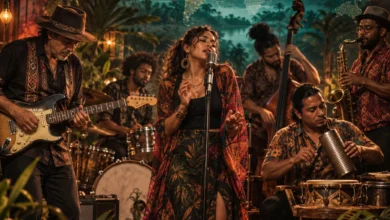
The annual Abergavenny Food Festival, a cornerstone of the Welsh cultural calendar, recently served as the backdrop for a unique cross-disciplinary performance titled From Barbecue To Black Coffee. The event, hosted by jazz broadcaster John Hellings and a guest presenter, explored the historical intersection of gastronomy and jazz. Held within a marquee at the heart of the festival, the performance offered a curated journey through the standard repertoire, specifically focusing on compositions that feature food or drink within their titles. The performance featured live musical accompaniment by soprano saxophonist Martha Skilton and pianist Newman Tai, effectively blending academic music history with the sensory experience of a premier culinary festival.
Contextualizing the Abergavenny Food Festival
Abergavenny Food Festival, established in 1999, has evolved from a local market gathering into a nationally recognized two-day event that draws thousands of attendees. Its mission extends beyond mere consumption; it serves as a platform for discussions on sustainable food production, agricultural innovation, and regional economic development. This year’s edition featured a diverse programming schedule, including the "Kids’ Restaurant" initiative, which aimed to engage younger demographics in conversations regarding the future of eco-friendly food production. This preceding event provided a fitting thematic bridge to the subsequent musical performance, as both sessions emphasized the cultural significance of nourishment.
Thematic Analysis: Food as a Metaphor in Jazz
The selection of music for the From Barbecue To Black Coffee performance was dictated by the thematic constraints of the festival. The program featured six core compositions: Lil Hardin’s Struttin’ With Some Barbecue, Victor Schertzinger’s Tangerine, Vincent Youmans’ Tea For Two, Herbie Hancock’s Watermelon Man, Dizzy Gillespie and Kenny Clarke’s Salt Peanuts, and Sonny Burke’s Black Coffee.
The inclusion of these works allowed for an examination of the social history embedded in jazz standards. For instance, the discussion surrounding Tangerine (1942) highlighted the wartime context of the piece. Originally composed by Victor Schertzinger for the film The Fleet’s In, the song utilized the imagery of South American fruit as an allegory for an alluring persona. This served as a form of wartime escapism, moving away from the stark realities of the 1940s to a more vibrant, exoticized cultural landscape.
The performance also addressed the evolution of linguistic norms within the jazz community. The hosts noted the prevalence of double entendres in mid-century standards, such as Bessie Smith’s I Need A Little Sugar In My Bowl. While such lyrics were commonplace in the blues and early jazz eras, the hosts acknowledged that modern sensibilities have shifted, rendering much of the era’s classic, suggestive repertoire a subject of historical analysis rather than contemporary casual usage.
Historical Evolution of the "Fats" Moniker
A significant portion of the event was dedicated to a sociological review of the "Fats" nickname, which was prevalent among jazz musicians in the early to mid-20th century. Figures such as Fats Waller, Fats Navarro, and Fats Domino, among others, were cited as examples of how the music industry of the past addressed physical appearance.
Historical records indicate that during this era, labels and promoters often utilized such descriptors to build a recognizable, relatable, or sometimes comedic brand identity for artists. However, as the industry transitioned into the late 20th century, these naming conventions largely disappeared. The hosts posited that the current musical climate reflects a broader cultural pivot toward health-conscious lifestyles and a rejection of the body-shaming or reductive labeling that characterized the jazz scene of the 1920s through the 1950s.
Industry Perspectives and Radio Context
John Hellings, a veteran broadcaster associated with Serenade Radio, utilized the platform to emphasize the shifting landscape of jazz distribution in the United Kingdom. Serenade Radio, an internet-based station, provides a specialized format that eschews the news bulletins and commercial interruptions found in terrestrial broadcasting.
The discussion highlighted the challenges currently faced by jazz programming on public service broadcasters like the BBC. According to industry observers, the reduction of dedicated jazz airtime on traditional platforms has forced audiences to migrate toward independent digital stations. This migration allows for a more focused, uninterrupted consumption of the genre, though it also signals a fragmentation of the traditional jazz audience base.
Technical and Historical Trivia
The research presented during the gig revealed several lesser-known facts regarding the provenance of jazz standards:
- Financial Impact: Herbie Hancock’s Watermelon Man is frequently cited as a case study in effective commercial songwriting. The royalties generated from Mongo Santamaria’s version, which included lyrics by Jon Hendricks, provided significant financial stability for Hancock early in his career.
- Plagiarism and Attribution: The session touched upon the contested history of Sonny Burke’s Black Coffee. Evidence suggests that the composition shares strong melodic similarities with Mary Lou Williams’ What’s Your Story, Morning Glory?, a development that underscores the complex nature of musical influence and copyright in the mid-century recording industry.
- Linguistic Ambiguity: The term "chafafa," featured in the lyrics of The Frim Fram Sauce, remains a point of scholarly debate. While performer Diana Krall famously categorized the song’s meaning as "all about sex," the literal definition of the specific terminology remains largely obscure, serving as an example of how jazz lyrics often functioned as coded language.
Audience Engagement and Critical Reception
The event attracted a diverse audience, including noted industry critics such as Ian Mann, publisher of The Jazz Mann blog. The open-air, marquee setting provided a unique performance dynamic; unlike traditional concert halls, the tent environment encouraged "walk-up" engagement from festival-goers. The performers observed that the visibility of the audience—as opposed to the darkened, impersonal atmosphere of a standard venue—fostered a more intimate connection between the musicians and the attendees.
The successful integration of these musical segments with the broader festival themes of sustainability and culinary heritage suggests a growing trend in event planning: the "hybridized festival experience." By moving away from siloed performances, organizers can reach a wider demographic, effectively introducing jazz history to culinary enthusiasts while exposing jazz aficionados to the nuances of modern food science and ethics.
Implications for Future Programming
The success of From Barbecue To Black Coffee suggests that there is a viable market for educational, historical, and lighthearted musical lectures within non-musical festival environments. The event demonstrated that when jazz is presented through a specific, relatable lens—in this case, food—the barriers to entry for uninitiated listeners are significantly lowered.
As the festival circuit continues to evolve, the ability to synthesize disparate interests will likely become a key differentiator for organizers. The Abergavenny Food Festival, by hosting a program that combined live performance with historical narrative and culinary thematic consistency, has set a precedent for how niche genres like jazz can be successfully integrated into broader, mainstream cultural programming.
In conclusion, the event served not only as a performance but as a repository of historical insights. From the evolution of linguistic expression to the commercial realities of the mid-20th-century recording industry, the gig offered a comprehensive, albeit informal, look at the music that has shaped the cultural identity of the jazz era. The positive reception from both the general public and professional critics reinforces the notion that music history remains a vibrant, necessary component of contemporary cultural discourse.