Gabriel Zucker and The Delegation Deliver a Genre-Defying Masterpiece on Their Debut Album

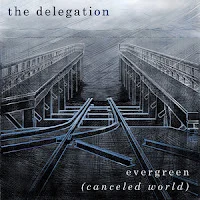
The contemporary jazz and avant-garde music landscape has welcomed a compelling new voice with the arrival of the self-titled debut album from composer, pianist, and vocalist Gabriel Zucker’s large ensemble, The Delegation. Released to critical intrigue, the record represents a meticulous convergence of disparate musical traditions, defying traditional categorization by weaving together elements of modern big band jazz, contemporary classical chamber music, pop sensibilities, avant-garde vocal techniques, and electronic soundscapes.
Zucker, a prominent figure in New York’s creative music scene known for his ambitious composition and collaborative spirit, has crafted a sprawling sonic architecture with The Delegation. The ensemble brings together a roster of gifted instrumentalists and vocalists capable of navigating complex, shifting meters and dense harmonic structures. Rather than relying on standard jazz forms, the album explores cascading auditory textures built from seemingly unrelated musical ideas, bound together by a rigorous intellectual framework and a cohesive emotional narrative.
Main Facts and Musical Composition
At its core, the debut album by The Delegation challenges conventional listening habits through its restless exploration of timbre, form, and genre. The music is characterized by sudden, volatile outbursts juxtaposed with fleeting, delicate melodic fragments that echo and recontextualize earlier passages within the compositions. Listeners familiar with contemporary large ensemble writing will recognize subtle nods to the modern big band tradition, yet these influences are continuously subverted by the introduction of chamber music rigor, avant-garde vocal explorations, and subtle electronic effects.
The harmonic language of the record is similarly fluid. Chords and orchestrations frequently cycle back upon themselves, creating a blurring of instrumental lines where individual timbres dissolve into a unified wash of color. This dynamic interplay creates an ebb and flow of intensity: moments of driving, high-energy propulsion give way to episodes of profound tranquility and suspenseful atmospheric tension.
Despite the meticulous arrangement and conceptual depth underpinning the project, a palpable sense of unpredictability remains at the forefront of the listening experience. This deliberate ambiguity forces the audience to confront fundamental questions about musical structure: Is structural cohesion strictly necessary in modern composition, or is the true value of the work found in complete immersion in the present moment? The album suggests that the journey itself—the acceptance of chaos as a valid structural component—is the primary objective.
Chronology and Development of the Project
The genesis of The Delegation traces back to Gabriel Zucker’s extensive background as a composer and bandleader navigating both the classical composition world and the downtown New York improvised music scene. Having studied composition and philosophy at Yale University and subsequently immersing himself in the vibrant creative music community of Brooklyn, Zucker sought to build a large ensemble capable of executing long-form works that bridge the gap between structured composition and spontaneous expression.
The development of the debut album spanned several years of iterative writing, workshopping, and live performances across various venues in New York City. During this developmental phase, Zucker refined the personnel of The Delegation, curating a collective of musicians whose technical proficiency and stylistic versatility could handle the demanding scores. The recording sessions brought together diverse sonic forces, capturing the raw energy of live performance alongside the precision of studio production.
The trajectory of the album culminates definitively in its final track, titled “Yellow Paint (Summaries II) / End Of Time (Canceled II).” Serving as the structural and emotional anchor of the record, this closing piece synthesizes the myriad musical threads introduced throughout the project. It is within this concluding movement that the album’s overarching thesis becomes fully manifest: that systemic beauty can emerge directly from chaos, and that profound artistic expression is ultimately achieved through the unification of disparate elements.
Supporting Data and Ensemble Dynamics
The scale of The Delegation’s debut is reflected not only in its stylistic breadth but also in the compositional architecture required to sustain such a large-scale project. Featuring an expanded lineup of horns, rhythm section, strings, and dynamic vocalists, the ensemble operates as a micro-orchestra designed for the 21st century.
Data regarding modern independent jazz and avant-garde releases indicate a growing appetite for boundary-pushing projects that refuse to adhere to radio-friendly formats or traditional genre boundaries. Albums of this scale, which often feature multi-movement structures exceeding ten to fifteen minutes per track, rely heavily on dedicated independent distribution networks, community-driven funding or artistic grants, and critical word-of-mouth to reach niche global audiences. The Delegation’s entry into this market highlights the ongoing viability of ambitious, long-form composition in contemporary music.
Furthermore, the integration of electronics and effects within an acoustic large ensemble setting reflects broader production trends in modern jazz. Composers are increasingly utilizing signal processing, live looping, and synthesized textures not merely as novelty additions, but as core compositional voices that interact directly with traditional brass, woodwinds, and percussion.
Critical and Official Reception
While large ensemble jazz and avant-garde chamber music occupy a specialized sector of the broader music industry, early critical assessments of Gabriel Zucker and The Delegation have emphasized the project’s intellectual rigor and emotional resonance. Reviewers have praised Zucker’s ability to manage a vast ensemble without losing the intimate nuances of individual performers.
Colleagues and contemporary composers within the creative music community have noted that projects of this ambition require a rare combination of compositional clarity and trust in the ensemble. By granting improvisers the space to interpret dense harmonic maps, Zucker allows the music to breathe organically despite its rigid underlying architecture. Reactions from listeners and critics alike center on the album’s refusal to offer easy resolutions, instead rewarding attentive listening through its complex narrative arcs.
Broader Impact and Industry Implications
The release of The Delegation’s debut album carries significant implications for the future trajectory of contemporary large ensemble music. As traditional commercial boundaries continue to dissolve, works that seamlessly integrate jazz, classical, electronic, and vocal traditions are becoming vital testing grounds for the evolution of musical composition.
By demonstrating that complex, multi-stylistic works can maintain both intellectual depth and emotional accessibility, Zucker and his ensemble provide a blueprint for contemporary artists operating outside mainstream commercial parameters. The album underscores the relevance of long-form conceptual recording in an era dominated by single-track streaming algorithms, proving that listeners remain receptive to immersive, album-length artistic
journeys.
Ultimately, Gabriel Zucker’s The Delegation has established a formidable presence in modern music. Through its fearless embrace of stylistic pluralism and structural audacity, the debut record stands as a testament to the power of organized chaos, offering a visionary listening experience that resonates long after the final notes fade.