Germany and Austria Push for Forced European Ownership of TikTok Alongside Strict New AI Copyright Legislation

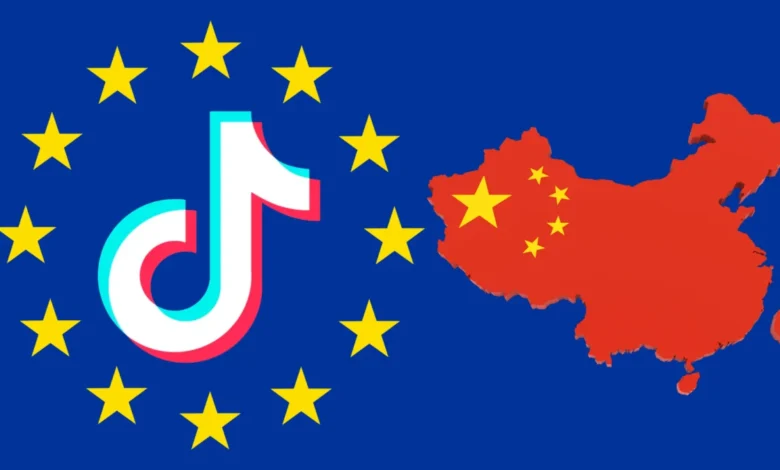
Culture ministers from across the European Union have convened in Brussels for a high-stakes two-day summit, arriving at the negotiating table amid a wave of intense policy proposals spearheaded by Berlin and Vienna. In a joint diplomatic initiative presented just ahead of the meetings, the governments of Germany and Austria have formally introduced a sweeping proposal aimed at forcing TikTok’s European operations into a localized ownership model. Under this ambitious framework, the short-form video platform’s European branch would be restructured in a manner mirroring the operational transformation of TikTok USA, where ultimate control rests securely in the hands of domestic investors.
The joint proposal, championed by German Culture Minister Wolfram Weimer and Austrian Digitalisation Minister Alexander Pröll, explicitly seeks to establish a dedicated "European ownership structure" for the platform. According to the ministers’ official policy statement, the primary objective is to secure absolute regulatory command over user data flows and proprietary recommendation algorithms, thereby fortifying the bloc’s digital sovereignty. As European officials debate the merits of the strategy, the initiative is expected to encounter fierce resistance not only from TikTok’s corporate leadership but also from its Beijing-based parent company, ByteDance.
Concurrently, Germany and Austria are throwing their political weight behind a separate, highly contentious agenda item: a concerted push for the European Commission to draft robust new copyright legislation designed to shield creators from the unchecked expansion of artificial intelligence. Together, these dual policy tracks signal a dramatic escalation in Europe’s ongoing regulatory confrontation with the world’s most influential technology giants.
Background Context and Global Precedents
The intense scrutiny surrounding ByteDance’s ownership of TikTok is far from a localized European phenomenon; rather, it represents the continuation of a multi-year global security debate. For years, governments across Western democracies have harbored deep-seated concerns that the Chinese state could leverage its legal jurisdiction over domestic tech firms to demand access to foreign user data or manipulate algorithmic feeds for geopolitical influence.
These anxieties reached a critical juncture in the United States throughout 2024. Amid mounting bipartisan pressure regarding national security risks, the U.S. Congress passed landmark legislation prohibiting any Chinese-controlled entity from operating the application within the American domestic market. The statute mandated that ByteDance divest its U.S. assets or face a nationwide ban.
Initially, ByteDance executives mounted a rigorous defense, arguing through various international legal channels that maintaining a fragmented operational structure across disparate global jurisdictions was logistically and technologically impossible. However, as legal avenues closed and regulatory walls tightened, that hardline stance ultimately proved to be a negotiating bluff. ByteDance restructured its American operations, selling the TikTok U.S. business to a consortium dominated by American investors. By the time the complex transaction reached finality, Donald Trump had returned to the U.S. presidency, resulting in TikTok USA falling under the stewardship of a network of prominent American investors and political allies—a corporate arrangement that continues to draw its own distinct set of political criticisms regarding transparency and corporate governance.
The Rationale for a European Takeover
Channeling the core security arguments that drove the American legislative intervention in 2024, ministers Weimer and Pröll have articulated an urgent rationale for mirroring those defensive measures within the European Union. In their policy briefing published on the eve of the Brussels summit, the ministers highlighted the immense sociopolitical power wielded by modern recommendation systems.
"Large digital platforms, through their ranking and recommendation systems, significantly influence which content people see, how widely it is shared, and how much attention it receives," the ministers wrote. They cautioned that foreign ownership structures, combined with opaque data access protocols and external algorithmic controls, directly "affect media diversity, the reliability of information, democratic decision-making, and thus the functioning of our participatory society."
The policy statement further underscored the geopolitical stakes, declaring that "if these essential factors of social coexistence are determined by non-European digital companies, which in turn are subject to the control of autocratic actors, then action is clearly needed."
Regulatory Realities and Systemic Risks
To date, TikTok’s European operations have been subject to some of the strictest technological oversight in the world, governed primarily by the General Data Protection Regulation (GDPR) and the sweeping mandates of the Digital Services Act (DSA). European regulatory bodies have not hesitated to enforce these statutes. Notably, the Irish Data Protection Commission levied a staggering €530 million fine against the company after finding it had permitted Chinese-based ByteDance personnel unauthorized access to European user data. Additionally, the European Commission has opened multiple formal investigations into the platform’s compliance under the DSA.
Despite these regulatory milestones, Weimer and Pröll argue that existing compliance mechanisms are fundamentally insufficient. They maintain that ongoing investigations merely illustrate the immediate urgency of the crisis, contending that the systemic risks posed by ByteDance’s overarching corporate structure extend far beyond the narrow scopes of data protection laws and the DSA.
"A fundamental solution should therefore address the root cause of this threat to Europe," the ministers argued, pointing directly to "the Chinese parent company ByteDance, its alignment with Chinese interests, and the resulting, persistently unclear access by the Chinese state to the data of millions of European users." They concluded that establishing a localized ownership model and placing critical technological infrastructure under direct European oversight represents an indispensable step toward genuine digital sovereignty.
Corporate Resistance and the Marketing Implications for the Music Industry
Unsurprisingly, TikTok and its parent organization have met the German-Austrian proposal with immediate hostility. Dismissing the initiative out of hand, a corporate spokesperson for TikTok told reporters that the proposals put forth by Weimer and Pröll possess "zero merit," reiterating the platform’s long-standing position that all allegations regarding undue foreign state access to user information are baseless and unfounded.
The stakes of this regulatory standoff extend far beyond geopolitical strategy, carrying profound economic implications for the global entertainment sector. During the height of the U.S. divestment battles in 2024, temporary disruptions loomed large, culminating in a brief twelve-hour blackout of the application in January 2025. Analysts noted that a prolonged shutdown of TikTok would have dealt a severe blow to the international music industry, which has grown to rely heavily on the platform as a primary engine for music discovery, marketing, and fan engagement.
While the complete collapse of European operations appears unlikely given that ByteDance’s threats of a total market withdrawal ultimately proved hollow in the United States, the brewing legislative battle guarantees a prolonged legal and political struggle across EU member states.
The Parallel Battle Over Artificial Intelligence and Copyright
Beyond the push for corporate restructuring, the Brussels summit is serving as the battleground for another critical digital policy initiative: copyright reform in the age of artificial intelligence. A growing coalition of eleven EU member states has rallied behind a formal demand for the European Commission to draft binding legislation explicitly designed to bolster copyright protections against the rapid, often unauthorized harvesting of creative works by AI developers.
According to policy documents endorsed by culture ministers from the eleven aligned nations, the rapid transition of artificial intelligence from theoretical research to pervasive practical application has triggered profound structural upheavals in human creative expression. The document emphasizes that the transformation of how art and culture are produced, perceived, and experienced makes the "need for action more urgent" than ever before.
At the heart of the dispute is the widespread practice by tech firms of scraping copyrighted text, imagery, and music without authorization or compensation to train generative AI models. While creative industries—most notably the global music business—insist that such uncompensated data ingestion constitutes blatant copyright infringement, major technology developers frequently point to existing text and data mining exceptions within European law to justify their training methods.
Although the landmark EU AI Act introduced preliminary transparency and copyright disclosure requirements, creative sector advocates argue those measures fall woefully short of providing genuine legal protection. Consequently, the coalition of culture ministers has formally requested an accelerated legislative response from the European Commission.
However, navigating this legislative minefield will require overcoming internal political divisions. Observers note that within many national governments across the EU, deep policy fractures persist. Economic and business ministries frequently advocate for pro-innovation policies that favor tech developers and AI startups, while culture departments consistently align with artists, publishers, and rightsholders.
As deliberations continue in Brussels, the ultimate direction of European digital policy remains in flux. Yet, the decisive maneuvers by Germany, Austria, and their allies make it clear that the European Union is preparing to assert unprecedented control over both the corporate architecture of foreign social media monoliths and the intellectual property rights of the continent’s creative workforce.