John R. Miller Releases The Great Unknowing and Explores Social Decay Through Modern Americana

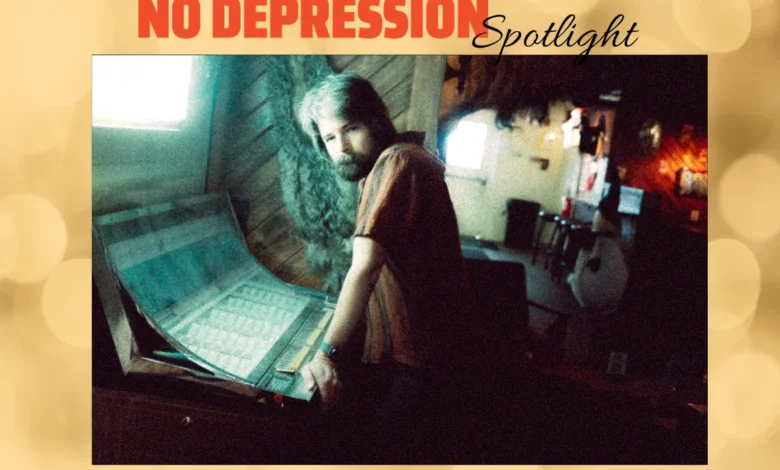
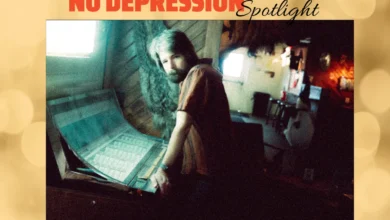
On July 10, 2026, acclaimed singer-songwriter John R. Miller officially released his fifth studio album, titled The Great Unknowing, marking a significant milestone in his career and his first major project since his rise to prominence within the independent Americana scene. Released under the prestigious Rounder Records label, the album arrives alongside the announcement that Miller has been named the Spotlight Artist for July 2026 by No Depression, the long-standing journal of roots music. This new body of work represents a thematic evolution for the West Virginia native, moving away from the purely personal narratives of his earlier discography toward a more expansive, though no less intimate, critique of the modern social and economic landscape.
The Great Unknowing is a ten-track collection that explores the intersection of individual listlessness and systemic failure. Miller, known for his literary approach to songwriting and his ability to blend traditional country influences with a gritty, contemporary realism, utilizes this album to examine what he describes as the "crumbling" of the world as we know it. The project is anchored by its third track, "Tollbooth," which serves as the source of the album’s title and encapsulates the record’s central metaphor: a journey into the unknown amidst the decay of public infrastructure and social contracts.
Thematic Origins and the Philosophy of the Great Unknowing
The title of the album is derived from a specific lyrical passage in "Tollbooth," where Miller sings of a turnpike plaza characterized by "cold fluorescents" and "toilets overflowing." The song depicts a protagonist setting forth into "the great unknowing" under a "big silver sky" with "no exit sign." While Miller has noted that the imagery is intended to be somewhat tongue-in-cheek, critics and cultural analysts have observed that the underlying sentiment is one of "torpid yearning"—a desire for direction in a world that offers none.
This sense of unease is not merely aesthetic; it is rooted in a profound disgust with what Miller identifies as the "moral squalor" of contemporary society. The album frequently touches upon the neglect of human beings in the pursuit of corporate greed and technological progress. Miller’s lyrics suggest that the "social construct" is unraveling, leaving individuals to navigate a world where they are "dimed" for every nickel and billed even when they cannot pay. This critique of class consciousness and the widening gap between the lived reality of the working class and the narrative of national progress is a recurring motif throughout the record.
Chronology of Development: 2023 to 2026
The road to The Great Unknowing began shortly after the tour cycle for Miller’s 2023 release. Over the course of three years, Miller transitioned from a period of heavy touring to a more reclusive writing phase in his home state of West Virginia. This period of reflection was essential for the development of the album’s more pensive and grounded perspective.
- Late 2023 – Mid 2024: Miller began drafting the initial sketches for "Tollbooth" and several other tracks that would eventually form the core of the album. During this time, he focused on capturing the "listless unease" he observed in both rural and urban environments during his travels.
- Early 2025: Miller entered the studio with a select group of collaborators, including long-time musical partners and session musicians familiar with the Rounder Records stable. The goal was to create a sound that felt both "upbeat" in its rhythm and "heavy" in its lyrical content.
- Late 2025: The album was finalized, with Rounder Records scheduling a mid-2026 release to coincide with the summer festival circuit and the No Depression spotlight feature.
- July 2026: The official launch of the album, supported by a multi-city tour and a digital marketing campaign focused on Miller’s evolution as a "humanity-focused" songwriter.
Supporting Data: The Economic Context of Miller’s Critique
The themes of class consciousness and economic disenfranchisement in Miller’s work are supported by contemporary data regarding the state of the American working class. As of mid-2026, economic reports indicate a continued trend of wage stagnation relative to the rising cost of essential services.
According to data from the Bureau of Economic Analysis (BEA) and independent labor groups, the "cost of living crisis" that began in the early 2020s has led to a 15% increase in the number of Americans identifying as "class conscious" or "economically precarious" compared to a decade ago. Miller’s assertion that "people are more class conscious than they were five years ago" aligns with sociological studies showing a shift in public perception regarding the fairness of the economic system.
Furthermore, the imagery of "overflowing toilets" and "cold fluorescents" in "Tollbooth" serves as a poignant commentary on the state of national infrastructure. The 2025 Report Card for America’s Infrastructure highlighted significant deficits in public transit and sanitation systems, particularly in the Appalachian regions that Miller calls home. By grounding his music in these tangible failures, Miller bridges the gap between art and social reality.
Official Responses and Industry Reception
The release of The Great Unknowing has garnered significant attention from both music critics and industry peers. Rounder Records, a label historically associated with the preservation of roots music, has praised Miller for his ability to modernize the Americana genre without losing its traditional soul.
In a statement regarding the release, a spokesperson for Rounder Records noted: "John R. Miller has always been a songwriter’s songwriter. With this fifth album, he has moved beyond the boundaries of traditional country to create something that is essentially liturgy for humanity. It is a record that demands attention, not just for its melodies, but for its message."
No Depression, in their July 2026 Spotlight feature, described the album as "essential listening for a fractured age." The publication emphasized Miller’s ability to find "startling clarity" within the chaos of the current world. Early reviews from other major outlets have similarly highlighted the album’s "unflinching honesty" and its rejection of the "Broadway bar crowd" aesthetic in favor of a more authentic, grounded sound.
Broader Impact and Implications for the Americana Genre
The release of The Great Unknowing signifies a broader shift within the Americana and roots music genres toward more overtly political and social commentary. For much of the early 21st century, Americana was often associated with nostalgia and a romanticized view of rural life. However, artists like Miller are increasingly using the genre’s traditional instruments—acoustic guitars, fiddles, and pedal steels—to deconstruct that very nostalgia.
Miller’s focus on "what is real and true" serves as a challenge to the industry’s tendency toward escapism. By centering the experiences of those who have been "left uncared for in the name of greed," he positions himself as a leading voice in a new wave of socially conscious roots music. This movement is characterized by a refusal to ignore the "moral squalor" of the present, choosing instead to document it with precision and empathy.
The implications for Miller’s career are equally significant. As he moves into the next phase of his career, The Great Unknowing establishes him as a mature artist capable of handling complex societal themes. His work is increasingly being compared to that of legendary songwriters like Townes Van Zandt or Guy Clark, who similarly balanced poetic lyricism with a stark, often uncomfortable, realism.
Conclusion: The Path Forward
As John R. Miller embarks on his 2026 tour, the resonance of The Great Unknowing is expected to grow. The album’s ability to capture the "listless unease" of the mid-2020s ensures its place as a definitive cultural artifact of its time. Miller’s dedication to grounding himself in "what is real and true" provides a blueprint for other artists seeking to navigate an increasingly uncertain world.
The Great Unknowing is more than just a collection of songs; it is a resolute history of the unravelling of the social construct. Through his partnership with Rounder Records and the platform provided by No Depression, Miller has ensured that his critique of greed and his call for human care will reach an audience hungry for authenticity. In an era where many feel they have lost their grip on reality, Miller’s latest work offers a necessary, if unsettling, clarity.
Related posts: