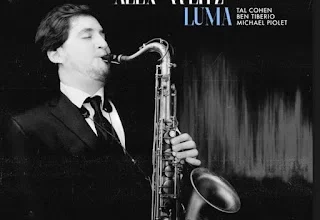
The current landscape of jazz music continues to be defined by a vibrant interplay between cutting-edge avant-garde experimentation and the preservation of foundational historical works. From the blistering spiritual free jazz of European ensembles to the meticulous restoration of mid-century American classics, the latest slate of recordings reflects an industry in the midst of a productive evolution.
Contemporary Voices and Experimental Frontiers
At the forefront of modern improvisational music is Maca Conu, led by pianist Jonas Cambien. Since its inception in 2021, the ensemble has garnered significant attention for high-intensity live performances. Their sophomore album, released via Sonic Transmission, serves as a masterclass in spiritual free jazz, utilizing a quintet featuring Signe Emmeluth on saxophones and Guro Kvåle on trombone. The project’s success mirrors a broader trend where European jazz collectives are increasingly blending abstract compositions with rebellious, high-energy hooks to engage a younger, more diverse audience.
Similarly, the Mitch Marcus Quintet offers a glimpse into the future of 21st-century jazz with their digital release, InAround. By integrating the tenor saxophone of Marcus with the distinct sound explorations of guitarist Jeff Miles, the group challenges traditional quintet structures. This shift toward "startling new music" suggests that the boundaries between post-bop, rock, and ambient soundscapes are becoming increasingly porous.
In the realm of global fusion, Tal Mashiach’s Who’s Around? (Anzic Records) demonstrates how New York’s creative-music community is synthesizing disparate cultural traditions. Mashiach’s sophomore album transitions seamlessly between Greek zeibekiko, Brazilian samba, flamenco, and classical motifs. The inclusion of vocals in Greek and Georgian underscores a growing movement of jazz musicians who view the genre not as a fixed American tradition, but as a global language capable of absorbing local folk identities.
Vocal Jazz: Tradition and Personal Narratives
Vocal jazz remains a cornerstone of the industry, with several artists using the medium to explore personal and historical themes. Virginia MacDonald, a Juno Award-winning clarinetist, is transitioning into a leadership role with her debut album In Search Of (Cellar Live). Backed by an ensemble including pianist Geoffrey Keezer and vocalist Laura Anglade, MacDonald’s work is being hailed by critics like Michael Dease as a visionary redefinition of the jazz clarinet. Her approach reflects a meticulous decade-long development process, emphasizing the importance of long-form compositional maturity.
Valerio Marino’s Under My Skin – A Frank Sinatra Songbook provides a different angle on vocal performance. By revisiting eleven Sinatra classics, Marino seeks to highlight the compositional depth of the Great American Songbook. This is a recurring theme in modern releases, where contemporary artists attempt to reclaim traditional standards, imbuing them with personal, familial significance—in Marino’s case, honoring his father’s influence on his early musical development.
Chris McNulty’s Soul Journey further illustrates the trend of personal introspection. Spanning her career as a veteran performer, the album has received significant critical acclaim, including a five-star review in The Weekend Australian. Her ability to bridge the gap between original compositions and Great American Songbook standards demonstrates the enduring commercial viability of vocal jazz when executed with a strong, unified artistic vision.
Historical Reissues and the Preservation of Legacy
The jazz industry continues to lean heavily on the preservation of its mid-century zenith. Waxtime’s recent reissues of Charles Mingus’s Blues and Roots and Charles Mingus Presents Charles Mingus serve as a reminder of the genre’s foundational brilliance. Blues and Roots (1959) remains one of the most significant recordings in jazz history, while Charles Mingus Presents Charles Mingus captures the bassist’s brief but fruitful collaboration with Candid Records, facilitated by the legendary writer Nat Hentoff.
The Modern Jazz Quartet’s Pyramid (20th Century Masterworks) offers another essential case study in historical preservation. Emerging from the rhythm section of the Dizzy Gillespie Big Band, the MJQ represented a unique fusion of bebop and classical structure. These reissues provide necessary context for modern listeners, tracing the lineage of today’s complex improvisational structures back to the masters of the 1950s and 60s.
Likewise, the reissue of Tenor Conclave, featuring Hank Mobley and John Coltrane, provides a window into the 1956 transitional period for Coltrane, just years before his monumental quartet work. These archival releases are not merely nostalgic; they are essential pedagogical tools for a new generation of musicians, providing direct access to the techniques that defined the genre’s evolution.
Cross-Cultural Exploration and Classical Integration
The integration of classical textures within jazz continues to yield sophisticated results. Ross Margitza’s Discovery utilizes the Soha String Quartet alongside a jazz trio, bridging the intimacy of chamber music with the spontaneity of blues. This structural approach—mixing the harmonic colors of strings with the rhythmic drive of jazz—is mirrored in the work of Carla Marciano, whose album Daydreaming features a string orchestra to support her alto and sopranino saxophone performance.
Benedicte Maurseth and Ensemble neoN’s Always and Never the Same (Aurora Records) pushes these boundaries further, incorporating the Hardanger fiddle—a traditional Norwegian instrument—into a contemporary ensemble setting. This project, which originated at the Ultima Festival in Oslo, underscores a growing trend of "folk-jazz" where regional instrumentation is used to expand the timbral palette of the genre.
Industry Implications and Future Outlook
The current release cycle highlights several critical shifts in the jazz economy:
- Genre Fluidity: The success of artists like Tal Mashiach and Lina Nyberg confirms that "jazz" is now a catch-all for a wide spectrum of improvised, global, and experimental music. The market is increasingly rewarding artists who can synthesize multiple cultural influences into a cohesive, personal statement.
- The Rise of Independent Production: Many of these artists, including Simon Moullier and Rintaro Mikami, are increasingly taking control of their production and distribution. This trend allows for more conceptual, less commercially compromised projects—such as Mikami’s song cycle on memory and time—to find dedicated niche audiences.
- Sustainability and Social Commentary: The work of Matt Wilson’s Good Trouble serves as a poignant example of jazz as a vehicle for social commentary. By framing "love" as a form of gentle protest, Wilson aligns his music with the long tradition of jazz musicians addressing the political climate, proving that the genre remains an active participant in public discourse.
- The Value of the "Long Form": Despite the industry’s push toward singles and playlist culture, the majority of the aforementioned albums are structured as cohesive, thematic works. Whether it is Myra Melford’s project inspired by Cy Twombly’s paintings or Anna Maurer’s exploration of human interaction in an AI-driven world, there is a clear demand for albums that function as complete, immersive experiences.
Conclusion
The current state of jazz is characterized by a healthy tension between the weight of history and the desire for innovation. Whether through the preservation of the Mingus and MJQ catalogues or the daring, world-music-infused compositions of contemporary leaders like Mashiach and Meier, the industry continues to provide a vital platform for creative expression. As technology continues to evolve, the emphasis remains on the human element—the "warmth and authenticity" championed by Anna Maurer—ensuring that jazz remains a human-centric endeavor in an increasingly automated world. These releases, collectively, offer a snapshot of a genre that is not only surviving but actively expanding its boundaries to reflect the complexity of modern life.
Related posts: