The intersection of generative artificial intelligence and creative artistry has reached a flashpoint, with legendary musician and Chic bandleader Nile Rodgers finding himself at the center of a growing digital debate. Following the announcement of his latest project—a reimagined music video for "The Christmas Song," a 2020 charity collaboration with soul singer Rebecca Ferguson—Rodgers has faced significant backlash from fans and industry observers regarding his use of AI-driven production tools. While Rodgers maintains that the technology is a logical evolution of his long-standing embrace of musical innovation, critics argue that the reliance on synthetic imagery detracts from the human craftsmanship expected of a Rock and Roll Hall of Famer.
A Chronology of the Controversy
The friction began in mid-November 2026, when Rodgers took to social media to share a behind-the-scenes look at his production process. The musician posted footage of himself inside a photogrammetry rig, a specialized system used to capture 3D data from physical objects or people. In his caption, Rodgers expressed genuine enthusiasm, framing the project as a "next level" artistic endeavor inspired by the high-tech, immersive visual experiences he witnessed at the Eagles’ residency at the Las Vegas Sphere.
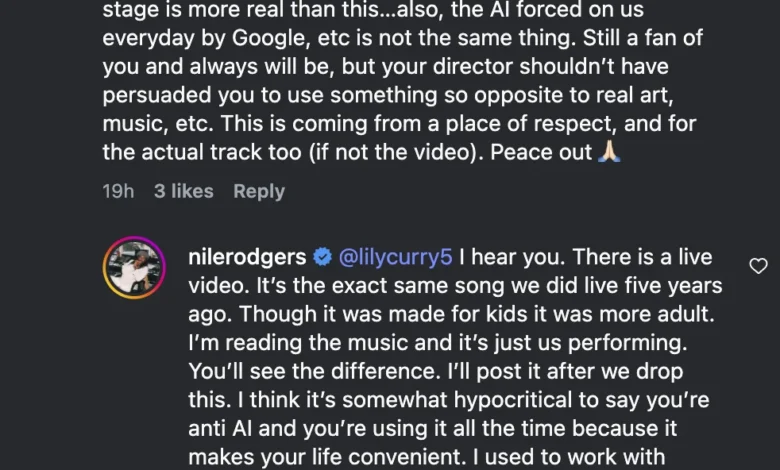
The response from his online audience was swift and largely negative. Commenters quickly labeled the imagery "AI slop," suggesting that the reliance on such tools signaled a decline in artistic standards. Rodgers, known for his direct engagement with fans, responded to the critiques by drawing a parallel between AI and traditional Computer-Generated Imagery (CGI). He urged his detractors to withhold judgment until the final work was unveiled, suggesting that their reactions were premature and based on a misunderstanding of his creative workflow.

As stills from the upcoming video began to circulate, the debate intensified. The visuals, which feature photogrammetric recreations of Rodgers and Ferguson alongside various "fuzzy creature" entities, exhibited common traits associated with generative AI, including inconsistent graphic textures, uncanny character design, and typographical irregularities in the title cards. Despite the mounting criticism, Rodgers remained steadfast, asserting that the production was the result of meticulous planning rather than mere automation.
The Argument for Efficiency and Creative Control
In a series of exchanges on Instagram, Rodgers provided a detailed defense of his methodology. He clarified that the project involved a structured creative process similar to traditional filmmaking, utilizing "mood boards and storyboards" to guide the generative output. According to Rodgers, the decision to utilize AI was, in part, an economic one. He estimated that a traditional production of comparable scope would have incurred costs upwards of $100,000—a significant barrier for a charitable release.
Rodgers’ defense also veered into the broader societal integration of AI, which he described as an unavoidable facet of modern life. He challenged his critics by pointing to their own daily digital habits, noting that the platforms they used to voice their dissent—such as Instagram—rely heavily on algorithmic AI. By characterizing the public’s resistance as "hypocritical," Rodgers attempted to pivot the conversation from the aesthetics of his music video to the ubiquity of machine learning in everyday technology, from GPS navigation to search engine optimization.
Historical Context: Rodgers and the Evolution of Studio Tools
This is not the first time Nile Rodgers has positioned himself as an advocate for disruptive musical technology. Throughout his storied career, he has been a vocal supporter of the democratization of music production. In 2023, he famously dismissed concerns regarding generative AI, comparing the current skepticism to the historical pushback against drum machines and sequencers in the 1970s and 80s.

During the dawn of the electronic music era, many traditionalists argued that drum machines were "fake" or "soulless." Rodgers, however, viewed these tools as essential enablers, arguing that they allowed artists who lacked access to expensive studio bands to bring their creative visions to life. From his perspective, the current controversy surrounding AI-generated visuals is a re-run of a familiar cultural cycle: the initial resistance to new technology, followed by eventual normalization once the utility of the tool becomes apparent.
The Technical and Ethical Divide
The core of the disagreement lies in the distinction between "utility machine learning" and "generative design." Industry analysts note that while Rodgers is correct in stating that most modern internet users rely on AI—such as through Google Maps or recommendation algorithms—there is a palpable difference between using data to organize information and using it to synthesize artistic content.
Generative AI operates by training models on massive datasets of existing images, which raises concerns regarding intellectual property and the displacement of creative labor. While Rodgers argues that his team "created everything" by directing the AI, critics argue that the end product lacks the "human touch" that defined the work of his earlier career. The presence of "hollow-feeling" creatures and incoherent graphic elements in the leaked stills suggests that even when guided by human vision, the current limitations of generative software can result in an uncanny or diminished aesthetic.
Broader Industry Implications
The backlash against Rodgers serves as a microcosm of the tension currently gripping the entertainment industry. Major studios, record labels, and independent artists are currently navigating a legal and ethical minefield regarding the use of AI. SAG-AFTRA and the Writers Guild of America (WGA) have already secured landmark protections regarding the use of AI in film and television, yet the use of these tools in promotional materials, music videos, and independent projects remains largely unregulated.

The economic argument presented by Rodgers—that AI makes high-quality visual storytelling more accessible for smaller budgets—is a compelling one for independent creators. However, it also highlights the potential for a "devaluation" of traditional visual effects (VFX) and illustration. If artists of Rodgers’ stature shift toward generative solutions, the industry may see a further contraction in opportunities for human animators and designers.
Fact-Based Analysis of the Discourse
The conflict highlights a fundamental disconnect between the artist’s intent and the audience’s reception. For Rodgers, the project is an experiment in new tools, a way to expand his creative output without the prohibitive costs of traditional high-budget production. For his audience, the project represents a betrayal of the organic, high-fidelity artistry they associate with his legacy.
The "whataboutism" utilized by Rodgers in his defense—citing the user’s presence on Instagram as proof of their complicity in AI adoption—has been criticized by media scholars as an oversimplification. Being a passive user of a platform and being an active creator of content that replaces traditional labor are two distinct categories of participation in the digital economy. This nuance is central to why the backlash has been so persistent; fans feel that the artist is conflating the infrastructure of the internet with the creative choices he makes as a content producer.
The Future of "The Christmas Song"
As the release date for the full project approaches on November 20th, the music industry will be watching closely to see how the final product is received. If the video succeeds in delivering a compelling narrative, it may validate Rodgers’ assertion that AI is simply another tool in the painter’s palette. If, however, the technical flaws and "hollow" aesthetics persist throughout the final cut, it may reinforce the narrative that generative AI is not yet a suitable replacement for traditional, human-led creative direction.

Ultimately, the case of Nile Rodgers underscores the ongoing struggle to define the boundary between technology and artistry. While the debate is unlikely to be resolved by a single music video, it provides a valuable look at how legacy artists are grappling with the rapid evolution of the tools at their disposal. Whether this project is remembered as a pioneering leap into the future or a misstep in the application of modern technology, it remains a significant touchpoint in the broader, ongoing conversation about the future of creativity in the age of artificial intelligence.
The controversy also invites a necessary conversation about transparency. In an era where AI can produce near-perfect photorealism, the audience’s reaction suggests a growing desire for clarity regarding how media is produced. As artists continue to experiment with these platforms, the disclosure of AI usage—and the degree to which it was involved in the creation of the work—will likely become a standard expectation for fans who value the provenance of the art they consume.
In the final analysis, the friction surrounding Rodgers’ project is not merely about a music video; it is about the shifting expectations of what constitutes "work" in the digital age. As the industry moves forward, the dialogue between artists like Rodgers and their audiences will continue to shape the norms and ethics of a landscape transformed by synthetic intelligence. Whether through refinement of the technology or a return to traditional methods, the pursuit of the "next level" of art continues to be a complex, contentious, and deeply human endeavor.