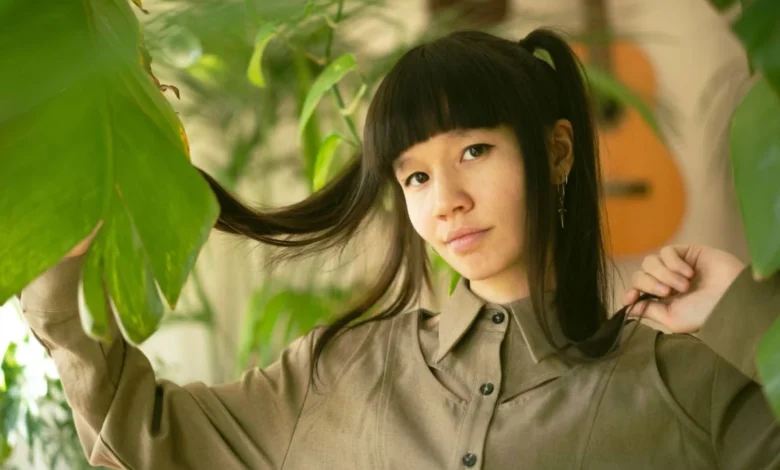
Electronic music producer and multidisciplinary sound designer Lindsey Wang, widely known by her alias Polygonia, has partnered with software developer Ableton to release the official project session for her latest single, “Neon Oracle.” The collaboration offers producers, students, and sound design enthusiasts an unfiltered look into the Munich-based artist’s creative workflow, utilizing the advanced digital tools available in Ableton Live 12.1. Alongside the project file download, Wang reflects on her classical upbringing, her transition into electronic music production, the vibrant underground culture of Munich, and her technical approaches to crafting rich, organic sonic landscapes.
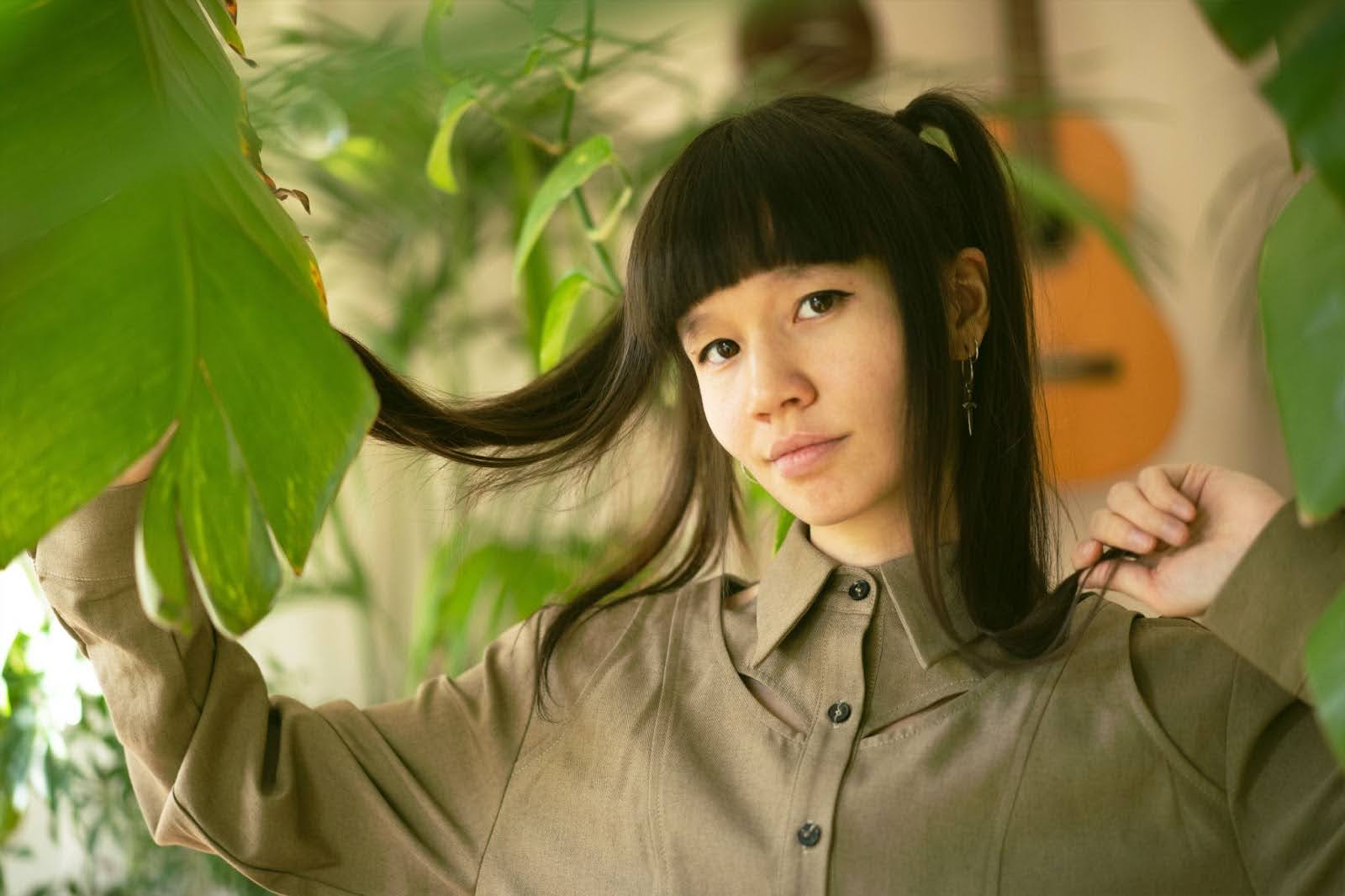
The initiative grants public access to the multi-track session of “Neon Oracle,” a composition that departs from Wang’s signature hypnotic techno to explore UK-influenced bass music, ambient textures, and intricate rhythm programming. The release highlights how modern digital audio workstations (DAWs) bridge the gap between traditional acoustic instrumentation and complex electronic sound synthesis.
Musical Lineage and Chronological Evolution
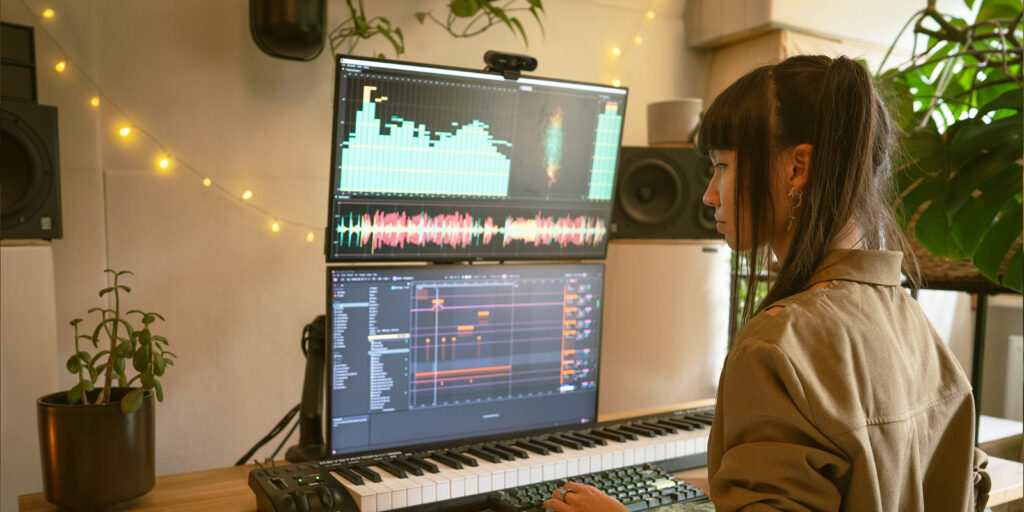
Wang’s journey into the upper echelons of electronic music production is rooted in a lifelong immersion in classical training. Growing up in a musically distinguished family in Germany, her early years were defined by formal instruction. Her father performed as a professional violinist within the Shanghai Quartet and prominent German orchestras, while her mother managed operations for a major European sheet music publisher. Furthermore, her grandfather served as a university-level clarinet professor, establishing a rigorous acoustic foundation that later influenced Wang’s graduation from a specialized music high school focused heavily on the violin and piano.
Despite this traditional academic background, teenage exposure to mainstream radio, MTV, and global pop music introduced Wang to electronic production methodologies. Rather than focusing on lyrical themes, she became entirely consumed by the mechanics of audio engineering and beat construction. The pivotal turning point occurred when peers introduced her to foundational UK dubstep records. The genre’s alien sound design and sub-bass weight represented a paradigm shift away from her classical repertoire, sparking a transition into electronic composition.
In the years following her discovery of underground club music, Wang expanded her stylistic horizons by exploring left-field hip-hop, IDM, and left-field electronic aesthetics popularized on internet-based music platforms. Her creative trajectory shifted decisively toward minimalist and hypnotic club music after she attended the Freqs of Nature Festival, where she witnessed seminal performances by techno innovators Cio D’or and Rrose. The stripped-down, psychedelic nature of their sets provided a conceptual bridge, aligning the trippy qualities of psytrance with the sophisticated structural restraint of contemporary European techno. This revelation galvanized her entry into the live performance circuit and studio production.
The Munich Underground Scene and Collective Culture
While Berlin maintains its status as the undisputed global capital for electronic music culture, Wang remains a vocal champion of Munich’s distinct and tightly knit creative ecosystem. Rather than relocating to the capital—a migration path taken by many aspiring DJs and producers—Wang credits her hometown’s smaller, less saturated community for fostering genuine artistic collaboration and reduced professional pressure.
Munich’s underground infrastructure is anchored by key institutions such as the Blitz Club, renowned for eclectic electronic music programming, and Zirka Space, which houses the independent broadcasting platform Radio 80000. These venues provide platforms for local collectives to thrive without the hyper-competitive climate often associated with larger metropolitan music hubs.
Wang’s organizational efforts within the community are reflected in her dual label management approach. She acts as a core member of the IO collective, an enterprise established alongside childhood friends to serve as a multidisciplinary platform for personal expression, music releases, and experimental audio software development. Simultaneously, she operates QEONE, an independent digital imprint dedicated to championing emerging, under-the-radar electronic artists. By prioritizing digital-first releases over expensive physical pressings, QEONE bypasses industry gatekeeping to elevate fresh talent, ensuring the broader electronic music landscape remains dynamic and diverse.
Technical Anatomy of Neon Oracle
The genesis of “Neon Oracle” can be traced directly to a live performance in Brighton for the DNO Records Mine event series, a showcase dedicated to deep dubstep and heavyweight sounds. Inspired by the physical impact of the venue’s sound system and her desire to approach dubstep through the lens of a digital techno DJ, Wang returned to the studio with a renewed sense of experimentation. Leveraging the updated features of Ableton Live 12.1, she constructed a track defined by precise sound design, algorithmic scales, and acoustic resampling.
The production of “Neon Oracle” relies on several core instruments and audio effects native to Ableton Live 12.1, showcasing Wang’s philosophy of generating complex sonic structures from minimalist device chains:
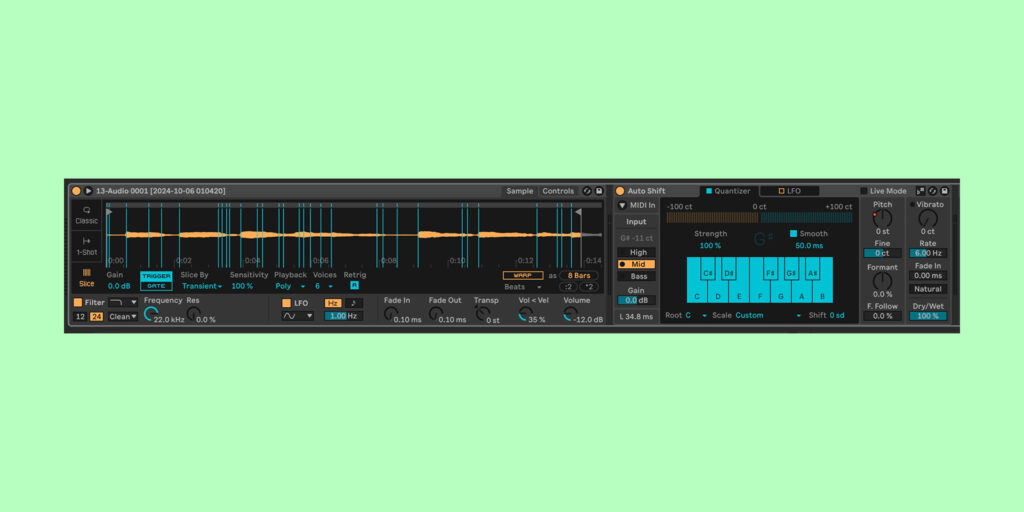
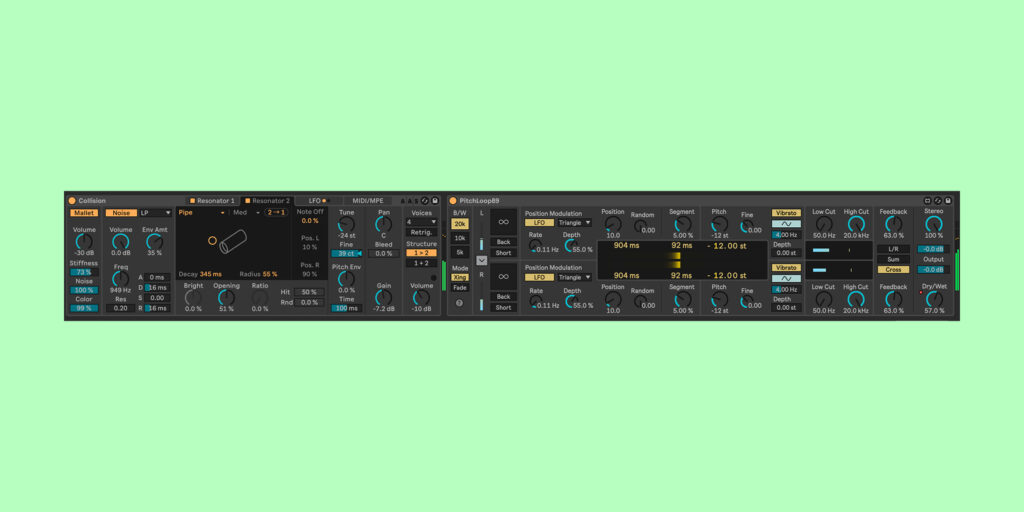
- Bell Textures via Collision and Pitchloop89: To craft the ethereal, bell-like opening melodies without relying on her standard muscle memory with Operator, Wang utilized Ableton’s physical modeling synthesizer, Collision. This was paired with the Pitchloop89 effect unit, shifting the pitch down an octave with a 57% wet/dry balance to add atmospheric depth while retaining the clarity of the initial transient.
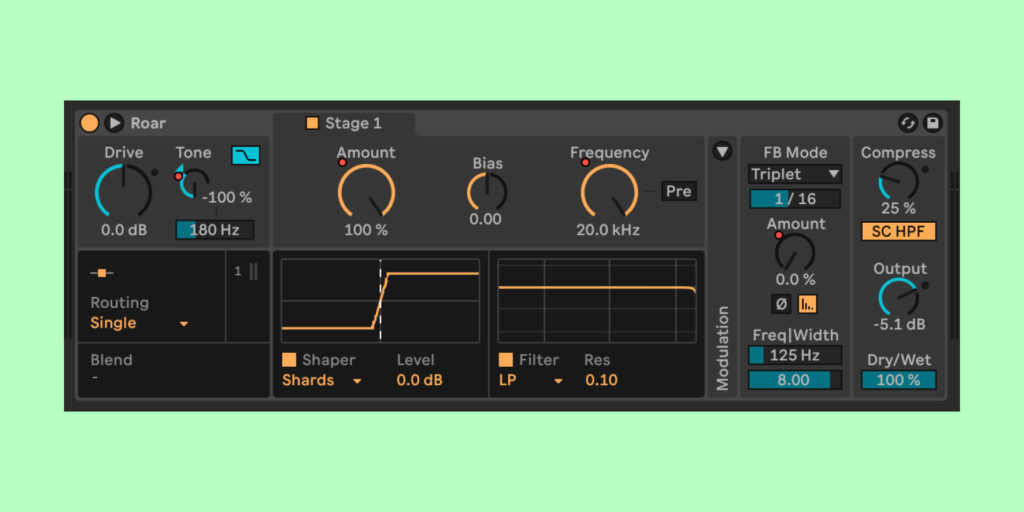
- Distorted Kick Processing through Roar: Breaking away from her historical use of the native Amp device, Wang implemented Ableton’s multi-algorithm distortion unit, Roar, on the track’s low-end foundation. By automating the Feedback parameter across the timeline, she introduced continuous wave-like tension and movement into the rhythmic low frequencies.
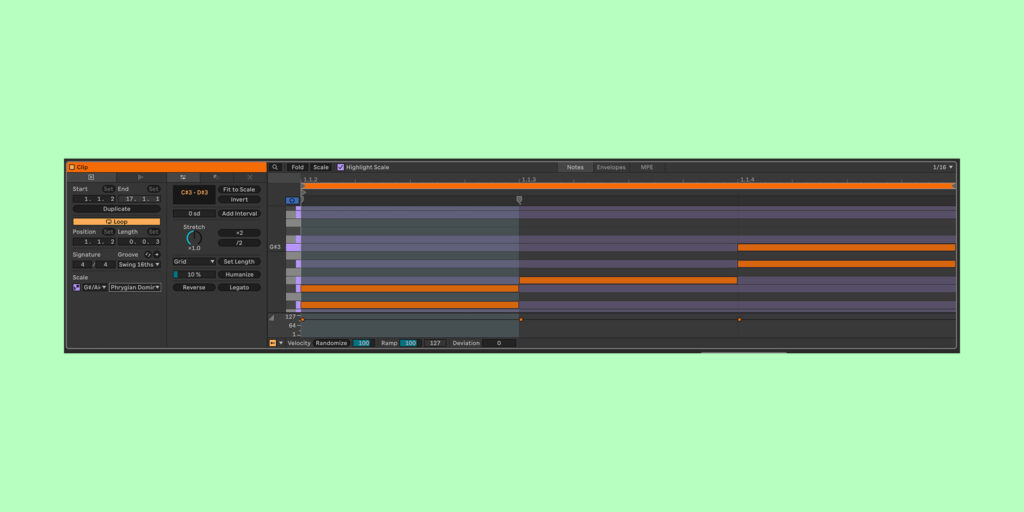
- Advanced Harmonic Frameworks with Meld: The track’s central arpeggiated motif utilizes Meld, a dual-engine MPE-compatible synthesizer, programmed manually rather than via automated MIDI generators. To achieve dark harmonic tension, Wang bypassed traditional minor scales in favor of the Phrygian Dominant scale—a church mode noted for its mysterious, unsettling intervals and major second intervals that introduce subtle dissonance.
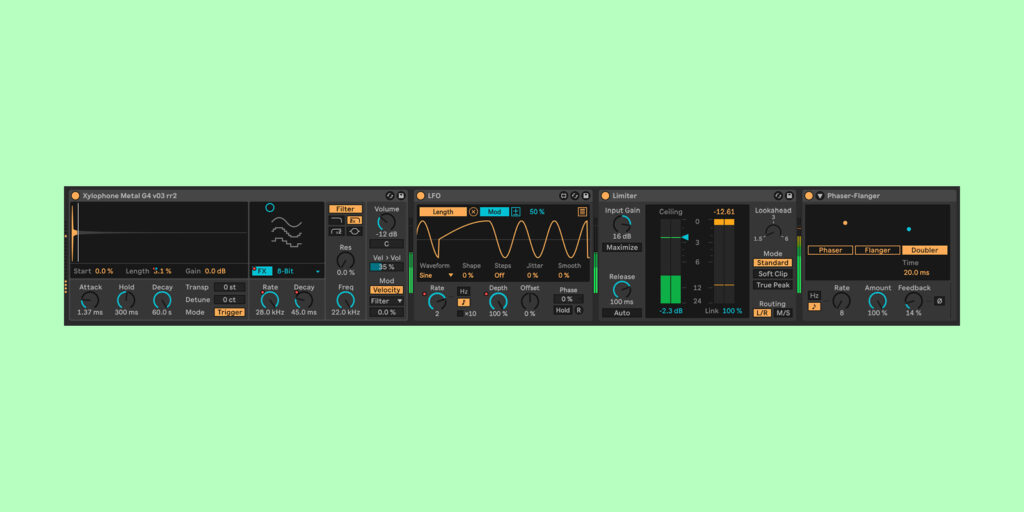
- Humanizing Drum Sampler and Granulator III: Rhythmic percussion elements incorporate the updated Drum Sampler device, where a rapid sine LFO subtly modulates sample length to emulate the organic irregularities of acoustic string instruments like a violin pizzicato. Additionally, acoustic bell textures were resampled and processed through Granulator III, manipulating grain size and envelope settings to produce warm, generative ambient layers.
- Organic Acoustic Overtones: To counteract purely synthetic timbres, Wang integrated a traditional Chinese bamboo flute passed down from her childhood. Recorded and layered into the mix as a finishing touch, the instrument injects unquantized human emotion and acoustic overtones into the digital arrangement.
Industry Implications and Future Outlook
The release of the “Neon Oracle” Ableton Live Set carries broader implications for music education and digital democratization within electronic music production. By opening her project files to the public—restricted strictly to educational use for holders of a Live 12.1 Suite license or trial—Wang and Ableton provide a transparent blueprint for modern hybrid production. This open-source approach empowers aspiring producers to dissect sophisticated audio routing, multiband distortion staging, and advanced scale mapping, lowering the technical barrier to entry for complex sound design.
As the industry continues to value transparency and direct artist-to-fan educational content, initiatives of this scale validate software-centric workflows as legitimate artistic mediums capable of rivaling hardware-heavy setups. With 2025 on the horizon, Wang’s professional trajectory points toward continued cross-disciplinary expansion. She is currently slated to release her second full-length studio album, a project that promises to merge her distinctive vocal performances with acoustic instrumentation and club-oriented electronic arrangements, followed by a headline live performance at the upcoming Outlook Festival.
Related posts: