The 2026 FIFA World Cup Halftime Show: A Global Spectacle Blending Super Bowl Grandeur with Unique International Flair

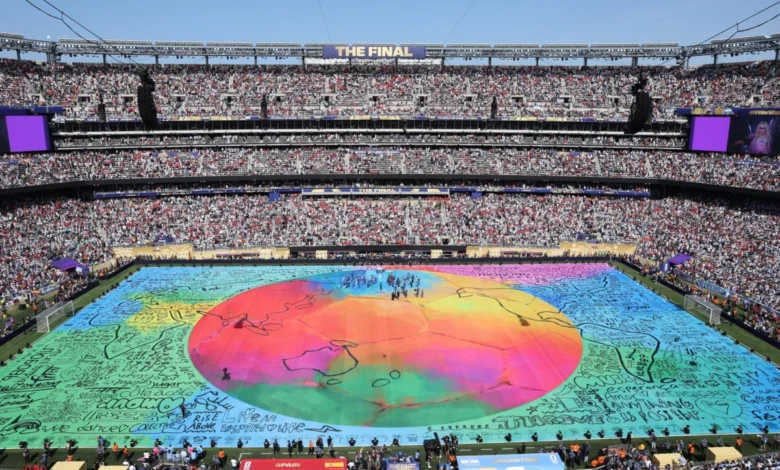
The 2026 FIFA World Cup, culminating in a monumental showdown at MetLife Stadium in New Jersey, witnessed a transformative moment in sports entertainment history: its first major, star-studded halftime show. For decades, the Super Bowl has reigned supreme in North American popular culture, not just for the game itself but for its consistently viral, high-production halftime spectaculars. The decision by FIFA to introduce a comparable entertainment segment for its global football (soccer) final marked a deliberate pivot, reflecting the growing influence of American entertainment sensibilities on international sporting events, particularly when hosted on U.S. soil. This inaugural major halftime show for a tournament dating back to 1930 presented a fascinating hybrid, simultaneously echoing the familiar bombast of a Super Bowl performance while forging a distinct identity through unexpected artistic collaborations and a truly global roster of talent.
Historical Context: The Evolution of Sports Entertainment
The concept of a halftime show in American sports has a rich, albeit evolving, history. The Super Bowl, since its inception in 1967, has always featured halftime entertainment. In its early years, these performances largely consisted of college marching bands, drill teams, and patriotic displays, reflecting a more traditional, community-oriented approach to sports pageantry. Iconic acts like Ella Fitzgerald and Carol Channing occasionally graced the stage in the 1970s, hinting at the potential for star power, but it wasn’t until the 1990s that the Super Bowl Halftime Show began its ascent to a cultural phenomenon. The 1993 performance by Michael Jackson is widely credited with revolutionizing the event, transforming it into a must-watch pop concert that drew millions of non-football fans. Since then, the show has become a coveted platform for the world’s biggest music stars, from Prince and Madonna to Beyoncé and Rihanna, consistently generating massive viewership figures and driving significant engagement across social media platforms. Each year, the Super Bowl Halftime Show reliably secures its place as the most-watched single broadcast in the U.S., often outperforming the game itself in terms of audience reach during that specific time slot.
Conversely, the FIFA World Cup, with its much longer history dating back to 1930, has traditionally approached its opening and closing ceremonies with a different ethos. These events, while often spectacular, have historically emphasized cultural representation, national pride, and thematic storytelling pertinent to the host nation or global unity, rather than a standalone pop music concert in the middle of the final match. Performances typically feature local artists, traditional music, and elaborate choreographies designed to showcase the host country’s heritage and the international spirit of the tournament. While global music stars have participated in World Cup anthems and pre-match performances, the concept of a dedicated, high-budget, mid-game pop music extravaganza akin to the Super Bowl has been absent. The 2026 tournament, co-hosted by the United States, Canada, and Mexico, with the final held in the U.S., provided a unique confluence of factors that made this shift not only possible but perhaps inevitable. The American market’s insatiable appetite for grand, celebrity-driven entertainment presented an undeniable opportunity for FIFA to elevate the World Cup’s global appeal further.
The 2026 FIFA World Cup Final: A Day of Unprecedented Musical Integration
The day of the 2026 FIFA World Cup final at MetLife Stadium was meticulously orchestrated to blend the traditional solemnity and global gravitas of the tournament with the electrifying entertainment spectacle North American audiences have come to expect. The musical programming was extensive, spanning pre-game ceremonies, a "closing ceremony" performance, and the main halftime show, each segment contributing to a multifaceted entertainment tapestry.
Pre-Game and "Closing Ceremony" Performances:
The day’s festivities commenced with an immediate departure from the Super Bowl’s traditional pre-game solemnity. While the Super Bowl typically features emotionally charged renditions of "The Star-Spangled Banner," "America the Beautiful," and "Lift Every Voice and Sing," focusing on vocal prowess and patriotic reverence, the World Cup opened with pure, unadulterated spectacle. Streamer IShowSpeed delivered a Busby Berkeley-esque musical number titled "Champions." The performance involved a large ensemble of dancers and musicians moving around an on-field image of the Empire State Building, complemented by dramatic bird’s-eye camera shots showcasing a custom-built soccer ball stage. The song itself, designed to emphatically establish the event, reportedly reiterated "this is the World Cup" no fewer than 27 times, leaving no doubt about the occasion.
Following this high-energy opener, Post Malone, dressed in country-inspired attire but reverting to his rapping roots, debuted a new track, "Chrome Heartbreaker." He then brought out Swae Lee to perform their Billboard Hot 100 No. 1 hit, "Sunflower." This segment, labeled a "closing ceremony" performance, offered a blend that felt less grandiose than a Super Bowl Halftime Show yet more elaborate than a typical Super Bowl pre-game act. It served as an early indicator for American viewers, potentially new to the World Cup’s entertainment style, that the "vibes" of this event would indeed be distinct.
Later, a powerful international collaboration took center stage as Robbie Williams, Nicole Scherzinger, and Laura Pausini harmonized on "Desire (Official FIFA Anthem)." Their emotionally charged performance was set against a backdrop of flags from dozens of nations waving, evoking a strong sense of global unity. This segment, while akin to the gravitas of an NFL kickoff performance, resonated more with the international spirit often seen during the Olympic Games, emphasizing a worldwide rather than purely national sentiment.
The national anthems, a staple of any major sporting event, were presented with a global perspective. Jennifer Hudson delivered a knockout rendition of "The Star-Spangled Banner," a clear nod to American viewers and their ingrained tradition of hearing the U.S. National Anthem before sports games. However, this was swiftly followed by two additional national anthems: Spain’s "Marcha Real," performed instrumentally by a brass band (as it has no lyrics), and Argentina’s national anthem, sung by Maria Becerra. This trio of anthems underscored the international nature of the final, reminding the audience that despite the American venue, the focus remained squarely on the competing nations of Spain and Argentina.
The Main Halftime Show: A Hybrid of Familiarity and Novelty
Curated by Coldplay’s Chris Martin, who himself headlined a Super Bowl Halftime Show in 2016, the main 11-minute FIFA World Cup Halftime Show promised a spectacle designed to bridge cultural divides and entertainment expectations. The lineup was undeniably star-studded, featuring Madonna, BTS, Justin Bieber, Shakira, and Burna Boy, alongside classical powerhouses the New York Philharmonic and the Simón Bolívar Symphony Orchestra, and the delightfully unexpected inclusion of The Muppets’ Electric Mayhem.
Super Bowl-esque Spectacle:
Individual performances within the main show certainly carried the hallmarks of a modern Super Bowl Halftime Show. Madonna, a Super Bowl headliner in 2012, delivered a madcap musical medley of "Music," "Disco Inferno," and "Danceteria" from atop a dune buggy, showcasing her signature theatricality. Shakira, who co-headlined the 2020 Super Bowl Halftime Show with Jennifer Lopez, brought her iconic hip-swiveling energy to "Dai Dai" alongside Burna Boy on the field. K-pop sensation BTS ignited the stage with a pyro-laden performance of their global hit "Dynamite." These acts demonstrated a clear understanding of the "assignment"—to deliver high-energy, visually stunning, and broadly appealing pop performances that are synonymous with Super Bowl entertainment. Their inclusion ensured that American audiences, accustomed to such productions, would find familiar ground within the new World Cup context. The enduring popularity of the Super Bowl Halftime Show, evidenced by its consistent viewership, confirms the effectiveness of this formula, and these artists successfully tapped into that proven entertainment value.
Distinct and Unexpected Moments:
However, for every moment that felt like a direct parallel to the Super Bowl, there were equally striking instances that carved out a uniquely World Cup identity, often by revisiting elements reminiscent of earlier, more eclectic Super Bowl eras.
One such moment was the collaboration between classical music maestro Gustavo Dudamel, The Muppets’ Electric Mayhem, and the New York Philharmonic. Dudamel, sporting a pinstriped suit personalized with his name and number, joined forces with Animal on drums and the esteemed Philharmonic to deliver a rousing rendition of The White Stripes’ "Seven Nation Army." Witnessing Animal’s primal percussion alongside professional violinists grunting and dramatically bowing their instruments was an unexpected delight, inhabiting a "brilly" (brilliant and silly) space. This absurd cross-pollination harkened back to 20th-century Super Bowl halftime shows, where diverse acts like Ella Fitzgerald and Carol Channing (1972) or James Brown and The Blues Brothers (1997) shared the stage, a stark contrast to the often meticulously curated, single-genre modern Super Bowl shows.
Another departure from contemporary Super Bowl norms was the comedic interlude featuring Jason Sudeikis and Brendan Hunt, reprising their roles as Ted Lasso and Coach Beard from the popular Apple TV+ series. Their appearance on the field to introduce Justin Bieber provided a chill, low-stakes comedic moment that felt refreshing. Modern Super Bowl halftimes rarely pause for such interludes, typically maintaining a relentless pace of musical performances. While Kendrick Lamar’s 2025 performance reportedly featured Samuel L. Jackson as Uncle Sam, the comedic energy brought by Sudeikis and Hunt offered a distinctly different, more relaxed vibe.
Justin Bieber’s performance itself also defied modern expectations. Instead of a high-energy medley of his Billboard chart-topping hits, Bieber delivered a somber acoustic rendition of "Everything Hallelujah" while casually strolling across the field. This quiet, reflective moment allowed the World Cup halftime to develop a unique flavor, prioritizing emotional resonance over sheer spectacle, a choice rarely seen from a pop superstar on such a massive stage in the current Super Bowl era.
The finale further cemented this distinctive approach. Staten Island’s PS22 Chorus, humanitarian Emmanuel Kelly, Coldplay, and The Muppets debuted "We Dance," a new Coldplay song specifically written for the occasion. The performance was a vibrant, mushy celebration of love, peace, bright colors, and global togetherness, featuring children and puppets. This kind of wholesome, communal finale is entirely conceivable for a halftime show from the 1980s, but less so for the often edgy, individualistic performances characteristic of 21st-century Super Bowls. This refreshing return to a more innocent, overtly celebratory tone provided a memorable close.
Analysis: A Hybrid Spectacle for a Global Audience
The 2026 FIFA World Cup Halftime Show represented a bold experiment in global sports entertainment. By carefully integrating elements of the hyper-produced, star-driven Super Bowl model with unique, often whimsical, and internationally flavored segments, FIFA and its organizers crafted a spectacle that sought to appeal to a broad demographic.
Bridging Cultures and Commercial Implications:
The show’s hybrid nature served a crucial purpose: to engage the massive American audience accustomed to high-stakes entertainment while retaining the World Cup’s intrinsic global appeal. The inclusion of chart-topping artists like BTS and Burna Boy, alongside global icons Madonna and Shakira, ensured relevance across continents. For the artists, performing on such a stage offered unparalleled global exposure, potentially boosting album sales, streaming numbers, and tour visibility, further solidifying the music industry’s interconnectedness with major sporting events. Billboard, as a leading music industry publication, would undoubtedly track the post-performance impact on artists’ chart performance and public engagement.
Organizers’ Intent and Broader Impact:
FIFA’s decision to invest heavily in this entertainment segment, particularly on U.S. soil, signals a strategic intent to elevate the World Cup’s overall event experience. Beyond the game itself, creating a compelling, memorable, and globally resonant entertainment package enhances the tournament’s commercial value, attracts a wider range of sponsors, and broadens its appeal to new audiences, especially those primarily drawn to pop culture. The success of this inaugural major halftime show could very well set a new precedent for future World Cups, irrespective of the host nation, pushing for more integrated, star-studded entertainment to complement the sporting spectacle.
Audience Reception and Future Outlook:
Initial reactions from audiences and critics would likely be varied, reflecting the show’s diverse stylistic choices. Some might laud its innovative blend and willingness to experiment, particularly the "brilly" moments that broke from modern expectations. Others might prefer the more straightforward, high-octane performances typical of recent Super Bowls. However, the overarching sentiment would likely acknowledge the show’s ambition and its successful creation of a unique identity.
The "more Muppets" conclusion, while playfully stated in the original assessment, encapsulates a profound truth about the show’s success: its willingness to embrace the unexpected and the joyful. In an era where entertainment often strives for hyper-polished perfection and relentless intensity, the World Cup Halftime Show dared to be silly, to be cross-genre, and to be genuinely surprising. This infusion of levity and unexpected collaboration resonated with an earlier, perhaps more innocent, era of Super Bowl entertainment, proving that spectacle doesn’t always need to be grimly serious to be impactful.
Ultimately, the 2026 FIFA World Cup Halftime Show was not merely an imitation of the Super Bowl; it was a deliberate and nuanced evolution. It demonstrated that while the lure of star power and high production values is universal, there is also an enduring appeal in performances that are authentic, unexpected, and unafraid to blend the sublime with the slightly absurd. This inaugural major halftime show forged a distinct identity, one that felt like an amalgamation of the best elements of Super Bowls over the decades, filtered through a truly international lens. Its legacy will likely be not just about the performances themselves, but about establishing a new benchmark for how global sporting events can leverage music and entertainment to create an unforgettable, culturally rich experience that transcends the game.