Unsung Icons of Electronic Music: Five Forgotten Synthesizers That Shaped Sound Design

The history of electronic music is overwhelmingly defined by a select pantheon of legendary instruments. Mention synthesizers to any producer, collector, or enthusiast, and names like the Yamaha CS-80, the Roland Jupiter-8, the Moog Minimoog, and the Sequential Circuits Prophet-5 instantly spring to mind. These flagship machines populate the collective consciousness, securing their legacies through blockbuster film scores, chart-topping pop hits, and enduring vintage market valuations. However, the commercial landscape of sound design spans decades of relentless engineering innovation, yielding thousands of models that failed to achieve household-name status.
While the ubiquity of timeless classics often dominates retrospective analyses, the broader ecosystem of electronic music hardware is littered with fascinating, highly capable instruments that slipped through the cracks of mainstream cultural memory. These forgotten synthesizers were not necessarily commercial failures or poorly designed units; rather, shifts in market dynamics, aggressive competition, limited manufacturing scales, or unconventional user interfaces relegated them to the footnotes of audio history. Examining these overlooked machines reveals a rich narrative of experimentation and ambition that laid the groundwork for modern sound production.
The Evolution of Synthesis and the Problem of Historical Obsolescence
Since the advent of commercial modular systems by pioneers like Robert Moog and Donald Buchla in the 1960s, the rate of synthesizer development has accelerated exponentially. Driven by technological advancements in microprocessor design, falling component costs, and continually expanding manufacturing capabilities, companies large and small have introduced countless sound-generating devices to the global market.
Naturally, this proliferation created an environment of intense competition. In any given decade, numerous manufacturers produced hardware that pushed sonic boundaries yet struggled to capture the public imagination. Factors such as poor distribution networks, fragile internal components, or timing that missed prevailing musical trends often sealed an instrument’s fate. Yet, many of these lost-to-time synthesizers possessed unique sonic signatures, robust architectures, and innovative workflow paradigms that arguably surpassed their more famous contemporaries. Today, a growing community of vintage preservationists, software developers, and modern producers are unearthing these rare units, ensuring that their sonic legacies endure through hardware restoration and digital emulation.
EML ElectroComp 101: The Semi-Modular American Pioneer
During the early 1970s, the American synthesizer market was heavily dominated by industrial giants Moog Music and ARP Instruments. Operating entirely in their shadow, however, was Electronic Music Laboratories (EML), a boutique manufacturer based in Vernon, Connecticut. Founded by Richard R. Stewart and Jeffrey S. Bilmes, EML specialized in robust, highly specialized educational and performance synthesizers aimed at universities and adventurous musicians.
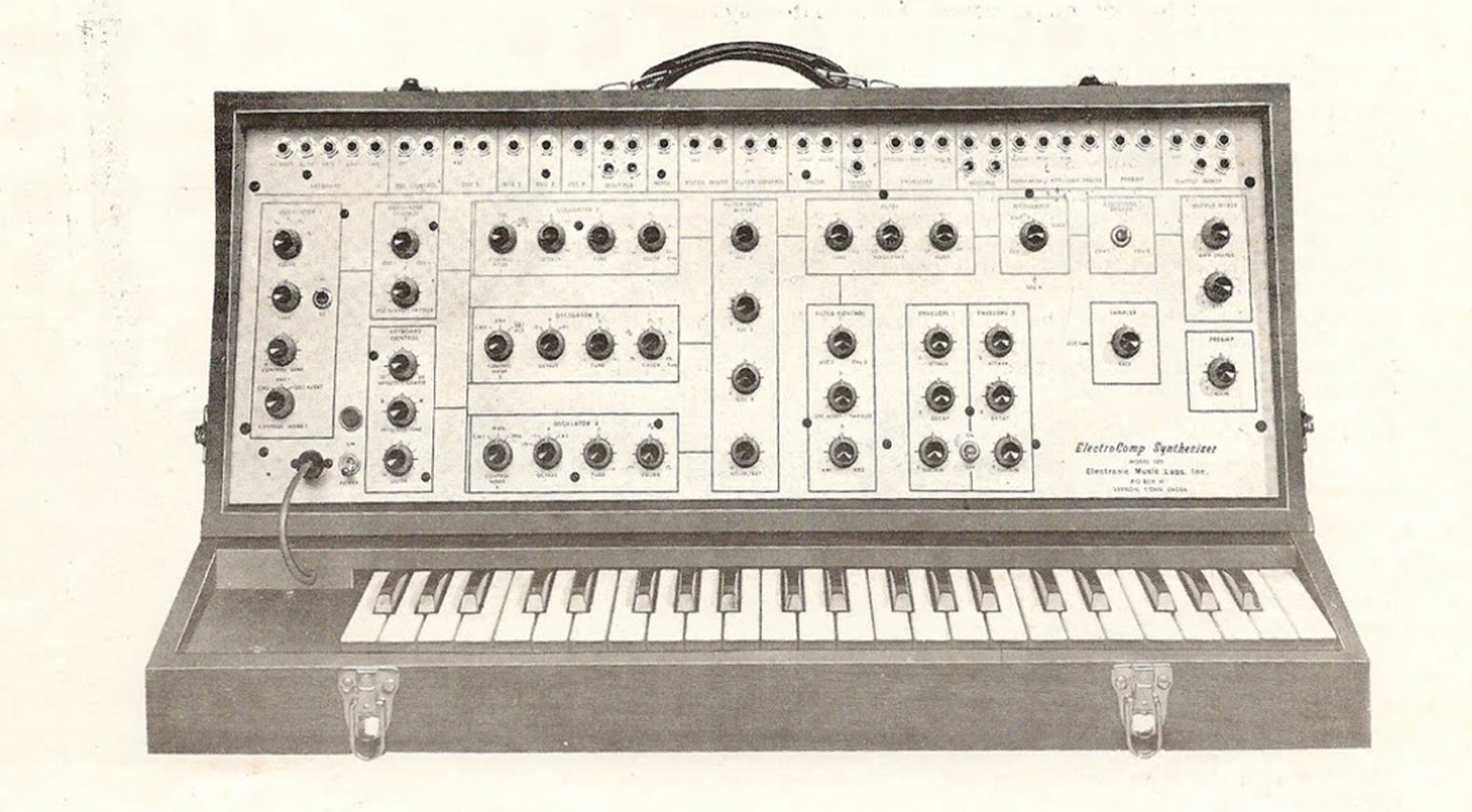
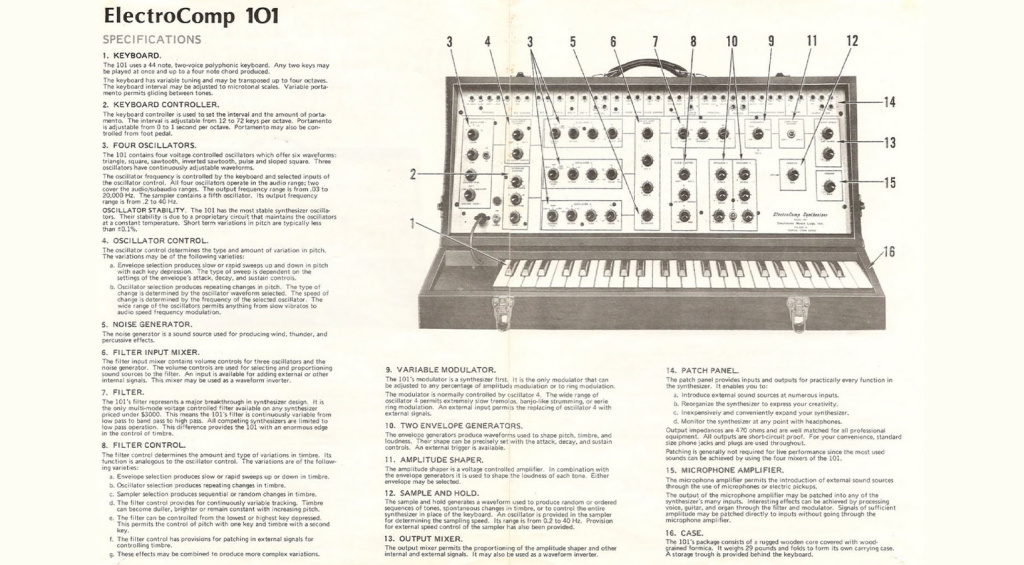
Among their most remarkable creations was the EML ElectroComp 101, released in the early 1970s. Predating the iconic ARP 2600 in several aspects of its conceptual layout, the 101 was a powerful semi-modular synthesizer housed in a rugged, suitcase-style wooden cabinet designed for portability. The instrument featured an impressive array of internal architecture, including four discrete oscillators, a versatile multimode filter, two envelope generators, and duophonic voicing capabilities.
What truly set the ElectroComp 101 apart was its distinct sonic character: raw, aggressive, and entirely distinct from the smoother, creamier tones produced by Moog ladder filters of the era. The unit relied on patch points that allowed users to override internal signal routing, granting immense flexibility in sound design. Despite its capabilities, EML lacked the extensive marketing and global distribution channels of its competitors, resulting in very low production numbers.
Today, original units are exceedingly rare and command high prices on the vintage collector market. Recognizing the historical significance and sonic uniqueness of the device, Denver Synth Labs recently developed a high-fidelity software emulation of the ElectroComp 101. This digital revival allows contemporary sound designers to experience the raw power of EML’s flagship analog circuitry without hunting down fragile vintage hardware.
Gleeman Pentaphonic: Mountain View’s Transparent Innovation
As the synthesizer industry transitioned from monophonic leads to polyphonic chord-playing machines at the dawn of the 1980s, innovation was not confined to major corporations. In Mountain View, California—just miles away from where Dave Smith and his team at Sequential Circuits were developing the legendary Prophet-5—two brothers named Leslie and Bernie Gleeman set out to build their own polyphonic analog synthesizer.
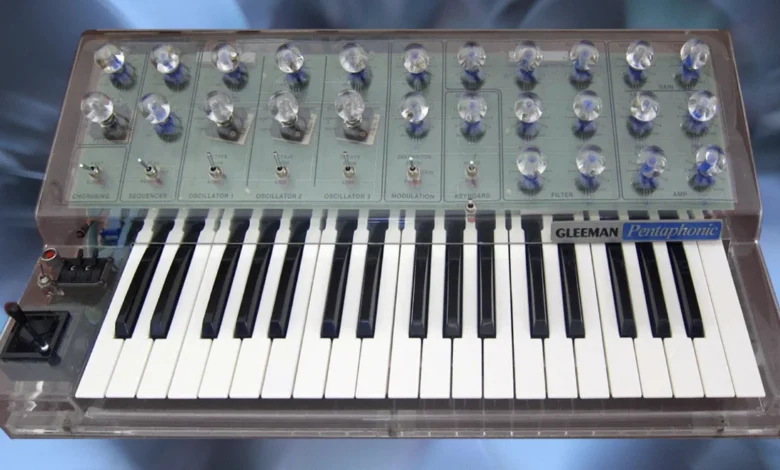
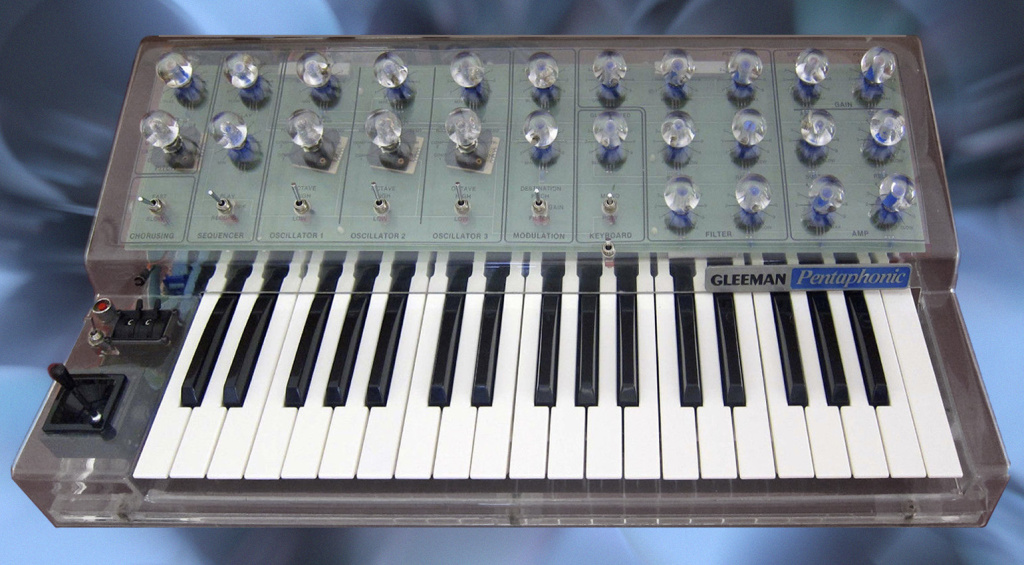
Introduced in 1981, the Gleeman Pentaphonic was a five-voice polyphonic analog synthesizer that incorporated several unorthodox design choices. At a time when voltage-controlled oscillators (VCOs) reigned supreme, the Gleeman brothers opted for digitally controlled oscillators (DCOs). While DCOs would eventually become industry standards later in the decade for their tuning stability, utilizing them in 1981 was a relatively novel engineering decision for a small independent startup.
Perhaps the most striking feature of the Pentaphonic, however, was its physical presentation. Certain production models were encased in transparent acrylic chassis, revealing the internal circuit boards and wiring to the player and audience alike. Visually arresting and structurally unique, the transparent Pentaphonic remains one of the most aesthetically daring instruments in synthesizer history.
Despite its futuristic design and solid feature set, Gleeman struggled against the massive marketing campaigns of established Japanese and American manufacturers. The company produced only a limited number of units before closing its doors. In a testament to the enduring appeal of this obscure Silicon Valley instrument, software developer Cherry Audio recently released an official emulation titled Pentaphonic. By translating the rare hardware architecture into a modern plugin format, Cherry Audio has successfully rescued the Gleeman brothers’ vision from total obscurity.
Roland MKS-7 Super Quartet: The Multitimbral Juno Powerhouse
In the pantheon of analog polyphonic synthesizers, Roland’s Juno series occupies a revered position. Instruments like the Juno-60 and Juno-106 are universally celebrated for their lush choruses, warm single-oscillator architecture, and exceptionally wide sweet spots. However, while keyboard variants achieved legendary status, Roland’s rackmount modules from the mid-1980s frequently suffered from a lack of brand recognition—despite often packing superior functionality.
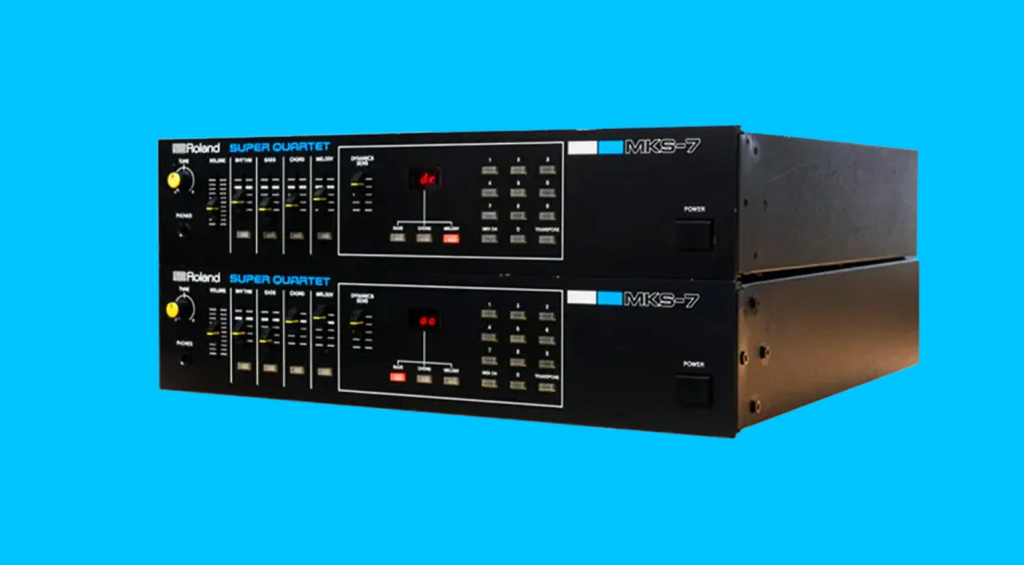
A prime example of this phenomenon is the Roland MKS-7 Super Quartet, released in 1985. Capitalizing on the rapid adoption of the MIDI protocol, Roland introduced a series of rackmount sound modules designed for professional studio integration. Rather than marketing the unit under an obvious derivative of its keyboard counterpart, Roland opted for the cryptic designation "MKS-7 Super Quartet," effectively masking its lineage as a direct relative of the Juno-106.

Beneath its unassuming 1U rackmount exterior, the MKS-7 was essentially three Junos combined into a single multitimbral powerhouse. The architecture was divided into distinct sections: a two-voice polyphonic melody section, a four-voice chord memory section, and a dedicated monophonic bass synth engine. To top it all off, Roland integrated a complement of analog drum sounds directly derived from the rhythm architecture of the TR-707 drum machine.
Functionally, the MKS-7 offered unprecedented production capabilities for a mid-1980s studio setup, acting as an entire band-in-a-box. Yet, because it lacked a physical keyboard and bore an obscure name, it failed to capture the public imagination in the same way the Juno-106 did. Furthermore, original hardware units share the notorious voice chip degradation issues inherent to the 106 era, requiring technical restoration. For modern producers seeking that specific vintage Roland warmth without hardware maintenance hurdles, sample libraries such as UVI’s Super-7 offer comprehensive access to the MKS-7’s unique sonic palette.
Korg T-Series: The Overshadowed Workstation Successor
In 1988, Korg released the M1 music workstation, a digital sample-synthesis powerhouse that fundamentally transformed popular music production. Featuring a combination of PCM waveforms, internal digital effects, an onboard sequencer, and a semi-weighted keyboard, the M1 became the best-selling synthesizer of all time, shaping the sound of house music, pop, and film scoring throughout the late 1980s and early 1990s.
When Korg developed a successor to this monumental instrument, many industry observers anticipated a radical redesign. Instead, the company introduced the Korg T-Series in 1989, consisting of three models: the 61-key T1, the 76-key T2, and the 88-key weighted-action T3. Rather than charting an entirely new sonic course, the T-Series was essentially an enhanced, premium evolution of the M1 architecture.
The T-Series doubled the internal ROM capacity to 16MB, offering expanded sample memory, a larger screen, enhanced sequencing capabilities, and superior keybeds across all variants—particularly the heavy, professional piano-action keybed found on the flagship T1. It was, in essence, the luxury tier of the M1 platform.
However, the high retail price point of the T-Series placed it out of reach for many project studios, while mainstream consumers who already owned an M1 saw little reason to upgrade to a machine with a fundamentally similar core sound engine. Consequently, the T-Series was quickly overshadowed by the rapid technological advancements of the 1990s, culminating in the release of Korg’s 01/W series. Today, while the M1 remains a celebrated icon, the T-Series is largely remembered only by dedicated workstation historians and keyboard purists who prize its superior mechanical keybed.
Alesis Ion: The Unsung Hero of Virtual Analog
The late 1990s and early 2000s marked a renaissance for synthesizer design, driven by the commercial viability of digital signal processing (DSP) and the rise of virtual analog (VA) synthesis. Manufacturers raced to emulate the warmth and behavior of classic analog circuits using digital algorithms. While instruments like the Roland JP-8000, Clavia Nord Lead, and Korg microKORG dominated market share and defined the era’s electronic music aesthetics, innovative alternatives often slipped through the cracks.
Among the most technically accomplished yet commercially overlooked virtual analog synths of this era is the Alesis Ion, released in 2003. Emerging shortly after Alesis released its ambitious, high-end analog flagship, the Andromeda A6, the Ion was designed to bring sophisticated modeling technology to a more accessible price point.
The Ion featured an advanced DSP engine capable of precise filter modeling, allowing users to emulate the sonic characteristics of historic filter topologies from legendary hardware, including the Minimoog ladder filter, the Oberheim SEM state-variable filter, and the Roland TB-303 diode ladder. In addition to these classic emulations, the Ion introduced cutting-edge spectral filter types such as formants and comb filters, offering a level of sound-shaping flexibility that was exceptionally advanced for 2003.

Despite receiving critical praise for its deep modulation matrix, robust sound engine, and hands-on control interface, the Ion struggled against stiff competition from established VA powerhouses. Alesis later attempted to capitalize on the engine by housing it in smaller form factors, such as the compact Micron and the Akai MINIAK, but none managed to secure the enduring cultural status of their rivals. Today, the Alesis Ion is celebrated by sound design purists as an underappreciated milestone in digital modeling history.
Implications and the Modern Preservation of Obscure Hardware
The collective amnesia that surrounds instruments like the EML ElectroComp 101, Gleeman Pentaphonic, Roland MKS-7, Korg T1, and Alesis Ion highlights a broader reality of the music technology industry: technical excellence and commercial success do not always align. Market positioning, timing, distribution networks, and brand perception frequently dictate which instruments achieve immortality and which are relegated to obscurity.
However, the modern era of audio production has fostered an environment of historical reclamation. Through advanced component-level software modeling, dedicated hardware emulation developers, and specialized boutique restoration labs, the barriers that once kept these forgotten synths locked away in dusty attics and private collections have dissolved. By revisiting these unsung pieces of engineering history, contemporary musicians and producers not only expand their sonic palettes but also pay homage to the visionary engineers who dared to build outside the mainstream consensus.