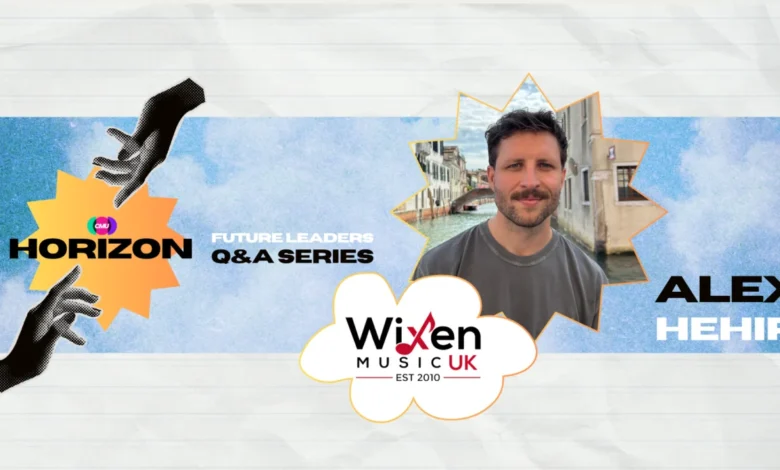
The contemporary music industry operates within a complex matrix of global streaming platforms, digital metadata streams, and evolving copyright laws, rendering traditional career trajectories obsolete. As the sector grapples with these shifts, understanding the mechanics of music publishing—arguably the least understood yet most financially vital sector of the business—has become paramount for emerging professionals. To shed light on this intricate landscape, Alex Hehir, Managing Director of the esteemed independent music publisher Wixen Music UK, shares his insights as part of the Horizon series, an initiative designed to connect current music executives with the next generation of industry leaders.
Hehir’s journey from loading venues and managing grassroots festival operations to leading an internationally connected publishing house provides a blueprint for modern career navigation. His perspective highlights a vital reality: while the digital age has democratized music creation and distribution, it has simultaneously introduced unprecedented challenges in revenue collection, data management, and artist sustainability.
The Mechanics of Independent Publishing and Daily Operations
At its core, music publishing is about safeguarding and maximizing the financial value of a songwriter’s intellectual property. Wixen Music UK operates as an independent and creative music publisher and neighbouring rights representative, collaborating closely with artists, songwriters, publishing catalogues, musicians, and independent labels. The primary objective is ensuring that creators are meticulously compensated whenever their compositions are streamed, broadcast, performed live, or utilized commercially.
For Hehir, the daily routine defies standard corporate predictability. Operating within a tightly knit team of six professionals handling a vast international network, his responsibilities span several specialized verticals. He oversees client relationships, technical data handling and delivery processes, intricate royalty investigations, Artists and Repertoire (A&R) discussions, and proactive business outreach.
Beyond administrative and strategic oversight, Hehir emphasizes the importance of internal team leadership. Ensuring that department members are supported and equipped to manage their workloads is central to scaling the business sustainably. This operational dynamism requires balancing highly technical, spreadsheet-driven data analysis with creative discussions regarding new compositions. Ultimately, the unifying thread across all daily operations is regular, transparent communication with writers and their management teams, guiding them through the labyrinthine structures of global publishing administration.
From Grassroots Venues to Executive Leadership: A Career Chronology
Hehir’s entry into the music industry did not follow a conventional corporate track; rather, it was forged through grassroots engagement and operational resilience. His foundational experiences began as a music fan deeply embedded in the local live music scene, frequenting regional independent venues such as the now-closed White Rabbit in Southampton.
During his university years studying music business—a degree he credits with providing a broad industry overview despite offering minimal insight into publishing specifically—Hehir took initiative by launching Above The Waves Promotions alongside peers to book bands in Southampton. This venture yielded an immediate lesson in live event crisis management. When the venue owner disappeared and closed the facility just 24 hours before their inaugural show, Hehir and his team pivoted by relocating the event to a friend’s house, staging a makeshift punk gig in a domestic kitchen.
This baptism by fire transitioned into professional event operations through an internship at Vision Nine, an experiential marketing and event agency. As an operations assistant, Hehir gained firsthand exposure to the logistics of major UK festivals, including Boardmasters and NASS. From headliner booking strategies to precise site-map engineering and perimeter fencing placement, this early exposure offered a comprehensive view of the commercial apparatus supporting the live sector.
Transitioning later into music publishing, Hehir found mentorship under industry veterans, most notably Wixen Music Publishing founder Randall Wixen. This trajectory underscores a recurring theme in Hehir’s professional philosophy: career progression in the music business is rarely linear, and success is frequently accelerated by embracing varied, hands-on operational roles early on.
The Evolving Landscape of Industry Opportunities
The structural framework for entering the music industry has undergone a notable transformation over the past decade. Traditional pathways, such as structured corporate internships at major label groups, have become increasingly scarce amid industry consolidation, resulting in intense competition for a limited number of formal positions.
However, Hehir notes that this contraction at the corporate apex has been counterbalanced by the explosive growth of the independent sector. The proliferation of independent artists, boutique management firms, and self-releasing creators has generated a substantial demand for agile, proactive support services. For aspiring professionals, entry-level opportunities may no longer manifest as traditional corporate graduate schemes; instead, they frequently involve supporting independent artist managers part-time or handling specific administrative workflows for emerging talent.
To prepare for these modern roles, Hehir advises newcomers to align their skill sets with specific publishing verticals. Applicants targeting data and royalty analysis require analytical aptitude distinct from those pursuing creative A&R roles. Universally, however, a thorough comprehension of the end-to-end publishing pipeline—tracing a composition from its inception in the writing room to the collection and distribution of royalties—remains indispensable.
For early-career networking and professional development, Hehir recommends engaging with specialized music conferences and educational initiatives across the UK. Events such as Fast Forward in London, Sound City in Liverpool, and Launchpad in Leeds serve as vital forums for knowledge-sharing, mentorship, and relationship-building among emerging professionals.
The Digital Data Dilemma and Modern Publishing Challenges
The rapid expansion of the digital landscape has fundamentally altered the operational demands placed on music publishers. Music is presently consumed, broadcast, and synchronized across a greater diversity of platforms and geographical markets than at any point in history. Consequently, the primary challenge facing modern publishers is not merely collecting revenue, but identifying and tracking every instance where a client’s catalogue generates a performance or mechanical right.
This shift has elevated data handling and metadata management from back-office administrative tasks to critical business assets. Publishers increasingly deploy proprietary digital tools to ingest, parse, and distribute complex datasets efficiently. Nevertheless, Hehir cautions against an over-reliance on automated technology. While analytical software enhances operational velocity, it remains dependent on human direction.
Advanced tools are only as effective as the professionals wielding them. Intimate, human-driven knowledge of songwriters, their catalogues, and their historical outputs remains the definitive differentiator. In an era where technological infrastructure is widely accessible to competitors, intellectual capital and deep catalogued familiarity represent a publisher’s core competitive advantage.
Economic Realities for Creators and the Imperative of Advocacy
As the economics of the modern music market continue to challenge the financial sustainability of independent artists and songwriters, the role of the publisher is undergoing a parallel evolution. Generating a stable livelihood through recorded music streaming alone remains exceptionally difficult for the vast majority of creators, a trend that industry analysts expect to persist.
In response, Hehir argues that the most effective music publishers must act as zealous advocates for their clients, aggressively pursuing every available revenue stream to ensure financial stability. Songwriters typically enter the industry driven by a creative impulse to write, record, and perform, rather than an affinity for auditing royalty statements or navigating complex accounting spreadsheets. By absorbing these administrative burdens, proactive publishers afford creators the psychological space and financial security necessary to sustain their artistic output.
Furthermore, Hehir stresses that as the industry navigates technological disruptions—including the integration of artificial intelligence and automated distribution systems—the value of genuine human connection will appreciate. Artists will increasingly rely on trusted teams capable of cutting through marketplace noise and fostering authentic relationships with audiences and industry partners alike.
Strategic Advice for Aspiring Industry Professionals
Reflecting on the trajectory of his career, Hehir offers pragmatic guidance for individuals entering the music business. Central to his professional ethos is the deliberate cultivation of a collaborative, trust-based network. The music publishing sector is inherently interdependent, requiring constant coordination between internal teams, external writers, sub-publishers, and collection societies. Building a reputation for reliability—honoring commitments and following through on professional undertakings—forms the foundation of career longevity.
Moreover, Hehir advocates for enthusiasm and active engagement with the product itself. Maintaining an authentic, vocal passion for music is not viewed as unprofessional, but rather as an essential driver of engagement and motivation within a demanding sector.
Finally, Hehir addresses the psychological pressures common among early-career professionals navigating competitive creative industries. His primary counsel is to draw inspiration from peers without succumbing to destructive comparisons or unrealistic timelines. Because career progression in the music industry is inherently non-linear, maintaining professional consistency and operational focus remains the most reliable path to achieving sustainable, long-term success.
Related posts: