Former Eminem Employee Pleads Guilty to Federal Copyright Infringement After Stealing and Selling Unreleased Music for $50,000

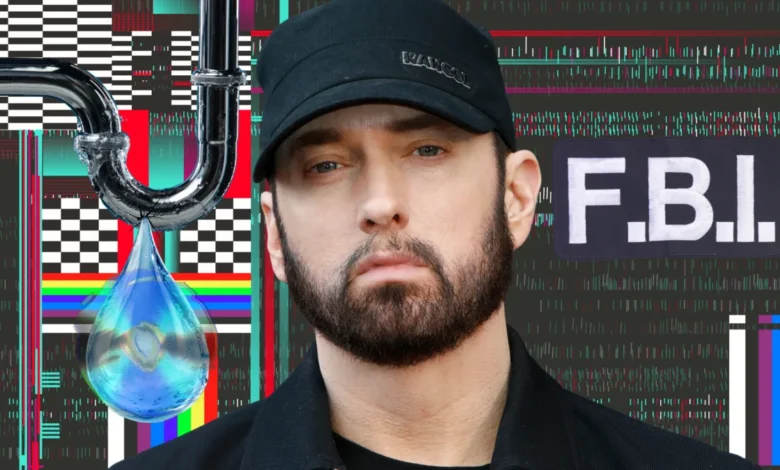
A federal courtroom in Michigan became the latest stage for a high-profile intellectual property scandal involving one of the music industry’s most fiercely guarded catalogs. Joseph Strange, a trusted former long-term employee of rap icon Eminem, formally entered a guilty plea to charges of criminal copyright infringement. The conviction stems from a calculated scheme in which Strange illicitly downloaded, hoarded, and subsequently sold dozens of unreleased tracks recorded by the legendary artist, generating tens of thousands of dollars in illicit profits and triggering millions of unauthorized streams across the internet.
Strange, who worked in close proximity to the rapper for nearly a decade and a half, now faces a maximum penalty of up to five years in federal prison. The case highlights the severe legal consequences of corporate espionage within the entertainment industry, where unreleased master recordings represent not only immense cultural value but also millions of dollars in potential commercial revenue. As federal authorities and legal representatives prepare for sentencing, the case serves as a cautionary tale about insider threats, digital security in professional recording studios, and the aggressive stance federal prosecutors are taking against digital piracy.
The Insider Breach: Background and Chronology
The mechanics of the breach date back to Strange’s tenure working directly with Eminem. Between 2007 and 2021, Strange was employed in a position of significant operational trust. Based primarily in the Detroit metropolitan area, his responsibilities included setting up, maintaining, and managing the specialized computer networks and storage systems utilized by Eminem and his production team at a recording studio located in Ferndale, Michigan.
Within this creative sanctuary, Eminem, born Marshall Mathers, archived years of musical experiments, alternate takes, unreleased collaborations, and completed tracks that never made the final tracklists of his multi-platinum albums. Because Strange built and administered the infrastructure housing these files, he had unfettered access to the digital vault.
Rather than safeguarding the intellectual property, Strange began systematically siphoning data, creating private digital copies of unreleased material for his own personal archive. Over time, the scale of the theft grew exponentially. Investigators later uncovered evidence suggesting that Strange boasted to prospective buyers about possessing an archive containing more than 300 unreleased Eminem tracks—a treasure trove for obsessive collectors and bootleggers.
The operation transitioned from quiet hoarding to active commercial exploitation in 2024. Capitalizing on underground demand for rare Eminem material, Strange allegedly brokered deals to distribute the stolen files. By January 2025, the fallout from the breach became impossible to ignore when unauthorized tracks began surfacing across various online forums and streaming networks.
Investigation and Law Enforcement Intervention
The sudden appearance of unreleased archival material prompted an immediate escalation, drawing the attention of the Federal Bureau of Investigation’s Detroit field office. Cybercrime units and intellectual property investigators traced the digital footprints of the leaked audio back to their source.
Federal agents quickly identified and interviewed a key buyer who admitted to purchasing approximately 25 unreleased Eminem tracks from Strange for a total sum of $50,000. Armed with this transaction record and digital evidence, federal agents executed a search warrant at Strange’s residence. During the raid, investigators seized multiple computer hard drives containing extensive copies of Eminem’s unreleased musical catalog.
The scope of the distribution was staggering. According to federal prosecutors, by November 2025, the stolen audio files had been accessed more than eight million times across digital platforms, magnifying the reach of the infringement and compounding the economic and artistic damage inflicted upon the artist.
Legal Definitions: Civil Litigation Versus Criminal Prosecution
In the broader landscape of intellectual property law, copyright infringement is frequently handled through civil litigation. In such disputes, the copyright owner initiates a civil lawsuit against the infringer, seeking monetary damages, injunctions, and legal fees. However, copyright infringement can cross the threshold into federal criminal activity under specific circumstances.
Under United States copyright law, criminal penalties—including substantial financial fines and lengthy prison sentences—are typically reserved for large-scale operations or actions undertaken explicitly for commercial advantage or private financial gain. The statutory requirement that an offender infringes copyright for the purpose of financial enrichment or commercial benefit is what transformed Strange’s actions from a standard breach of an employment contract into a federal felony.
Official Responses and Statements
The resolution of the guilty plea prompted sharp statements from law enforcement officials, underscoring the gravity with which the federal government views intellectual property theft in the creative sector.
Assistant Attorney General A. Tysen Duva addressed the media following the court proceedings, pulling no punches regarding the nature of Strange’s actions. "Joseph Strange abused a position of trust to unlawfully copy and sell unreleased music belonging to Eminem, profiting from works that were not yet authorized for public distribution," Duva stated.
Duva emphasized that Strange’s conduct directly undermined Eminem’s fundamental legal and artistic rights. He reiterated the unwavering stance of the United States Department of Justice’s criminal division, noting that the agency "remains committed to protecting intellectual property, holding accountable those who seek to profit from the theft of creative content, and working with our law enforcement partners to deter and disrupt these crimes."
Echoing these sentiments, FBI Special Agent Jennifer Runyan focused on the cultural and economic importance of safeguarding the local artistic community in Michigan. "Detroit has always been a city where creativity thrives, and no one has the right to steal or profit from another artist’s work without their permission," Runyan remarked. "Today’s guilty plea reinforces a simple principle: accountability follows those who compromise the integrity of another person’s creative labor."
Defense Perspective and Mitigation
While federal prosecutors and law enforcement agencies celebrated the guilty plea as a decisive victory for intellectual property rights, Strange’s legal team offered a more measured and complex perspective on the situation.
Wade Fink, the defense attorney representing Strange, did not dispute the core facts of the case but sharply criticized the tone of the statements released by the Department of Justice and the FBI. Fink characterized the official remarks as "hyperbolic" and "self-congratulatory," arguing that the narrative painted by prosecutors oversimplified a much more intricate reality.
"This case is a far more complicated and nuanced matter than a man just unabashedly stealing," Fink asserted in a statement. He also spoke to the personal toll the high-profile federal case has taken on Strange’s family, stating, "Joe Strange is a good man whose children have suffered greatly in all of this."
Despite his critique of the government’s public relations approach, Fink confirmed that his client was accepting full responsibility for his actions. "Nevertheless, my client has taken accountability for what he has done, has tremendous remorse for what has happened to his family, and has great faith, as do I, in the judges of our district to see this case for what it is."
Commercial Context and Industry Implications
The prosecution’s filings shed light on the complicated nature of managing an artist’s unreleased vault. Prosecutors noted during the proceedings that while no commercial release of the specific music and material Strange stole and sold was "imminent or even certain" at the time of the theft, efforts had occasionally been made by the artist’s team "to prepare some of the music for possible commercial release, in some cases including studio mastering."
In the modern music industry, unreleased archival material represents a lucrative asset. Legacy acts and active superstars alike frequently mine their vaults for deluxe anniversary editions, posthumous releases, or curated collector’s items. When insiders leak this material prematurely, it can entirely derail an artist’s strategic release schedule, diminish the commercial viability of a future project, and strip away the element of surprise that marketing teams rely on to drive sales and streaming numbers.
Furthermore, the case underscores the vulnerability of independent studios and private recording setups. Unlike massive corporate conglomerates with institutional cybersecurity frameworks, individual artists often rely on trusted inner circles to manage day-to-day digital architecture. When a long-term employee compromises that trust, the fallout can be devastatingly personal as well as financial.
Broader Impact on Copyright Enforcement
The conviction of Joseph Strange adds to a growing body of federal case law protecting digital assets in the entertainment industry. As music consumption has shifted almost entirely to digital formats, the physical security of master tapes has been replaced by the cybersecurity of hard drives, cloud servers, and proprietary workstations.
Federal law enforcement agencies have increasingly dedicated resources to cyber-enabled intellectual property theft, signaling to insiders and external hackers alike that the digital distribution of stolen art carries severe penal consequences. For Eminem—an artist who has spent decades meticulously managing his public output, crafting intricate narratives, and protecting his catalog from unauthorized exploitation—the federal guilty plea brings a measure of legal closure, even if the digital genie can never fully be put back in the bottle.
With the guilty plea formally entered into the court record, all eyes now turn to the federal bench. Strange is scheduled to appear before a judge in January for his formal sentencing, where the court will weigh the gravity of the federal crime, the scope of the financial and digital damage, the defendant’s acceptance of responsibility, and the human cost to his family before handing down a final judgment.