John Scofield Still Warm: A Definitive Return to the Improvisational Core of Jazz Fusion

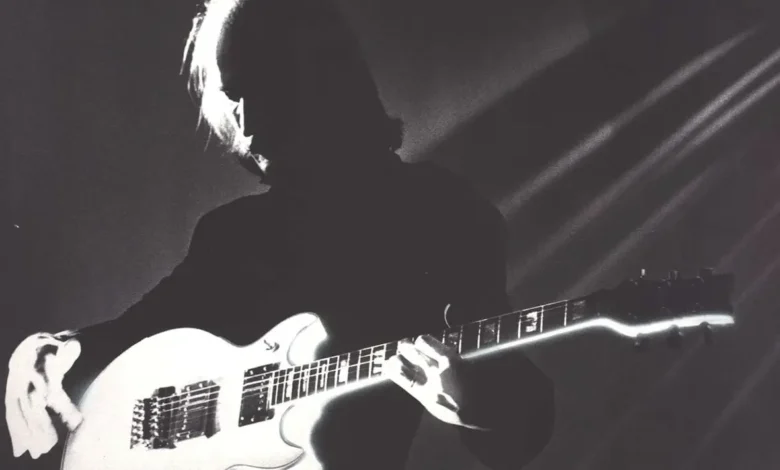
The release of John Scofield’s album Still Warm stands as a definitive milestone in the mid-1980s jazz-fusion landscape, marking a decisive shift from the experimental, studio-heavy production of his earlier work toward a more visceral, improvisational aesthetic. Recorded in New York City in June 1985 and released under the Gramavision label, the project serves as a compelling rebuttal to the overly polished, synth-saturated soundscapes that dominated much of the era’s instrumental music. By stripping back the artifice and relying on a quartet of exceptional technical prowess, Scofield effectively reasserted his identity as one of the most formidable improvisers in the modern guitar canon.
The Evolution of the Scofield Sound
To understand the significance of Still Warm, one must contextualize it within the broader trajectory of Scofield’s career during the early 1980s. Following his pivotal tenure with Miles Davis—a period that saw the trumpeter redefining the parameters of electric jazz—Scofield began to seek a signature voice as a bandleader. His debut for Gramavision, Electric Outlet, was a notable start, yet it suffered from a certain level of studio-imposed rigidity. Critics at the time noted that while Electric Outlet displayed immense technical craft, the excessive use of overdubs and a slightly sterile, “fussy” production style occasionally masked the spontaneity inherent in Scofield’s playing.
Still Warm represents a corrective measure. It is a “blowing album” in the truest sense, prioritizing the interplay of a live quartet over the meticulous construction of programmed soundscapes. The album captures Scofield at a crossroads where his deep-seated knowledge of American roots music, blues, and post-bop jazz coalesced into a platform designed specifically for long-form improvisation.
Chronology and Recording Context
The sessions for Still Warm took place in New York City during June 1985. The selection of personnel was a strategic move by Scofield to ensure that the rhythmic foundation would be both complex and relentlessly driving. The quartet featured:
- John Scofield: Guitar
- Don Grolnick: Keyboards
- Darryl Jones: Bass
- Omar Hakim: Drums
This lineup was not merely a collection of session musicians but a synergy of players who had already established their credentials in high-pressure environments. Darryl Jones, who would later become a permanent fixture of The Rolling Stones, brought a “heavy-duty” approach to the bass lines, transforming Scofield’s in-the-pocket riffs into structural steel. Omar Hakim, whose work with Weather Report and Sting had already cemented his status as one of the most versatile drummers in the world, provided a whip-crack precision that allowed the compositions to breathe while maintaining a high-tempo intensity. Don Grolnick, meanwhile, served as a nuanced foil, providing a restrained, atmospheric texture that allowed Scofield’s rough-edged guitar tone to occupy the foreground.
Musical Analysis: The Architecture of Improvisation
The album’s composition, which includes tracks such as "Techno," "High And Mighty," "Protocol," and the country-shuffle-infused "Rule Of Thumb," reveals a deliberate attempt to blend disparate musical dialects. Scofield’s approach to the fretboard on this record is characterized by a "rough-diamond" aesthetic. He frequently utilizes a technique of inspecting his own musical ideas from multiple angles, often holding sustained notes for extended durations to explore their harmonic implications.
A notable moment occurs during the latter half of the country-inflected "Rule Of Thumb." Scofield experiences a momentary lapse in his rhythmic train of thought—a near-collapse of the piece’s structure—which he handles with the seasoned professional’s instinct: he repeats the "mistake" with such conviction that it is recontextualized as a deliberate stylistic choice. This ability to integrate uncertainty into the final product is what separates Still Warm from the more predictable fusion records of the period. The album functions as a testament to the "time-honoured jazz tradition" of risk-taking, where the value of a performance is measured not by its technical perfection, but by the authenticity of the improviser’s journey.
Comparative Analysis: Electric Outlet vs. Still Warm
The contrast between Scofield’s 1984 output and his 1985 project is striking when analyzed through a production lens. Electric Outlet was a product of the studio, designed to explore the possibilities of early digital recording and multi-tracking. In contrast, Still Warm leans into the zest of an impromptu live performance. Where the former felt occasionally contrived, the latter feels inevitable.
Data regarding the reception of these two projects indicates that critics favored the shift toward a more direct sound. The cohesion of the quartet on Still Warm allowed for a greater range of expression, as the musicians were forced to react to one another in real-time rather than following a pre-ordained overdub schedule. This transition highlights a broader trend in 1980s jazz, where many artists—having reached the ceiling of what synth-pop and fusion could offer—returned to the fundamental values of interplay, swing, and individual voice.
Broader Implications and Legacy
The release of Still Warm had several long-term implications for the jazz-fusion genre. First, it solidified the legitimacy of the "power quartet" format, proving that an electric jazz group did not need to rely on excessive electronic layering to sound modern. Second, it elevated Scofield’s standing as a composer who could weave complex riffs with accessible, blues-inflected melodies.
The title itself—Still Warm—has been noted by music historians and critics as something of an understatement. Given the intensity of the performances, the heat generated by the interplay between Jones and Hakim, and the blistering speed of Scofield’s phrasing on tracks like "Protocol," the album is more accurately described as "ruddy hot." It remains a masterclass in how to balance the technical demands of jazz fusion with the emotional immediacy of blues and rock.
Technical Specifications and Discography
The album was released on the Gramavision label (18-8508-1), a company that played a critical role in distributing the music of avant-garde and fusion artists during the mid-80s. The tracklisting is as follows:
- Side A: Techno, Still Warm, High And Mighty, Protocol (Total time: 22:03)
- Side B: Rule Of Thumb, Picks + Pans, Gil (Total time: 19:26)
The recording is noted for its clean, punchy mix, which highlights the distinct roles of the instruments. The bass is kept low and percussive, acting as the primary anchor, while the drums are mixed with a crispness that emphasizes Hakim’s use of "electric accessories" and auxiliary percussion. Scofield’s guitar tone is the centerpiece, captured with a raw, gritty quality that retains the grit of his improvisations without being washed out by unnecessary reverb or digital effects.
Conclusion: A Resonant Contribution
Nearly four decades later, Still Warm stands as a pivotal document in John Scofield’s extensive discography. It captured a moment in time where the technical proficiency of fusion met the grit and soul of the blues, resulting in a cohesive, convincing work of art. By prioritizing the soloist’s voice and the quartet’s collective intuition, Scofield managed to avoid the pitfalls of the "over-produced" era. The album remains a essential listening experience for those seeking to understand the bridge between the electric experiments of the 1970s and the more organic, improvisational focus of the 1990s jazz scene. It serves as a reminder that regardless of the era, the core of jazz remains the ability of the performer to navigate the space between intent and accident with unwavering confidence.