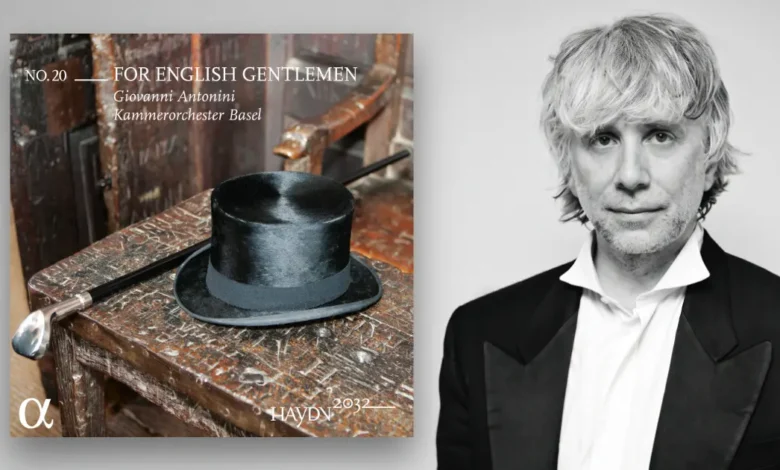
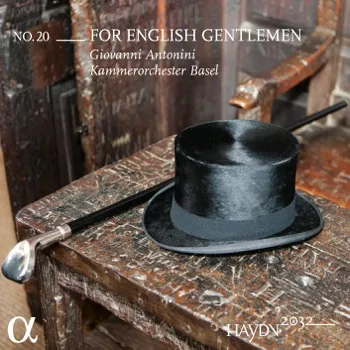
The ongoing ambitious recording initiative known as the Haydn 2032 project has reached a significant milestone with the release of its twentieth volume, titled For English Gentlemen. Released by Alpha Classics under catalogue number ALPHA1102, this latest installment features the acclaimed Kammerorchester Basel under the dynamic leadership of conductor Giovanni Antonini. Centered around a fascinating historical detour—a projected 1782 trip to London that ultimately did not materialize—the album pairs three lesser-known symphonies by Joseph Haydn (Nos. 76, 77, and 78) with an emotionally charged, Sturm und Drang symphony by Johann Christian Bach. Spanning roughly 85 minutes of music, the release offers listeners a rare glimpse into a pivotal period of late-eighteenth-century musical commerce, stylistic experimentation, and trans-European artistic exchange.
Historical Context and the Fateful 1782 London Trip
To fully appreciate the significance of the works featured on Haydn 2032, Vol. 20, one must examine the professional constraints and changing fortunes of Joseph Haydn during his long tenure in the service of the Esterházy family. Under the terms of his employment contract, Haydn’s creative output was theoretically the exclusive property of Prince Nikolaus Esterházy. However, a crucial contract revision in 1779 granted the composer newfound commercial freedom, permitting him to sell his compositions to outside publishers and patrons across Europe.
Seizing this opportunity, Haydn composed Symphonies Nos. 76, 77, and 78 with a specific destination in mind: a lucrative concert tour of London slated for the spring of 1782. Eager to maximize his financial returns in multiple major European cultural capitals, Haydn orchestrated a marketing strategy directed at music publishers in Vienna, Paris, and London. In a surviving piece of correspondence to a prospective publisher, Haydn famously outlined his entrepreneurial mindset, writing, "Whoever pays me best will obtain my works; on the other hand, I assure you that you will make a tremendous profit with these three symphonies."
Ultimately, the planned 1782 journey to London fell through due to shifting obligations at the Esterházy court, delaying Haydn’s actual triumphant arrival in the British capital by nearly a decade. Consequently, these three scores were absorbed into the wider European market without the immediate benefit of a British premiere. Despite their high artistic caliber, musicological history has often allowed these gems to be overshadowed by the sheer ubiquity of Haydn’s later, universally celebrated Paris (Nos. 82–87) and London (Nos. 93–104) symphonies. Antonini and the Kammerorchester Basel have stepped forward to redress this historical imbalance.
Detailed Musical Analysis: Symphony No. 78 in C Minor

The chronological journey through the album begins with Symphony No. 78 in C minor, a work that immediately establishes a serious, urgent tone dictated by its home key. Yet, true to Haydn’s unpredictable compositional style, the severe opening gives way to a brilliant shift in mood with the arrival of the second subject in E-flat major.
In the developmental sections, Haydn subjects both primary themes to extensive fragmentation, tossing musical motifs fluidly between various instrumental sections. The transparent voicing and crisp articulation championed by Antonini and the Kammerorchester Basel allow the listener to fully appreciate the composer’s intricate, playful counterpoint.
Comparing performance metrics across modern recordings reveals interesting interpretive choices. While early performance expectations might point toward a brisk, breathless reading of the opening Vivace—such as the 7-minute, 36-second interpretation by the Heidelberg Symphony Orchestra under Marcus Klumpp on Hänssler—Antonini opts for a marginally more measured duration of 7 minutes and 58 seconds. Rather than dragging, this tempo feels precisely calculated to accommodate the music’s structural weight.
The subsequent Adagio is handled with notable spaciousness. Antonini resists the temptation to rush, maintaining the structural integrity of the long melodic lines more successfully than several recorded predecessors, such as Stefano Dantone with the Accademia Bizantina on Decca. The internal movements maintain this dramatic momentum: the Menuet exhibits a natural, breathing ebb and flow alongside a delightful Trio, while the Presto finale delivers the sharp rhythmic contrast expected from Antonini’s baton. Observers will note a distinct evolution in this volume; compared to earlier releases in the Haydn 2032 series, Antonini demonstrates a newfound flexibility and subtle nuance in handling transitional passages.
Stylistic Contrast: Symphony No. 77 in G Major
In direct contrast to its C minor companion, Symphony No. 77 in G major offers a sunnier, less restless, and far more genial sonic landscape. In previous volumes of the Haydn cycle, some critics noted a tendency for Antonini to approach lighter works with an unyielding, stern rigidity. Here, however, that critique is entirely put to rest.
The opening Vivace clocks in at a substantial 9 minutes and 41 seconds, making it considerably slower than parallel recordings by Marcus Klumpp (8 minutes, 43 seconds) and Christopher Goodman with the Hanover Band (8 minutes, 14 seconds). Despite the slower tempo, the movement never stagnates. Instead, it radiates a palpable sense of warmth and comedic timing.
The slow movement, featuring ethereal textures played with muted strings, achieves a breathtaking atmosphere of stillness. This leads directly into a tightly driven Menuet and a thrilling Finale—historically recognized as one of Haydn’s earliest experiments with the sonata-rondo form. Throughout the performance, the Kammerorchester Basel projects an authentic engagement with Haydn’s inherent wit, transforming technical precision into genuine musical pleasure.
Bridging the Eras: J.C. Bach’s G Minor Symphony
As part of the conceptual framework established throughout the Haydn 2032 series, Antonini frequently incorporates works by Haydn’s contemporaries to provide historical and stylistic context. Vol. 20 features Johann Christian Bach’s Symphony Op. 6, No. 6 in G minor.
Program notes accompanying the release candidly acknowledge that J.C. Bach’s music has historically faced patronizing critiques—specifically, that it allegedly lacked the profound seriousness of his father, Johann Sebastian Bach, and the radical originality of his brother, Carl Philipp Emanuel Bach. However, this three-movement, emotion-laden Sturm und Drang work is intended to dispel such antiquated reputations permanently.
The G minor symphony is no stranger to the modern catalog, having enjoyed robust interpretations over recent decades. Notable prior recordings include those by Anthony Halstead with the Hanover Band (CPO), Simon Standage with the Academy of Ancient Music (Chandos), and Bernhard Mai with the Akademie für Alte Musik Berlin (Harmonia Mundi). More recently, Ian Page and The Mozartists delivered a full-bodied, visceral reading on their 2020 Sturm und Drang collection for Signum Classics. While Antonini’s traversal is undeniably polished, purists may argue that it does not entirely eclipse the raw, theatrical intensity found in Page’s earlier reading, particularly within the evocative slow movement. Nevertheless, its inclusion broadens the album’s thematic scope significantly.
Resolution and Conclusion: Symphony No. 76 in E-Flat Major
The album concludes with Symphony No. 76 in E-flat major. The opening movement’s polyphonic inventiveness is answered by a stately, expansive slow movement. In Christopher Goodman’s traversal with the Hanover Band, this specific movement stretches out to a duration nearly equal to that of the final two movements combined, occasionally testing the listener’s patience.
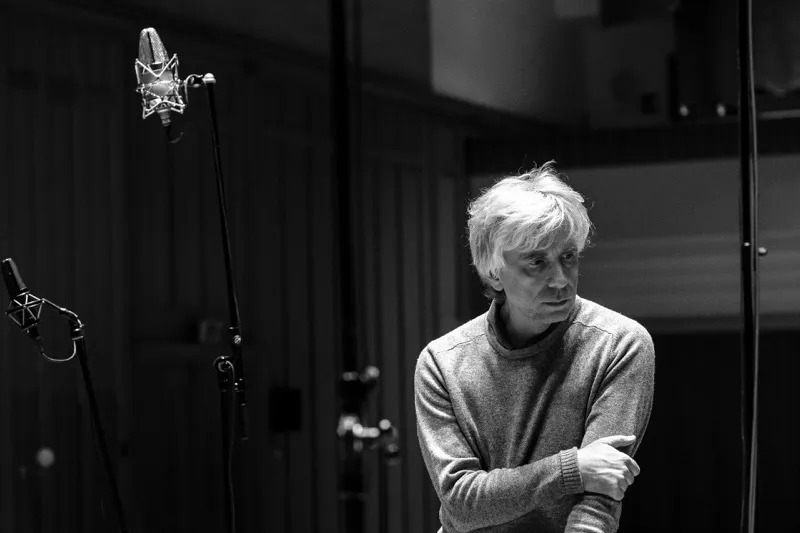
Antonini adopts a slightly more proactive tempo. Combined with the silvery tonal beauty and refined agility of the Basel ensemble, this pacing successfully justifies the inclusion of all written repeats. Furthermore, the performance adopts a chamber-music intimacy that surpasses the acoustic profile of competing recordings from Heidelberg. While other fine cycles—such as the reliable Naxos recording featuring the Cologne Chamber Orchestra under Helmut Müller-Brühl—have occasionally stumbled over the extended length of this slow movement (clocking in at 10 minutes and 34 seconds), Antonini maintains continuous architectural interest.
The final two movements are characterized by playful, unexpected pauses designed to elicit a smile from the audience. Here, the stern academic approach occasionally perceptible in earlier installments of the Haydn 2032 project is entirely eclipsed by an infectious sense of joy shared among the musicians.
Packaging, Documentation, and Availability
Alpha Classics has ensured that the physical and digital presentation of Haydn 2032, Vol. 20 matches its musical ambition. The release is accompanied by an extensive booklet containing an introductory note by Giovanni Antonini, a comprehensive musicological essay by Christian Moritz-Bauer exploring the sociopolitical and artistic climate of Haydn’s 1780s output, and a complete roster detailing the participating musicians and their period-informed instruments.
With a total running time of approximately 85 minutes, the release offers extraordinary value for classical music enthusiasts. While dedicated collectors who have dutifully followed the Haydn 2032 journey from its inception will undoubtedly acquire this volume without hesitation, the album also serves as an ideal entry point for newcomers. For listeners seeking to fill notable gaps in their standard symphonic discography with fresh, historically informed, and intellectually stimulating interpretations of overlooked masterpieces, For English Gentlemen stands as a resounding triumph. The album is widely available across physical retail outlets, major streaming platforms including Apple Classical, and specialized vendors such as Presto Music.