Pixies Unearth Four Archival Tracks, Including Steve Albini Version of Dig for Fire

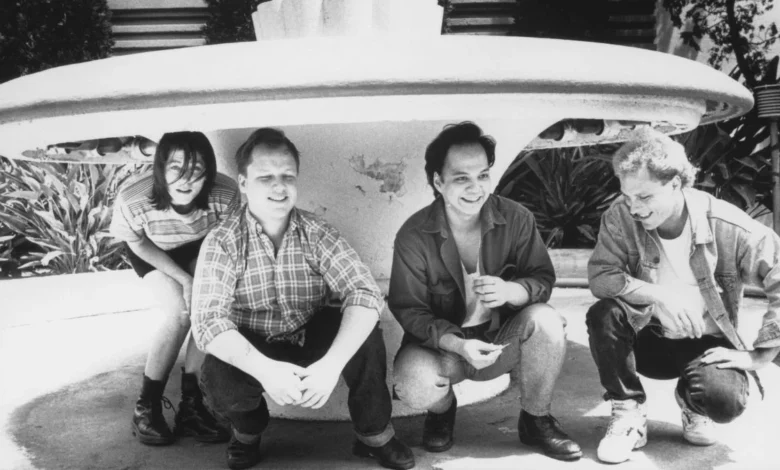
The legendary alternative rock pioneers Pixies have officially opened their vault, releasing a collection of four previously unreleased tracks that provide a rare, intimate look into the band’s transformative creative process during the late 1980s and early 1990s. While these recordings were briefly available as exclusive 7-inch bonus material accompanying the recent limited-edition remasters of Bossanova and Trompe le Monde, they have now been made available on all major digital streaming platforms, allowing for a broader reassessment of the band’s formative output.
The release includes the highly anticipated early take of "Dig for Fire," recorded with the late, visionary producer Steve Albini, alongside the tracks "Go Man Go," "Brackish Boy," and "Punk Loop." These songs offer more than mere nostalgia; they serve as a sonic blueprint of a band that was actively defining the parameters of alternative rock, influencing countless artists who would define the subsequent decade.
A Chronology of the Vault: From Surfer Rosa to Trompe le Monde
To understand the significance of these tracks, one must look at the timeline of the Pixies’ most fertile creative period. The crown jewel of this collection, the Steve Albini-produced version of "Dig for Fire," predates the polished, surf-inflected track that eventually graced the 1990 Bossanova album by nearly three years. Recorded in late 1987, these sessions occurred during the same timeframe as the production of Surfer Rosa, the band’s abrasive, critically lauded debut full-length album.
The inclusion of this specific recording highlights the stark evolution of the band’s sound. While the released version of "Dig for Fire" leans into the spacey, production-heavy aesthetic that characterized Bossanova, the Albini-produced archival take captures the band’s raw, visceral energy. It reveals a group of musicians oscillating between the jagged intensity of their early work and the melodic, experimental textures that would later become their hallmark.
The timeline of the remaining tracks spans the transition from the Bossanova sessions to the more chaotic, sci-fi-inspired era of 1991’s Trompe le Monde.
- 1987: The Albini-recorded "Dig for Fire" sessions take place in Chicago.
- 1990: "Go Man Go" is drafted during the Bossanova sessions, involving songwriting contributions from both Black Francis and Kim Deal.
- 1991: "Punk Loop" is captured during the Trompe le Monde studio sessions, a period defined by the band’s desire to push away from the polished sound of their previous records.
- 1993: Black Francis re-records "Brackish Boy" for his self-titled solo debut under the moniker Frank Black, marking the end of the song’s life as a potential Pixies track.
The Tangled Web of Go Man Go
Perhaps the most fascinating archival discovery is "Go Man Go," a song that serves as a bridge between the creative output of the Pixies and The Breeders, the band formed by Pixies bassist Kim Deal. The track represents a rare moment of collaborative overlap. Because both the Pixies and The Breeders were operating in similar creative circles during the late 80s and early 90s, "Go Man Go" became a casualty of the era’s frantic output.
Neither the Pixies nor The Breeders officially included the song on their respective albums at the time, leading to a decades-long period where the song existed primarily on bootleg tapes and in the memories of those who attended early live shows. Its inclusion in this archival release, following its 2023 emergence on the 30th-anniversary reissue of The Breeders’ Last Splash, provides a definitive, high-fidelity version of a track that has long been a "holy grail" for dedicated fans of the Boston alternative scene.
Contextualizing the Production: The Role of the Archive
The release of these tracks coincides with a broader trend in the music industry where labels and artists are increasingly treating archival material as essential components of their catalogs. By making these recordings available, the Pixies are engaging in a form of institutional self-documentation.
From an analytical standpoint, these recordings offer a masterclass in band dynamics. The differences between the early "Brackish Boy" and the later Frank Black solo version illustrate how the band’s core members—Black Francis, Kim Deal, Joey Santiago, and David Lovering—would take raw, guitar-heavy skeletons and either strip them down for solo projects or dress them in the sophisticated, layered production that defined their studio albums.
The presence of "Punk Loop," labeled simply as "Punk Loop MSTR" on the original studio tape, provides a glimpse into the unfiltered nature of the Trompe le Monde sessions. During this time, the band was reportedly under significant pressure to follow up their previous successes, and the archival release allows listeners to hear the experimental loops and rhythmic explorations that were often discarded in favor of more structured compositions.
Looking Ahead: The 2027 Tour Cycle
The release of these tracks serves as a strategic prelude to a high-profile 2027 for the Pixies. The band is scheduled to embark on an extensive South American tour in March, covering territories including Peru and Colombia, before returning to North America for a major arena circuit.
Most notably, the Pixies will be joining Queens of the Stone Age for a spring 2027 US arena tour. The pairing is significant, as it bridges two generations of alternative and desert rock. Queens of the Stone Age, led by Josh Homme, have long cited the Pixies as a primary influence on their own sound—a sound that, much like the Pixies’, relies on a delicate balance between rhythmic precision and distorted, melodic aggression.
The tour kicks off on May 1st in San Diego and concludes on May 24th in Boston. Industry analysts view this tour as a bellwether for the enduring commercial viability of legacy alternative acts in large-scale venues. With the release of this archival material, the band is effectively reinforcing its brand identity, reminding both long-time fans and new audiences of the foundational work that paved the way for the current rock landscape.
Broader Implications and Legacy
The availability of these tracks provides a deeper historical understanding of the "Pixies sound." In the late 80s, the band was an anomaly; their dynamic shifts—the famous "quiet-loud-quiet" structure—were largely unheard of in mainstream rock. By listening to the archival version of "Dig for Fire," one can hear the nascent stages of this structure. It is not just a demo; it is a document of the band learning to manipulate tension and release in real-time.
Furthermore, the release highlights the lasting influence of Steve Albini’s engineering style. Albini, who passed away in 2024, was a polarizing but undeniably pivotal figure in the development of independent music. His work with the Pixies on Surfer Rosa set a standard for what a guitar record could sound like—dry, punchy, and utterly uncompromising. These archival tracks serve as a poignant reminder of his contribution to the band’s legacy.
As the music industry continues to digitize and curate the history of the 20th century’s most influential acts, the Pixies have set a standard for transparency. By presenting these tracks not just as "bonus content" but as a deliberate look into their history, they are ensuring that their legacy is not just one of finished products, but of the creative struggle that produced them.
For the casual listener, the tracks offer a compelling look at the band’s evolution. For the archivist, they represent a vital piece of the puzzle that was the Boston alternative explosion. With the upcoming tour and this fresh look at their past, the Pixies are proving that their relevance is not merely a matter of historical record, but a living, evolving element of contemporary music culture. Fans can now access these recordings across all major streaming services, marking a new chapter in the preservation of one of rock music’s most essential catalogs.