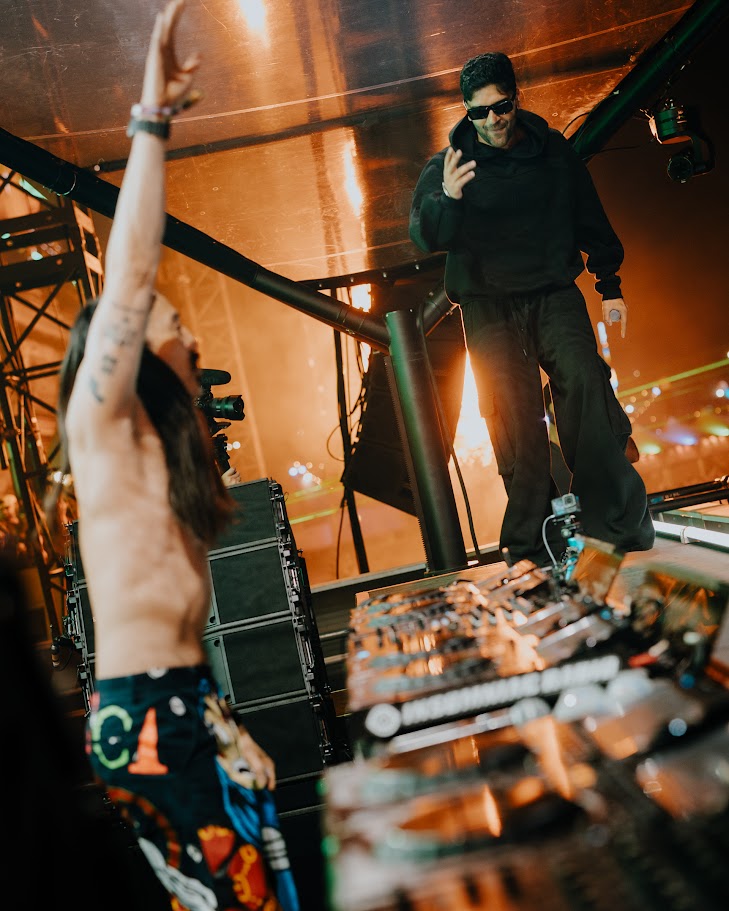
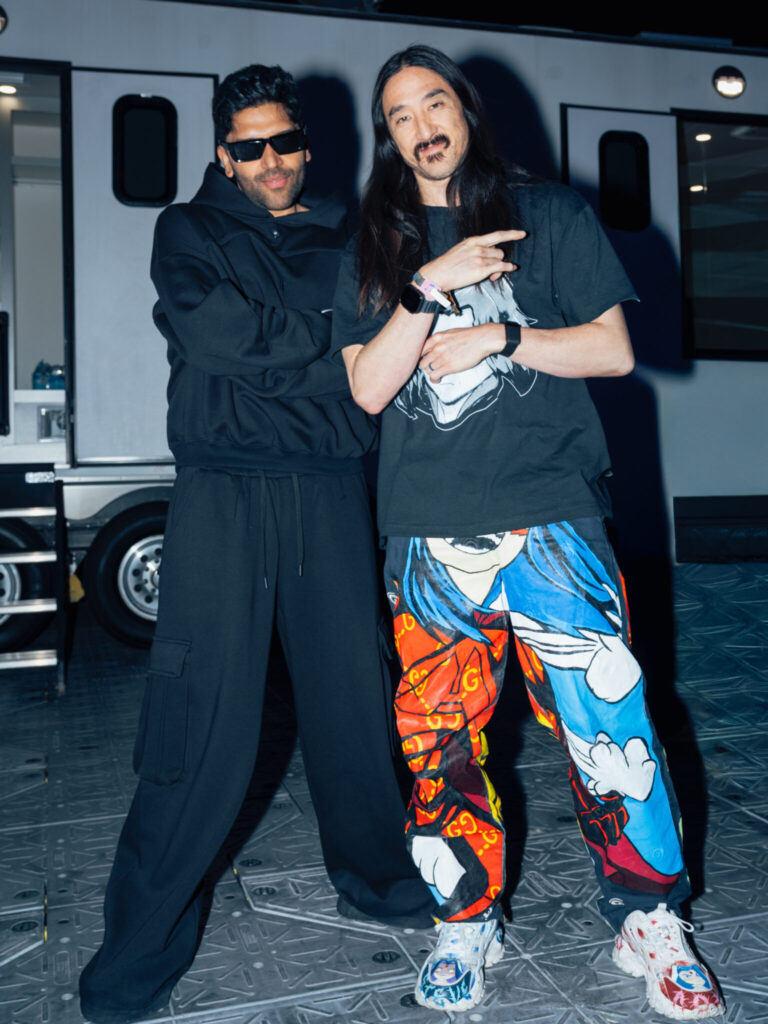
The second day of the Electric Daisy Carnival (EDC) delivered an unforgettable landmark moment for electronic dance music and South Asian pop culture alike, as two-time Grammy-nominated DJ and producer Steve Aoki welcomed Indian music sensation Guru Randhawa to the mainstage for a historic, high-energy collaboration. The surprise appearance, which caught the massive festival audience completely off guard, served as the global debut for Aoki’s official remix of Randhawa’s chart-topping smash hit, "Sirra," taken from the artist’s acclaimed album Without Prejudice.
This cross-cultural pairing stands as a defining milestone within the modern global music landscape. For Aoki, who has built a legendary career on bridging disparate musical worlds, the collaboration represents his first-ever foray into Punjabi pop. Meanwhile, for Randhawa, the performance broke a monumental barrier, establishing him as the first India-born music talent and the first Punjabi artist to ever perform on the mainstage of EDC. The seamless integration of stadium-sized EDM drops with vibrant Punjabi vocal hooks created an electric atmosphere that resonated deeply with the diverse festival crowd, signaling a new frontier for cross-continental musical partnerships.
The Anatomy of a Cross-Cultural Collaboration
The genesis of the "Sirra" remix lies in the shared affinity both artists hold for boundary-pushing production and global audience engagement. The original track, a massive streaming phenomenon, had already accumulated over 356 million cumulative streams across various digital platforms prior to the EDC unveiling. When infused with Aoki’s signature high-octane electronic production, the song transformed into a potent festival weapon designed to command massive open-air arenas.
Steve Aoki is no stranger to transformative crossovers. Over a career spanning more than two decades, the founder of Dim Mak Records has routinely blurred the lines between electronic music and mainstream hip-hop, K-pop, and Latin genres. His extensive catalog of genre-bending remixes includes iconic works such as his multi-billion-streamed rework of BTS’s "MIC Drop" and the timeless, multi-platinum festival anthem remix of Kid Cudi’s "Pursuit of Happiness." Furthermore, Aoki has a proven history of engaging with the South Asian music market, having previously collaborated with legendary Indian playback vocalists Shreya Ghoshal and Sunidhi Chauhan. However, stepping into the realm of Punjabi pop with Randhawa marks a distinct evolution in Aoki’s global outreach strategy, tapping into one of the fastest-growing and most culturally influential music exports in the world today.
For Guru Randhawa, sharing the EDC mainstage with Aoki is the latest in an impressive string of international achievements. Randhawa has long positioned himself as a global ambassador for Indian pop music, having previously built a formidable portfolio of cross-genre collaborations with Western and international heavyweights such as Pitbull, The Chainsmokers, French Montana, K-pop sensation LE SSERAFIM, and hip-hop icon Rick Ross. By bridging the gap between Bollywood-adjacent pop, regional Punjabi sensibilities, and Western electronic production, Randhawa continues to dismantle traditional geographic boundaries within the music industry.
Festival Chronology and Crowd Reception
As Day 2 of EDC reached its peak, anticipation among the thousands of attendees was already running high. Aoki took to the decks, delivering his trademark performance style characterized by frenetic energy, cake-throwing antics, and a relentless onslaught of bass-heavy anthems. Midway through his headlining set, the atmosphere shifted as visual screens teased the introduction of a special guest.
When Guru Randhawa emerged onto the stage, the crowd’s reaction was immediate and overwhelming. The visual spectacle of the festival production—synchronized laser grids, towering LED displays, and explosive pyro—complemented the dynamic stage presence of both performers. As the first notes of the "Sirra" remix dropped, the fusion of traditional Punjabi rhythm structures with massive four-on-the-floor EDM percussion created an infectious momentum that galvanized the audience.
Industry observers noted that the surprise appearance was executed with military precision, keeping festival organizers and attendees guessing until the moment Randhawa stepped into the spotlight. The live debut not only served as a highlight of the weekend’s programming but also provided an instant viral moment across social media platforms, with fan-captured footage circulating globally within minutes of the performance concluding.
Broader Industry Implications and the Globalization of Punjabi Music
The pairing of Aoki and Randhawa at a premier electronic music festival underscores a broader structural shift within the global music ecosystem. For decades, Western markets operated largely independently of regional Asian music industries, with cross-overs remaining rare novelties. However, the proliferation of digital streaming platforms, social media algorithms, and borderless music consumption has radically accelerated the globalization of non-Western genres.
Punjabi pop, in particular, has experienced an unprecedented surge in international visibility over recent years. Driven by charismatic artists, high-production music videos, and a relentless touring schedule, Punjabi music has transitioned from a localized diaspora market to a mainstream global commodity. Artists like Randhawa, alongside peers who frequently chart on international streaming metrics, have proven that language barriers are increasingly irrelevant in the face of strong melodies, infectious rhythms, and compelling visual branding.
By integrating Punjabi vocal styles into the high-profile environment of an EDC mainstage, Aoki has provided validation to a genre that commands billions of streams yet has historically fought for representation on major Western festival lineups. Music industry analysts suggest that this collaboration will likely pave the way for more frequent and formalized partnerships between top-tier Western producers and South Asian artists, opening up lucrative exchange pipelines between North American dance music hubs and the burgeoning entertainment capitals of India.
Looking Ahead: The Return to the Live Stage
The explosive debut of the "Sirra" remix via Warner Music India serves as a strategic precursor to a massive professional milestone for Guru Randhawa. Following the high-visibility exposure at EDC, Randhawa is set to embark on a highly anticipated homecoming show scheduled for December 12, 2026, at the Jawaharlal Nehru Stadium in New Delhi.
This upcoming concert holds substantial significance for the artist and his fanbase, as it marks his official return to live touring following a three-year hiatus from major domestic headlining concerts. The hiatus, utilized by the artist to focus on global studio collaborations, international writing camps, and cross-media projects, has only amplified anticipation for his return to the live stage. Industry insiders expect the New Delhi performance to draw tens of thousands of attendees and serve as a masterclass in modern stadium production, incorporating elements from his international collaborations—potentially including surprises informed by his work with global producers like Aoki.
As the official release of the Sirra (Steve Aoki Remix) gains traction across digital streaming service playlists and radio airwaves worldwide, the collaboration stands as a testament to the power of musical synthesis. It illustrates that when distinct cultural traditions and modern electronic production methodologies intersect with mutual respect, the result is a transcendent experience that unifies diverse crowds under a single global rhythm.