Remembering Ol’ Dirty Bastard: The Life, Legacy, and Unpredictable Genius of a Wu-Tang Clan Icon

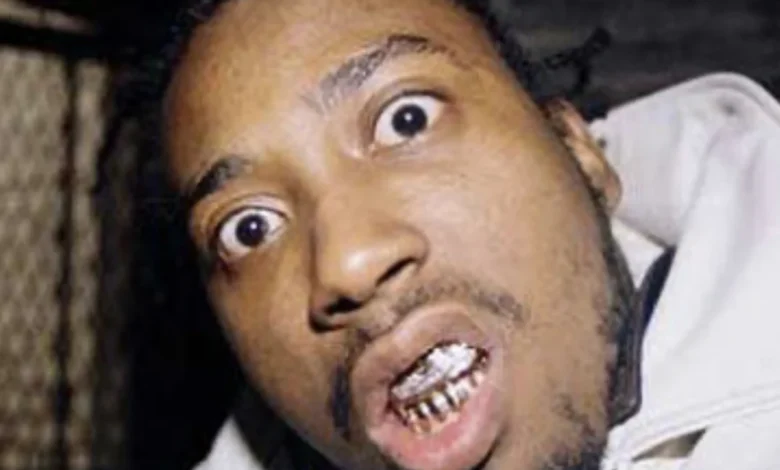
The hip-hop community annually reflects upon the birth and enduring influence of Russell Tyrone Jones, universally recognized by his stage moniker Ol’ Dirty Bastard (ODB). As a founding member of the seminal Staten Island-based collective the Wu-Tang Clan, Jones redefined the boundaries of rap performance, lyricism, and persona. Born on November 15, 1968, in Brooklyn, New York, ODB possessed an idiosyncratic delivery and chaotic charisma that helped propel the Wu-Tang Clan to global superstardom following the release of their 1993 debut album, Enter the Wu-Tang (36 Chambers). Beyond his musical contributions, Jones cultivated a larger-than-life public image marked by unfiltered authenticity, legal turbulence, and spontaneous acts that cemented his status as a permanent fixture in American pop culture history.
Main Facts and Musical Origins
To understand the cultural footprint of Ol’ Dirty Bastard, one must examine the genesis of the Wu-Tang Clan in the early 1990s. Alongside cousins Robert Diggs (RZA) and Gary Grice (GZA), Jones helped form a collective that utilized martial arts imagery, gritty street narratives, and intricate soulful production to capture the bleak realities of New York City housing projects. ODB adopted numerous aliases throughout his career, including Dirt McGirt, Big Baby Jesus, The Specialist, and Osirus, each reflecting a facet of his multifaceted personality.
While RZA served as the sonic architect of the group, ODB functioned as its explosive, unpredictable catalyst. His solo debut album, Return to the 36 Chambers: The Dirty Version, released in 1995 via Elektra Records, debuted to critical acclaim and commercial success. Anchored by hit singles such as "Shimmy Shimmy Ya" and "Brooklyn Zoo," the album showcased his ability to shift seamlessly between slurred, off-key singing, frantic rhyming, and cartoonish vocal inflections. Certified platinum by the Recording Industry Association of America (RIAA), the project proved that individual members of the Wu-Tang Clan could sustain viable, distinct solo careers outside of the collective umbrella.
Chronology of Noteworthy and Unconventional Public Incidents
Throughout his career, Ol’ Dirty Bastard’s personal life frequently intersected with public spectacle, creating a continuous stream of media coverage that blurred the lines between performance art and genuine unpredictability.
In November 1999, Jones was arrested in New York City following a traffic stop where police allegedly discovered crack cocaine and a firearm. While awaiting trial, his legal troubles escalated significantly. In the fall of 2000, facing multiple drug possession charges and active warrants for his arrest, Jones made a notorious live appearance at New York City’s Hammerstein Ballroom. Demonstrating his trademark nonchalance toward legal authorities, he addressed the audience prior to performing, openly acknowledging his fugitive status by stating that he could not remain on stage indefinitely because law enforcement was actively pursuing him. Shortly after delivering a single verse, he evaded capture at the venue, though he was eventually apprehended by police in Philadelphia later that year.
Another defining moment of cultural subversion occurred in the mid-1990s when Jones utilized a stretch limousine to travel from his Brooklyn residence to a local welfare office to collect government assistance food stamps. Captured by MTV News, the stunt drew mixed reactions from the public and political commentators. When questioned about the apparent contradiction of driving in luxury while utilizing public assistance programs, Jones offered a historically charged justification, stating that the government owed him "40 acres and a mule"—a reference to the unfulfilled promise of reparations made to formerly enslaved African Americans during the Reconstruction era. This calculated piece of street theater highlighted systemic economic disparities while weaponizing bureaucratic absurdity through humor.
On the industry front, the 1998 Grammy Awards provided a stage for one of the most famous disruptions in television history, predating subsequent award show interruptions by more than a decade. Frustrated by the Wu-Tang Clan’s loss in the Best Rap Album category—which was awarded to Sean "Puffy" Combs and the Family for No Way Out—Jones took to the stage during the broadcast. Though he arrived on air slightly later than intended, coinciding with songwriter Shawn Colvin’s acceptance speech for Song of the Year, ODB seized the microphone to voice his grievances.
"I went and bought me an outfit today that costed me a lot of money today because I figured Wu-Tang was going to win," Jones declared to the television audience. "I don’t know how y’all see it, but when it comes to the children, Wu-Tang is for the children. We teach the children. Puffy is good, but Wu-Tang is the best. I want you to know that this is ODB, and I love you all."

Supporting Data and Industry Context
The commercial metrics surrounding Ol’ Dirty Bastard underline his viability as a mainstream commodity despite his erratic behavior. Return to the 36 Chambers: The Dirty Version peaked at number seven on the US Billboard 200 chart and remained on the charts for over forty weeks. His sophomore solo release, Nigga Please (1999), featured the hit single "Got Your Money" featuring Kelis, which peaked within the top forty of the Billboard Hot 100 and achieved gold certification.
Collaborations further expanded his reach. ODB lent his distinctive vocals to high-profile tracks by mainstream artists outside of hip-hop, including a memorable remix of Mariah Carey’s 1995 chart-topping single "Fantasy." Carey later credited Jones with injecting an essential edge and collaborative spirit into pop-R&B crossover music, demonstrating how industry executives and elite producers recognized the commercial value of his raw, unfiltered aesthetic.
Official Responses and Media Reactions
Media outlets, legal entities, and cultural critics frequently struggled to categorize Ol’ Dirty Bastard during his lifetime. Law enforcement officials viewed him as a recurrent fugitive who openly defied judicial mandates, while tabloid journalists capitalized on his arrests, substance abuse struggles, and erratic public appearances. Conversely, cultural historians and fellow musicians viewed him as an avant-garde performance artist who operated without a filter, channeling the pain, humor, and resilience of inner-city life.
Within the hip-hop community, reactions to Jones were universally characterized by respect for his lyrical originality and protection of his eccentricities. Members of the Wu-Tang Clan frequently defended him in interviews, emphasizing that his public persona was not a manufactured gimmick, but an authentic reflection of a complex individual battling personal demons while navigating the pressures of sudden celebrity.
Broader Impact and Cultural Implications
The sudden death of Russell Jones on November 13, 2004—just two days before his 36th birthday—from an accidental drug overdose involving cocaine and tramadol, brought a tragic close to a brilliant yet troubled life. However, his death magnified his status as a martyr of hip-hop culture, sparking widespread mourning and tributes from fans and peers alike.
The implications of ODB’s career on modern hip-hop are profound. Long before the emergence of SoundCloud rap, punk-rap crossovers, and internet-era artists who prided themselves on chaotic authenticity and unvarnished public displays, Ol’ Dirty Bastard pioneered the archetype. He demonstrated that hip-hop audiences would embrace vulnerability, eccentricity, and imperfection over polished perfectionism.
Furthermore, his socio-political commentary, whether delivered through unscripted award-show rants or satirical trips to welfare offices, highlighted the intersections of poverty, race, and systemic neglect in America. By refusing to conform to corporate expectations of respectability politics, ODB forced the media and the music industry to confront the realities of urban America on his own terms.
Decades after his passing, the legacy of Ol’ Dirty Bastard endures through archival recordings, fashion tributes, documentaries, and the continued cultural dominance of the Wu-Tang Clan. He remains etched in the collective memory of hip-hop not merely as an eccentric entertainer, but as an irreplaceable foundational pillar who proved that absolute authenticity remains the culture’s most enduring currency.