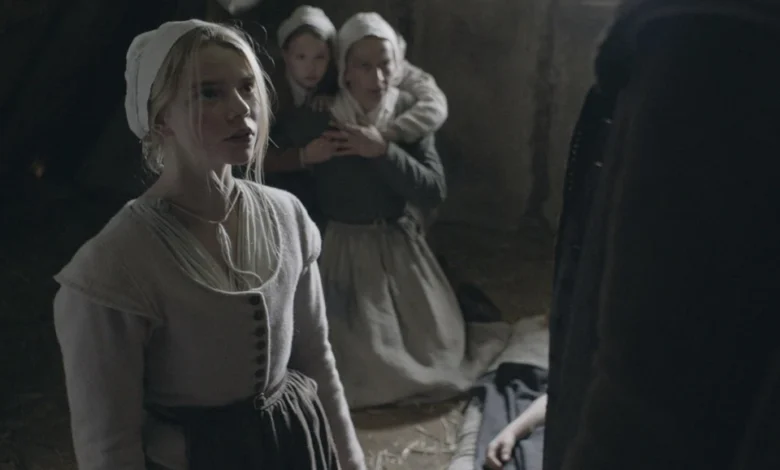
The historical narrative surrounding the witch hunts of the early modern period has long been dominated by the iconic, albeit geographically isolated, trials of Salem, Massachusetts. However, a far more extensive and lethal campaign of persecution occurred across the European continent between the 15th and 18th centuries. In a significant legislative move, the regional government of Catalonia, Spain, recently passed a sweeping measure to officially pardon more than 700 individuals—the vast majority of whom were women—who were executed on charges of witchcraft during this period. This act of restorative justice represents a profound effort by the modern Catalonian state to reconcile with a legacy of systemic violence and gender-based persecution that has been buried in the archives for centuries.
The Legislative Milestone
In late 2021, the Catalonian parliament voted overwhelmingly to recognize the systemic injustice committed against these victims. Out of 135 total votes, 114 members of parliament supported the measure, while 21 opposed it. Beyond the formal pardon, the legislative package includes directives for local municipalities to rename public streets in honor of those who were executed, ensuring that their names are memorialized in the geography of the regions where they once lived.
This initiative is not merely symbolic. By officially clearing the names of the victims, the government of Catalonia is formally acknowledging that these individuals were not "witches" in the sense defined by the superstitious courts of the 16th and 17th centuries, but rather victims of a social and political climate that weaponized fear to target independent women and practitioners of traditional medicine.
A Contextual History of European Witchcraft
To understand the scope of the Catalonian trials, one must look at the broader European landscape. Historians estimate that between 1580 and 1630, approximately 50,000 individuals were executed for witchcraft across Europe. Of that staggering figure, nearly 80 percent were women. This period, often characterized by political instability, religious strife, and erratic climate patterns known as the "Little Ice Age," created a volatile environment where paranoia flourished.

In Catalonia, the trials began at the local level. Unlike regions where the Inquisition maintained a tight grip on legal proceedings, many rural Catalonian villages operated under the influence of local feudal lords. These lords, often seeking to exert control or respond to the anxieties of their constituents, authorized local courts to conduct trials with little oversight. While the Spanish Inquisition generally maintained a skeptical stance toward the existence of witchcraft—often viewing it as a superstitious delusion rather than a tangible threat—the secular courts in rural Catalonia proved far more ruthless.
The Anatomy of an Accusation
The mechanics of these trials were consistently rooted in social scapegoating. An accusation was rarely the result of a single incident; rather, it was often the culmination of a community crisis. In the mountainous regions of the Pyrenees, where many of these trials took place, a natural disaster, a failed harvest, or the sudden death of a child served as the catalyst for accusations.
Because of the isolation of these communities, the legal process was alarmingly simplified. In many secular courts, a confession—often extracted through intimidation or the promise of a more lenient death—was sufficient to secure a conviction. The irony of the legal system at the time was that the more centralized the authority, the more likely the accused was to survive. If a case was transferred to the jurisdiction of the Spanish Inquisition, the victim had a statistically higher chance of acquittal due to the Inquisition’s insistence on verifiable evidence, which was almost always impossible to produce.
For those convicted in secular courts, the penalty was usually death by hanging. While popular imagination often associates the witch hunts with the pyre, the secular courts of Catalonia frequently opted for the gallows. It was a pragmatic decision: hanging was a more efficient and cost-effective method of execution than the labor-intensive process of gathering firewood for a burning.
Voices from the Chamber
The legislative debate in the Catalonian parliament highlighted the contemporary relevance of these historical traumas. Jenn Díaz, a member of the Catalonian parliament, offered a poignant perspective on why this pardon was necessary in the 21st century.

"We are the heiresses of the witches, the poisoners, and the healers," Díaz remarked in an interview following the vote. She drew a direct, albeit complex, parallel between the historical suppression of women who defied societal norms and modern-day misogyny. "There is a connection between the witch hunts and femicide. We want reparation and an understanding that the past is not as distant as we think."
Díaz’s sentiment reflects a growing academic consensus that the witch trials were, at their core, a tool for social control designed to curb the autonomy of women. Whether they were healers, midwives, or simply women who lived outside the protection of a male guardian, these individuals occupied a space in society that made them vulnerable to being "othered" when collective anxiety peaked.
A Broader European Trend
Catalonia is not the first European entity to revisit its dark history. The continent has seen a gradual, localized movement toward the exoneration of those condemned by ecclesiastical or secular courts for witchcraft.
In 2008, the Swiss government officially pardoned Anna Göldi, who was the last woman executed for witchcraft in Europe, having been beheaded in 1782 for allegedly poisoning her employer’s child. In 2011, the Norwegian government inaugurated the Steilneset Memorial in Vardø, a striking architectural monument dedicated to the victims of the Finnmark witch trials. These acts of remembrance serve as a necessary counter-narrative to the romanticized or sanitized versions of history often presented in popular media.
The Implications of Reparation
The decision by the Catalonian parliament to acknowledge these injustices serves several broader functions. First, it acts as a form of "truth and reconciliation" for local communities, allowing them to confront the role their ancestors played in the persecution of their neighbors. By renaming streets, the government is forcing a dialogue about history that has long been suppressed.

Second, the pardon serves as a statement of values for the modern Catalonian state. By siding with the victims of the past, the current government is emphasizing its commitment to gender equality and human rights. It acknowledges that the "witches" were not monsters, but citizens who were failed by their institutions.
Finally, the move underscores a growing scholarly interest in the socioeconomic drivers of the witch hunts. By studying the demographic, environmental, and legal contexts of the Catalonian trials, researchers are gaining a better understanding of how crises—whether they are economic, climate-driven, or political—can lead to the systematic dehumanization of vulnerable populations.
Historical Chronology of the Witch Hunts
- 15th Century: The early development of the witch craze in Europe, fueled by the publication of theological treatises like the Malleus Maleficarum.
- 1580–1630: The peak of the European witch hunts, resulting in an estimated 50,000 executions across the continent.
- 17th Century: The height of secular-led witch trials in rural Catalonia, characterized by localized feudal jurisdiction.
- 1782: The execution of Anna Göldi in Switzerland, often cited as the last legal execution for witchcraft in Europe.
- 2008: The posthumous pardon of Anna Göldi by the Swiss government.
- 2011: The opening of the Steilneset Memorial in Norway, honoring victims of the Finnmark trials.
- 2021: The Catalonian Parliament votes to pardon over 700 victims of the witch trials, marking a major milestone in European historical reconciliation.
Conclusion
The mass pardon in Catalonia is a sobering reminder that the "witch hunts" were not merely a historical curiosity or an aberration of the past, but a deeply embedded component of early modern society that resulted in immense loss of life. By shifting the narrative from the supernatural to the sociological, the Catalonian government has provided a model for how modern states can address the systemic injustices of their past. As the region begins the process of renaming its streets and educating the public on the realities of the trials, it ensures that the women who were once branded as threats to the social order are finally recognized for what they truly were: victims of a system that feared their power and their autonomy. The echoes of these trials serve as a perpetual warning of the dangers inherent in fear-based governance and the importance of preserving the rights of the marginalized, no matter the century.