Phoebe Bridgers Fans Embrace Analog Creativity Through Custom Artwork on Phone-Free Arena Tour

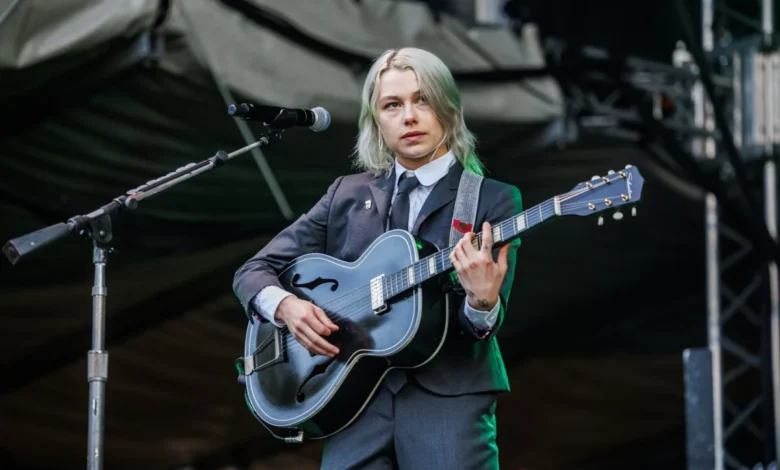
The intersection of live music and digital technology has reached a fascinating turning point as audiences adapt to increasingly restrictive device policies at major concert venues. When acclaimed singer-songwriter Phoebe Bridgers announced that her highly anticipated global routing would strictly prohibit mobile phones and recording devices, many industry observers questioned how modern concertgoers—accustomed to documenting every second of a performance for social media—would react. Instead of retreating into passive observation, Bridgers’ fan base has sparked a vibrant cultural counter-movement, channeling their concert experiences into traditional visual arts. By trading glowing screens for sketchbooks, pencils, and paints, these attendees are redefining what it means to bear witness to a live musical performance.
The phenomenon has rapidly gained momentum across the United States leg of the ongoing arena tour, officially titled the Lost Tour. Rather than capturing pixelated videos or distant photographs from stadium seats, concertgoers are relying on memory, emotion, and immediate post-show reflection to immortalize the evening. Bridgers herself has taken notice of the trend, utilizing her digital platforms to highlight standout pieces created by her audience. This grassroots artistic response offers a compelling glimpse into human behavior when the pervasive compulsion to record is artificially removed, replacing digital consumption with tactile creation.
The Genesis of the No-Phones Policy and the Lost Tour Context
The roots of this artistic wave trace back to the summer announcements surrounding the Lost Tour, which accompanies Bridgers’ latest critically acclaimed studio album, Lost Weekend. Earning a rare five-star review from major music publications, the record has been lauded as a profound exploration of personal reckoning, familial ties, and romantic vulnerability. Recognizing the deeply intimate and emotionally demanding nature of the new material, management and the artist sought an environment free from the distraction of glowing screens and recording red lights.
In recent years, the implementation of phone-free environments at live music events—frequently facilitated by specialized locking pouches such as those provided by Yondr—has transitioned from a novelty to a strategic choice for select performers. Artists including Bob Dylan, Jack White, and Silk Sonic have championed these measures to cultivate a more present, immersive atmosphere. For Bridgers, whose lyricism relies heavily on quiet introspection and rapt silence from the crowd, banning phones was framed as a protective measure for the emotional integrity of the shows.
However, the policy initially sparked debate among ticketing demographics accustomed to capturing and sharing every performance milestone. The psychological shift from documenting an event in real-time to experiencing it purely in the present moment can induce mild anxiety for audiences reliant on digital safety blankets. Yet, as the tour rolled through major American arenas, this initial apprehension transformed into a collective liberation, ultimately manifesting in the widespread production of fan art.
Fan Perspectives and the Psychology of Analog Memory
The transition from digital documentation to manual creation has profound psychological implications for how audiences process live entertainment. Olivia MacDonald, a concertgoer from Massachusetts who attended Bridgers’ packed performance in Boston, found herself compelled to sketch the defining visual elements of the evening hours after the house lights came up. Her artwork focused on poignant details: the singer-songwriter’s signature dripping electric blue eye makeup and the historical weight of her instrument—a guitar formerly owned by the late, influential indie songwriter Elliott Smith.
Reflecting on her creative process in interviews with media outlets, MacDonald articulated a sentiment shared by many within the fandom. While photographs and videos freeze a precise microsecond of time, manual drawings capture an overarching emotional resonance that fosters deeper interpersonal connections and sparks nuanced cultural conversations.
Similarly, Anna Meyer, an attendee at the New York arena stop, translated a striking visual moment—Bridgers performing solo at the piano beneath a stark, solitary spotlight—into a detailed artistic time-lapse. Meyer noted the distinct contrast between the immediate urge to sketch versus the conditioned reflex to check a smartphone. In her view, the enforced absence of digital devices acts as a catalyst for dormant creative impulses. She observed that contemporary society is frequently nudged toward automated or artificial intelligence-generated media, creating a false narrative that visual creation requires technological mediation. By returning to pen and paper, fans are actively reclaiming authorship over their memories, arguing that human-made creations carry an authenticity that neither high-definition cameras nor algorithms can replicate.
Comprehensive Tour Chronology and Global Itineraries
As the Lost Tour prepares for its next major phase, the logistical scale of Bridgers’ enterprise becomes increasingly apparent. The timeline of the campaign has experienced several notable adjustments, driven primarily by health developments earlier in the year. In August, a series of intimate UK album-launch performances in cities including Bristol, Brighton, and Kingston were abruptly postponed after the Boygenius member was hospitalized for acute appendicitis.
Having successfully recovered, Bridgers has rescheduled these intimate celebratory performances to immediately precede her expansive arena dates. The UK and European leg of the Lost Tour is scheduled to commence imminently, featuring support from Isaac Wood, former frontman of the acclaimed experimental rock outfit Black Country, New Road.
Beyond her headline arena routing, Bridgers’ long-term impact on the festival circuit was cemented with the announcement that she will serve as the first official headliner for London’s prestigious All Points East festival. This steady accumulation of high-profile milestones underscores her transition from an underground indie darling to a defining arena-scale voice of her generation.
Philanthropic Partnerships and Social Impact
In tandem with her artistic endeavors, Bridgers has integrated significant philanthropic initiatives into the framework of the Lost Tour. Through a formal partnership with PLUS1, a charitable organization that channels collective donations from concert tickets to grassroots causes, a specific financial contribution—one euro or pound sterling from every ticket sold across the European leg—is directly allocated to local non-profit organizations. These beneficiary groups focus heavily on supporting survivors and communities affected by sexual assault and domestic violence.
This philanthropic integration aligns closely with the thematic weight of Lost Weekend, an album defined by emotional honesty, boundary-setting, and healing from past trauma. By connecting large-scale commercial success with direct community reinvestment, the tour establishes a model for how contemporary artists can leverage their platform to address systemic societal issues without compromising the artistic integrity of their live shows.
Analytical Implications for the Live Entertainment Industry
The success of the Lost Tour’s phone-free mandate, coupled with the organic emergence of fan art, offers valuable data points for the broader live entertainment and music industries. For decades, the proliferation of smartphones at concerts was viewed as an unstoppable technological tide, with venues adapting by constructing larger video screens and artists accepting the trade-off of free digital promotion in exchange for audience distraction.
Bridgers’ experiment demonstrates that audiences are not only willing to surrender their devices for the sake of a better show, but that doing so can actively enhance fan engagement and community building. When digital validation loops are removed, fans compensate by developing alternative rituals—such as trading physical artwork, writing detailed concert diaries, and engaging in deeper interpersonal discussions outside the venue walls.
Furthermore, this trend challenges the prevailing narrative surrounding artificial intelligence and digital art consumption. By demonstrating a grassroots resurgence in analog craftsmanship inspired by live musical performance, audiences are signaling a cultural pushback against hyper-mediated, automated content.
As the Lost Tour heads into its European arenas and prepares for major festival appearances, the enduring legacy of these phone-free performances may extend far beyond the tour dates themselves. It establishes a compelling precedent for how artists can cultivate deeper connections with their audiences, proving that when the recording devices are packed away, the human imagination steps forward to fill the silence.