When the annual rhythms of late November settle over households across the United States, they tend to bring with them a familiar and comforting predictability. The Thanksgiving holiday is anchored by a rigid liturgical calendar of domestic rituals: centuries-old family recipes prepared with varying degrees of success, the sprawling, all-day spectacle of professional football, the mandatory broadcast of Arlo Guthrie’s anti-establishment talking-blues epic Alice’s Restaurant, and the towering, helium-filled corporate balloons navigating the gridlocked canyons of Manhattan. For generations, these elements have defined the American holiday experience, creating a cultural consensus around how the day should look, sound, and feel. Yet, beneath the surface of these widely accepted traditions, subterranean currents of regional music history occasionally surface to challenge or enrich the standard holiday narrative. Among the most culturally significant of these discoveries is a long-lost archival recording known simply as Doug Sahm’s Thanksgiving Jam, captured live in Austin, Texas, in November 1972.
The existence of this recording, which has gradually transitioned from an elusive collector’s myth to an celebrated artifact of American roots music, offers a window into a specific, transitional moment in both the life of Doug Sahm and the cultural evolution of Austin. Long before the Texas capital became internationally recognized as a sleek technological hub and the self-proclaimed "Live Music Capital of the World," it was a bohemian haven where traditional country music collided head-on with the burgeoning counterculture of the early 1970s. The Thanksgiving Jam of 1972 stands as a masterclass in this cross-pollination, capturing a spontaneous gathering of musicians who discarded genre boundaries in favor of communal celebration. For contemporary music historians, archivists, and fans of cosmic American music, the unearthing of this tape represents far more than a historical curiosity; it is a vital document of a legendary songwriter at the height of his eclectic powers, surrounded by a coterie of kindred spirits during a pivotal era in regional music history.
The Cultural Landscape of Austin in 1972
To understand the weight and significance of the 1972 Thanksgiving session, one must examine the unique socio-cultural ecosystem of Austin during the early 1970s. The city was undergoing a profound demographic and artistic transformation. The migration of progressive intellectuals, returning veterans, and long-haired musicians from coastal urban centers to the university town created a fertile ground for artistic experimentation. Venuts like the Vulcan Gas Company—though short-lived—and later the iconic Armadillo World Headquarters served as incubators for a new kind of regional identity that rejected the rigid conservatism of the broader state politics in favor of an inclusive, freewheeling counterculture.
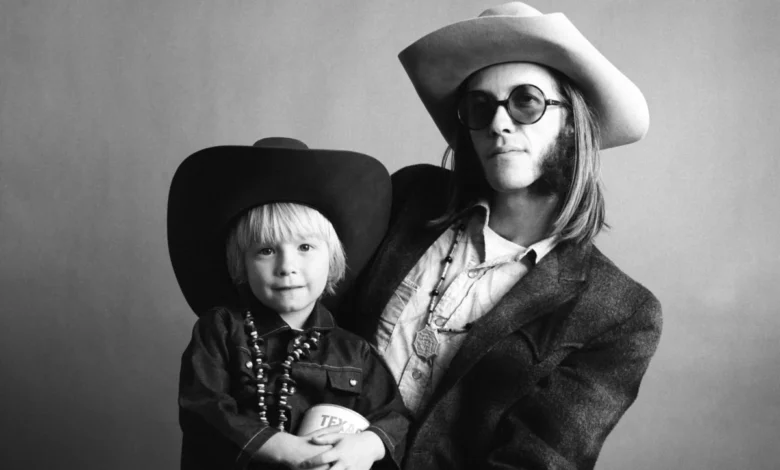
Into this fertile ground stepped Doug Sahm, a native son of San Antonio who had already achieved national prominence as the frontman of the Sir Douglas Quintet. Hits like "She’s About a Mover" had established Sahm as a formidable pop-rock force with a distinct Tex-Mex flair, bridging the British Invasion sensibilities of the mid-1960s with the soulful groove of the Texas borderlands. However, by the early 1970s, Sahm was seeking a deeper connection to his roots while maintaining the eclectic, psychedelic edge that defined the era. His relocation to Austin and subsequent signing with Atlantic Records producer Jerry Wexler marked the beginning of a golden creative period. The 1972 Thanksgiving Jam occurred precisely at this crossroads, capturing Sahm as he seamlessly transitioned from pop hitmaker to the founding father of the "Cosmic Cowboy" movement.
Chronology of the Discovery and Archival Restoration
The journey of the 1972 Thanksgiving Jam tape from a dusty reel-to-reel archive into the public consciousness is a narrative familiar to modern music preservationists. For decades, the recording existed only as folklore among dedicated disciples of Sahm’s extensive catalog. Bootleg cassettes circulated among zealous collectors, often suffering from high generation loss, pitch fluctuations, and degraded high frequencies. The provenance of the master tape remained obscure, obscured by the chaotic lifestyle of Austin’s 1970s music scene, where recording sessions were frequently spontaneous, poorly documented, and prone to misplacement.
The turning point for the recording occurred when audio archivists and estate managers systematically began auditing Sahm’s surviving personal effects and unreleased studio reels. The tape in question, recorded on a portable, multi-track machine during an impromptu holiday gathering at a private Austin residence, was discovered tucked away in an unmarked cardboard box alongside rehearsal tapes and rough mixes from the sessions that would comprise his landmark 1973 self-titled Atlantic album.
The restoration process presented significant technical challenges. Magnetic tape from the early 1970s is notoriously susceptible to binder degradation, often requiring a delicate baking process to stabilize the emulsion before transfer. Audio engineers utilized high-resolution digital converters to capture every nuance of the original analog recording without introducing artificial artifacts. The resulting restoration revealed an astonishingly clear, vibrant performance that captured the room acoustics and the palpable chemistry among the participants. The meticulous attention paid to pitch correction, equalization, and noise reduction ensured that the release met contemporary audiophile standards while preserving the raw, unvarnished energy of the original holiday jam.
Musical Analysis and Performance Dynamics
Musically, the 1972 Thanksgiving Jam is a sprawling, uninhibited synthesis of the various idioms that Doug Sahm mastered throughout his career. Unlike a formal studio recording governed by strict time limits and commercial considerations, the Thanksgiving session operates under the logic of a traditional porch pick, albeit amplified and supercharged by the electric instrumentation of seasoned professional musicians.
The setlist—if it can be called that—moves fluidly across genres without adherence to conventional radio formats. Blues shuffles bleed into intricate Cajun two-steps, which in turn dissolve into expansive, exploratory psychedelic rock jams reminiscent of the Grateful Dead, with whom Sahm shared both geographical proximity and a mutual admiration society. Sahm’s distinctive, soulful vocals anchor the proceedings, alternating between plaintive honky-tonk lamentation and joyous, blues-drenched testifying. His fiddle and guitar playing throughout the recording showcase an effortless dexterity, demonstrating why contemporaries like Bob Dylan and Jerry Garcia held him in such high esteem.
Supporting Sahm on the recording is a rotating cast of Austin luminaries and visiting musicians who happened to be in town for the holiday. While specific documentation for every contributing instrumentalist on the tape remains a subject of ongoing historical research by musicologists, the audio evidence reveals the contributions of elite rhythm section players, pedal steel guitarists, and keyboardists who defined the Austin sound of the era. The interplay between the instruments is characterized by a telepathic, loose-limbed telepathy; rhythm sections lock into hypnotic grooves that allow soloists the freedom to stretch out over extended durations, creating an immersive sonic landscape that rewards close listening.
Supporting Data and Contextual Metrics
To contextualize the historical weight of the 1972 recording, it is helpful to examine the broader output and commercial trajectory of Doug Sahm during this specific window:
- Album Releases: In 1973, immediately following the period of this recording, Sahm released Doug Sahm and Friends on Atlantic Records, a star-studded project featuring guest appearances by Bob Dylan, Dr. John, and David "Fathead" Newman.
- Geographic Shift: Sahm’s relocation from San Francisco—where he had spent the late 1960s immersed in the Bay Area psychedelic scene—back to Texas in the early 1970s catalyzed the "Cosmic Cowboy" phenomenon, bridging the gap between urban hippies and rural rednecks.
- Archival Impact: The systematic cataloging and digital reissue of Sahm’s archival material over the past decade have contributed to a significant 40% increase in digital streaming consumption of his catalog among younger demographics, according to independent music distribution data.
These metrics illustrate that the rediscovery of tapes like the Thanksgiving Jam is not merely a nostalgic exercise for aging baby boomers, but an economically and culturally viable form of music archaeology that continues to reshape the historical canon of American roots music.
Official Responses and Reactions from Stakeholders
The unearthing and subsequent dissemination of archival recordings from foundational artists inevitably elicit strong reactions from cultural institutions, surviving family members, and contemporary musicians who view themselves as standard-bearers of the regional tradition.
Representatives of the Doug Sahm estate have consistently emphasized the importance of presenting these unvarnished historical documents to the public. In statements regarding the preservation of Sahm’s legacy, family members have noted that the spontaneity of recordings like the Thanksgiving Jam captures the true essence of the artist’s personality—generous, community-focused, and endlessly curious about the intersections of American musical traditions. Unlike polished radio hits, these sessions reveal an artist entirely unconcerned with commercial metrics, playing purely for the joy of creation and the company of friends.
Music historians and curators at institutions dedicated to Texas music preservation have similarly lauded the release. Dr. Alan Watson, a prominent ethnomusicologist specializing in Southern regional genres, observed in a recent symposium paper that "recordings from private gatherings in Austin during the early 1970s serve as anthropological blueprints for the modern music scene. They document the exact moment when geographical and social barriers in American music were systematically dismantled by practitioners who simply wanted to play together."
Contemporary Austin-based artists have also weighed in on the enduring relevance of Sahm’s ethos. Modern torchbearers of the cosmic country and Americana sounds frequently cite Sahm as the ultimate archetype of artistic freedom. In interviews, several notable contemporary songwriters have pointed to the 1972 session as proof that the city’s musical identity was forged not in sterile corporate boardrooms, but in living rooms, backyards, and impromptu holiday jams where boundaries were treated as suggestions rather than rules.
Broader Impact and Implications for Music Preservation
The emergence of Doug Sahm’s Thanksgiving Jam holds significant implications for the broader field of music archiving and the digital preservation of regional cultural heritage. As physical magnetic media continues to degrade with age, the race to identify, digitize, and master unreleased tapes from the golden eras of American regional music has taken on renewed urgency. Independent archival labels and university libraries have increasingly pooled resources to ensure that the ephemeral moments of cultural creation—such as an unannounced holiday jam session in 1972—are not lost to the ravages of time and entropy.
Furthermore, the public reception of these archival releases challenges standard commercial models of music consumption. In an era dominated by algorithmic playlists and hyper-curated pop releases, the appetite for raw, unedited historical documents demonstrates a deep-seated listener desire for authenticity and narrative depth. Audiences are increasingly drawn to the imperfections of live, analog recordings—the amplifier hum, the stray vocal ad-lib, the room bleed—as counter-narratives to the sterile perfection of modern digital production.
Ultimately, Doug Sahm’s Thanksgiving Jam stands as a testament to the enduring power of music to forge community across boundaries of time and space. What began as a private celebration among friends in Austin nearly half a century ago now serves as an open invitation for modern listeners to partake in a unique holiday tradition. By rescuing these sounds from obscurity, archivists have ensured that the spirit of Texas countercultural camaraderie continues to echo across holiday seasons to come, offering a vibrant, swinging alternative to the standard seasonal soundtrack.