Soundwalk Collective and Patti Smith Announce Correspondences Vol III EP Alongside Major Exhibition and UK Live Dates

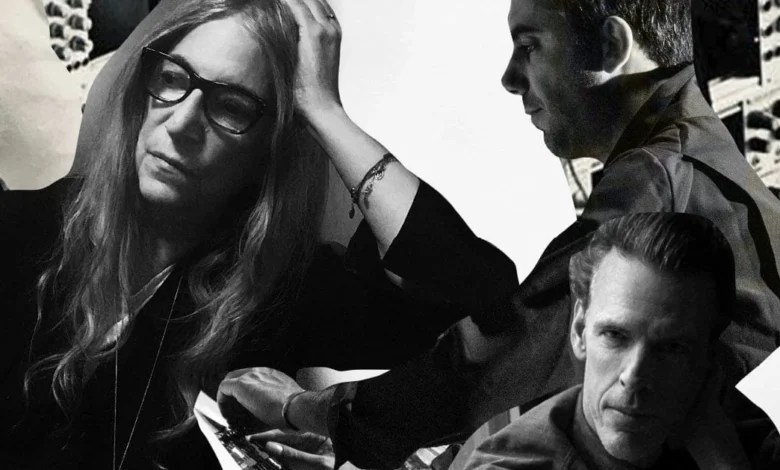
The contemporary sonic art and poetry vanguard Soundwalk Collective—comprising founding artists Stephan Crasneanscki and Simone Merli—has officially announced the forthcoming release of Correspondences Vol III. Arriving on January 8, 2027, via the independent record label Bella Union, the two-track extended play features the compositions "Cry of the Lost" and "Prince of Anarchy." This latest offering serves as the third major installment in a sweeping, decade-spanning multidisciplinary project that investigates the sonic footprints of poets, revolutionaries, ecological collapse, and geopolitical upheaval across the globe.
The announcement of the new EP coincides with the major launch of the comprehensive Correspondences multidisciplinary exhibition at the Triennale Milano in Italy, curated in collaboration with the Fondation Cartier pour l’art contemporain. Furthermore, the collaborative entity has expanded its forthcoming live itinerary, adding a new performance date at the Bristol Beacon in the United Kingdom to precede their previously announced, sold-out engagement at London’s Royal Festival Hall.
The Evolution of a Decade-Spanning Project
To understand the conceptual weight of Correspondences Vol III, one must examine the trajectory of the broader overarching project, which officially commenced its public release schedule in 2024. Conceived initially by Crasneanscki and Merli through years of archival field recording, spatial acoustic research, and literary collaboration with legendary singer-songwriter and poet Patti Smith, the project explores the conduits of communication between humanity, history, and the natural world.
The first volume, released in 2024, was heavily preoccupied with mortality, martyrdom, and the intellectual legacy of Italian filmmaker, poet, and public intellectual Pier Paolo Pasolini, who was tragically murdered in 1975. Crasneanscki and Merli mapped the acoustic environments associated with Pasolini’s life and final days, creating a haunting sonic memorial that Smith imbued with raw, elegiac verse.
Following this initial exploration, Vol II pivoted toward the sacred and the catastrophic, centering its attention on the Chernobyl exclusion zone in Ukraine. Within that desolate, one-thousand-square-mile radioactive perimeter, the collective located the church of St. Elijah—the sole operational house of worship remaining in the forbidden zone. The work captured the eerie, suspended acoustics of a landscape fundamentally altered by human error and invisible poison.
With the arrival of Correspondences Vol III, the thematic focus sharpens onto the mechanics of communication itself—specifically, what occurs when systems of correspondence are violently disrupted, ignored, or severed entirely. According to Crasneanscki, the two new tracks share an undeniable thematic continuity defined by "an utter sense of inevitable climate catastrophe." He elaborates on the dual nature of the work: "It has both a political and an ecological dimension, and somehow it has a liquid complexion; it’s all ice and water here."
Acoustic Violence in the Ocean’s Twilight Zone
The primary focal point of the new release’s first single, "Cry of the Lost," is the systemic acoustic trauma inflicted upon marine ecosystems by industrial activity. Hundreds of meters beneath the ocean’s surface, in the bathypelagic twilight zone where sunlight fails to penetrate, acoustic navigation is the primary sensory modality for marine mammals. For toothed whales, dolphins, and baleen species, sound serves as vision, social network, and survival mechanism. Across vast expanses of dark, remorseless water, these animals maintain complex familial webs through vocalizations that travel thousands of miles.
This delicate, ancient acoustic architecture is systematically shattered every ten seconds, continuously over days and weeks, by industrial seismic airgun arrays. Towed behind specialized survey vessels hunting for offshore oil and gas deposits, these massive pneumatic devices blast high-pressure pulses of compressed air directly toward the seabed. The resulting sound pressure levels at the source far exceed the noise output of standard commercial shipping, reaching volumes equivalent to underwater explosions.
These deafening blasts scramble, mask, and utterly drown out cetacean songs. The ecological consequences are devastating: family groups are fractured, navigation is disoriented, and displaced animals frequently wash ashore dead far from their natural habitats.
Dissecting "Cry of the Lost"
"Cry of the Lost" directly confronts this anthropogenic catastrophe through a dense, layered sonic arrangement. The track integrates undersea acoustic recordings captured by Oslo-based artist Jana Winderen, archival ocean soundscapes sourced from the TBA21–Academy, direct field recordings of industrial seismic airgun arrays, and the resonant, weeping cello arrangements performed by contemporary musician Lucy Railton.
Over this harrowing acoustic backdrop, Patti Smith delivers a poetic narrative structured around an un-creation myth—a deliberate undoing of the biblical Genesis. The composition opens on the conceptual "third day," when biblical text describes the gathering of the Earth’s waters, but accelerates toward a dystopian conclusion where an ocean choked with industrial noise transforms the cradle of life into a watery grave.
Reflecting on the emotional resonance of the piece, Smith draws a direct parallel between human parental instinct and the plight of marine mammals. "It’s so terrible," Smith notes. "Imagine being a parent and you always know where your children are, and then suddenly they can’t hear you anymore. You’re calling and calling, but they never call back. Whales and dolphins are also mothers and fathers. These are their lives."
Discussing her collaborative methodology with Soundwalk Collective, Smith emphasizes the improvisational and instinctual nature of their creative synergy. "I feel like we do our work nakedly," she explains. "We just go in with an epiphany and create our work out of nothing. And then through these correspondences, it is given clothes of gold."
The project’s promotional materials characterize "Cry of the Lost" as a modern distress flare and an ecological message in a bottle. The track concludes with the repeated, echoing phrase, "Such great tears," cast out symbolically into rising and acidifying seas.
From Siberian Glaciers to 19th-Century Anarchism
While the first side of the EP is anchored in contemporary marine devastation, the second track, Prince of Anarchy, pivots dramatically across time and space, traveling back one hundred and fifty years to the frozen landscapes of the Russian North.
The composition is inspired by the formative years of Piotr Kropotkin, a Russian prince and geographer from Moscow who, during his early scientific expeditions in Siberia, made pivotal observations regarding glacial retreat and the physical markers left behind in ancient rock formations. Beyond his contributions to early geographical science, Kropotkin was profoundly influenced by the egalitarian, leaderless communities he encountered among indigenous Siberian populations.
At the age of twenty-eight, Kropotkin turned his back on a prestigious, aristocratic career appointment within the Russian Geographical Society. Instead, he dedicated his life to the intellectual and practical development of nineteenth-century anarchism, advocating for a social structure based not on hierarchy or state coercion, but on voluntary cooperation, mutual aid, and human kindness.
Crasneanscki points to the contemporary relevance of Kropotkin’s philosophies in the face of modern ecological crises. "I like to think that anarchy may be a teaching we received from those we call ‘primitive,’" Crasneanscki states, "and a possible political way to act against today’s necrocapitalism."
Exhibition and Live Performance Itineraries
The release of Correspondences Vol III coincides with the ongoing presentation of the Correspondences exhibition at the Triennale Milano, offering museumgoers an immersive, spatialized encounter with the project’s audio-visual archives, sculptural elements, and poetic texts. The exhibition highlights the collective’s dedication to merging high-concept academic research with visceral contemporary art.
In tandem with the recorded output and museum exhibitions, Soundwalk Collective and Patti Smith have solidified their live performance schedule for early next year. Due to overwhelming public demand, the duo has added a regional United Kingdom tour date ahead of their major London performance.
The updated live itinerary includes:
- Tuesday, February 2: Bristol, UK – Bristol Beacon
- Thursday, February 4: London, UK – Royal Festival Hall (Sold Out)
These live performances are designed as immersive theatrical and sonic experiences, merging Smith’s spoken-word delivery and impassioned vocals with the intricate, field-recording-driven soundscapes constructed by Crasneanscki and Merli.
Pre-Order and Publication Details
Correspondences Vol III will be officially released on January 8, 2027, via Bella Union. Pre-orders for physical vinyl editions and digital streaming formats are currently accessible through designated distribution networks. As Soundwalk Collective and Patti Smith continue to map the intersections of historical memory, political philosophy, and urgent ecological realities, this latest volume promises to challenge listeners to confront the consequences of a world where human industry has drowned out the ancient voices of the natural sphere.