The Evolving Pulse of the North Mississippi Hill Country: Reed Turchi and the Stewardship of a Living Tradition

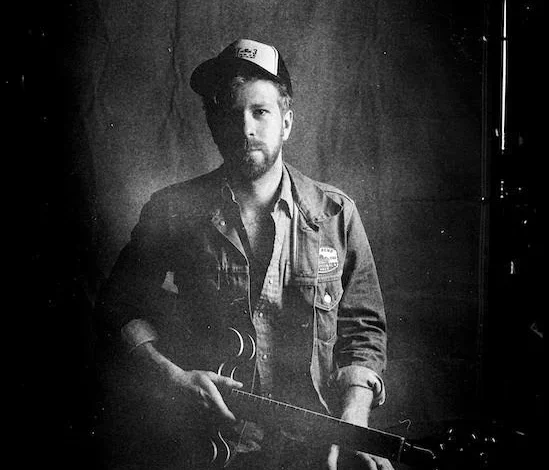
Reed Turchi has spent much of his musical career immersed in the North Mississippi Hill Country blues tradition. A musician, producer, and poet, Turchi has studied its history, learned from the musicians who shaped it, and documented their work through his Devil Down Records label. His experience has put him in an unusual position: not only as a student and performer of the tradition, but also as someone who has helped preserve, interpret, and carry it forward. While many contemporary artists treat blues as a static historical artifact, Turchi views it as a living, breathing language that requires both reverence for the past and the courage to adapt for the future.
The Genesis of a Musical Apprenticeship
Turchi’s journey into the heart of Hill Country blues did not follow a conventional path. Growing up in Swannanoa, North Carolina, he was raised in a household where music was a central pillar, yet his specific obsession with the North Mississippi sound was catalyzed during his time at the University of North Carolina. It was there that he encountered folklorist William Ferris, a pivotal figure in the documentation of Southern music. Under Ferris’s mentorship, Turchi began editing archival tapes, including recordings of Mississippi Fred McDowell dating back to August 1967.
These archival sessions acted as a masterclass. By meticulously listening to the raw, unvarnished performances of the genre’s pioneers, Turchi developed a technical and emotional vocabulary for the slide guitar. He internalized the repetitive, hypnotic structures that define the tradition—a style of playing that favors the “drone” over the standard, chord-heavy progressions found in urban blues. This process was not academic in the traditional sense; it was an act of osmosis. He transitioned from a passive listener to a practitioner by embedding himself in the scene, eventually producing recordings for artists like Kenny Brown and collaborating with the North Mississippi Allstars.
Defining the Foundations: A Genre of Improvisation
To understand the significance of Turchi’s work, one must recognize the four pillars of the Hill Country sound: Othar Turner, Mississippi Fred McDowell, Junior Kimbrough, and R.L. Burnside. Each contributed a distinct stylistic thread that, when woven together, created the genre’s unique tapestry. Turner’s fife-and-drum tradition provided the percussive, syncopated backbone, while McDowell’s open-D tuning introduced the droning, vocal-mimicking slide lines that have become the genre’s signature. Kimbrough added a layer of hypnotic complexity in standard tuning, and Burnside’s open-G approach added a raw, driving intensity.
Turchi notes that the genre’s structural simplicity—often centering on a single root note or a repeating one-to-two riff cycle—is exactly what provides its immense freedom. Unlike genres that rely on rigid turnaround structures, Hill Country blues is essentially a canvas for improvisation. Turchi has performed songs like R.L. Burnside’s "Going Down South" with dozens of different musicians, noting that each iteration yields a different result depending on the interplay between the rhythm section and the lead guitar. This adaptability, he argues, is what makes the tradition universal and enduring.
The Interplay of Poetry and Sound
Beyond the fretboard, Turchi operates as a poet, a discipline that deeply informs his approach to songwriting. The challenge, he observes, lies in the "monochordal" nature of the genre. Because the music is built on repetitive, hypnotic riffs, there is little room for the expansive, narrative-driven lyrics common in folk or singer-songwriter traditions. Consequently, Hill Country lyrics must be lean, evocative, and capable of holding multiple meanings—often relying on double entendres or elliptical phrases.
For Turchi, the sonic environment always dictates the lyricism. While a poem might emerge from the cadence of words, a song emerges from the riff. He describes the process as a push-and-pull; sometimes the music demands a spare, minimalist vocal, and at other times, the lyrics serve as a percussive instrument themselves. This tension between the literary and the rhythmic is a hallmark of his creative output, visible in projects where he attempts to carve out space for storytelling within the rigid constraints of a repeating blues groove.
Documenting the Legacy: Devil Down Records
Turchi’s work as a producer has been instrumental in capturing a snapshot of the North Mississippi scene that might have otherwise been lost to time. His label, Devil Down Records, has focused on preserving live, unadorned performances that prioritize "feeling" over technical perfection. His philosophy is informed by the "live-take" aesthetic of classic jazz, where the goal is to capture a singular, fleeting moment of human expression rather than constructing a song through digital layering.

Significant contributions include a double album with Kenny Brown—featuring what is widely considered Brown’s only solo acoustic recording—and an invaluable session with bassist Joe Ayers. The Ayers recording, which includes original compositions he wrote with Junior Kimbrough, provides a critical historical document, clarifying the role Ayers played in shaping the Kimbrough sound. These efforts are not merely for nostalgia; they represent a deliberate attempt to keep the historical record accurate and complete.
The Economic Landscape of Independent Blues
The economics of recording and distributing independent blues have undergone a seismic shift over the last two decades. Turchi reflects on a time when an independent release could move 1,000 physical units, generating enough revenue to sustain further production. The transition to the streaming era has altered the financial viability of such niche projects, a change Turchi acknowledges with a pragmatic, if cautious, eye. He points out that even during the "golden age" of labels like Fat Possum, the financial rewards were rarely exorbitant.
However, the rise of digital accessibility has created a paradox: while direct revenue from album sales has dwindled, the visibility of the genre has increased. Turchi identifies the current era as a "guitar revival," fueled in part by high-profile acts like The Black Keys, whose Delta Kream album brought the Hill Country sound to a massive, international audience. He suggests that this mainstream exposure acts as a tide that lifts all boats, allowing for a new generation of musicians—such as Cedric Burnside and Kody Harrell—to find audiences far beyond the borders of Mississippi.
Synthesis and Evolution: The Modern Era
Turchi’s own musical evolution continues to mirror his philosophy of "living tradition." His most recent work, including the 2025 release World on Fire, sees him moving away from the "raw rock" aesthetic of overdriven, heavy-gauge electric guitars in favor of a cleaner, more ensemble-focused sound. By incorporating influences from soul-jazz masters like Grant Green and Jimmy Smith, as well as the desert blues of Saharan groups like Tinariwen and Bombino, Turchi demonstrates that the Hill Country tradition is not a closed circuit.
His work is perhaps best exemplified by the recent remixing and remastering of his 2012 album Road Ends in Water. By stripping away the "more is better" production choices of his youth—such as excessive microphone layering—and returning to a sparse, live-in-the-room mix, Turchi achieved a sound that felt more authentic to the source material. It was an act of artistic reconciliation: acknowledging the past while refining it with the wisdom of hindsight.
Implications for the Future
The debate over "authenticity" in music is one that Turchi largely dismisses. He argues that the music has always been in a state of flux—pointing out that even R.L. Burnside’s sound shifted drastically after his exposure to the Chicago scene. For Turchi, the primary obligation of a musician is not to maintain a museum piece of the past, but to play with sincerity and to provide the listener with a clear map of the tradition’s origins.
As a Grammy-winning engineer and a dedicated archivist, Turchi’s influence is twofold. First, he has helped secure the legacy of the North Mississippi Hill Country by ensuring that the voices of its practitioners were recorded with care and respect. Second, by integrating these sounds into a modern context, he has prevented the genre from stagnating. The success of his recent work and his ongoing collaborations suggest that the "Hill Country" is not a geographic boundary, but a state of mind—one that continues to evolve, move, and, above all, demand that its listeners dance.
Looking ahead, Turchi remains a vital node in the network of blues preservation. Whether through his re-releases of early work or his exploration of new, acoustic-driven compositions, his career serves as a blueprint for how a contemporary artist can act as a steward of tradition without sacrificing the forward momentum of their own creative voice. In an age of infinite content and ephemeral trends, Turchi’s commitment to the enduring power of the riff and the human story within the song ensures that the pulse of the North Mississippi Hill Country will continue to beat for a new generation of listeners.