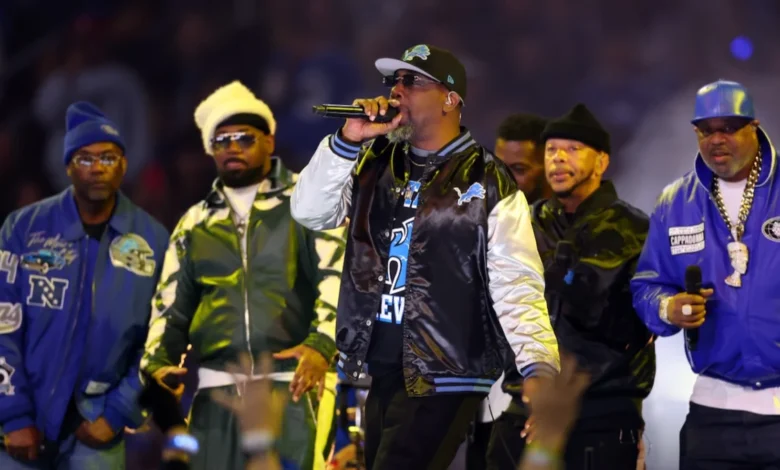
The intersection of legendary hip-hop culture and professional sports reached a fever pitch this past Thursday as the Wu-Tang Clan took center stage for the Detroit Lions’ Thanksgiving Day halftime show. In a performance that bridged generational gaps and musical genres, the Staten Island collective delivered a high-octane set that served as the centerpiece for one of the NFL’s most storied annual traditions. The event, held at Ford Field during the Lions’ marquee matchup against the Chicago Bears, was bolstered by the unexpected addition of Red Hot Chili Peppers drummer Chad Smith, who provided a percussive foundation for the group’s iconic catalog.
A Curated Spectacle: The Eminem and Rosenberg Influence
The selection of the Wu-Tang Clan was far from a random booking; it was the result of a deliberate, long-term strategy spearheaded by Detroit’s own Eminem and his longtime manager, Paul Rosenberg. Last year, the duo formalized a multi-year partnership with the Detroit Lions organization to serve as executive producers for the team’s annual Thanksgiving halftime festivities. The initiative was designed to inject a sense of cultural relevance and high-concept entertainment into a traditional sports slot.
Eminem and Rosenberg, both self-professed disciples of the Wu-Tang sound that dominated the early 1990s, aimed to curate a lineup that would resonate with both legacy fans and younger viewers. The success of last year’s inaugural performance, headlined by Jack White, set a high bar for the production. By bringing the "Shaolin" sound to the Midwest, the producers successfully transformed a routine halftime intermission into a nationally televised cultural event.
"We often like to do things that are both exciting and unexpected," Rosenberg stated in an official release following the performance. "A Wu-Tang Clan Thanksgiving performance in Detroit certainly fits that description. Both Eminem and myself have been fans since the early 90s, along with a whole generation of Detroit football fans, and we are honored to bring them to this year’s stage."
The Setlist and Musical Execution
The performance featured a rapid-fire succession of the group’s most essential tracks, underscoring their vast influence on the trajectory of hip-hop. The set included seminal records such as "Triumph," "Da Mystery of Chessboxin," "Protect Ya Neck," "Method Man," "Shimmy Shimmy Ya," "Ice Cream," "C.R.E.A.M.," and the anthem "Wu-Tang Clan Ain’t Nuthing ta F’ Wit."
The inclusion of Young Dirty Bastard, son of the late, legendary Ol’ Dirty Bastard, provided a poignant connection to the group’s origins. His participation served as a bridge between the founding era of the Clan and their current iteration. Chad Smith’s integration into the ensemble added a layer of raw, live energy that complemented the group’s classic samples, marking a rare crossover that highlighted the percussive, aggressive nature of the group’s production style.
Chronology of a Milestone Year
The Thanksgiving performance serves as the crowning achievement in an exceptionally busy 2026 for the Wu-Tang Clan. The group’s trajectory throughout the year has been defined by high-profile appearances and institutional recognition:
- June 2026: The Clan performed a high-energy set at Madison Square Garden during Game 4 of the NBA Finals, signaling their continued relevance in the world of professional sports entertainment.
- Summer 2025 – October 2026: The group executed their "Wu-Tang Forever: The Final Chamber" tour. Initially conceived as a farewell series, the immense popular demand forced the group to extend the tour across North America, concluding on October 4, 2026, in Phoenix.
- November 2026: In a historic moment for the genre, the group was formally inducted into the Rock & Roll Hall of Fame. They shared this honor with a diverse class of music legends, including Oasis, Iron Maiden, Sade, and Phil Collins, cementing their status as cultural icons rather than merely hip-hop pioneers.
Organizational Perspectives
The Detroit Lions organization has leaned heavily into the halftime spectacle to bolster the "Thanksgiving Day Classic," a game that historically draws one of the highest television audiences of the NFL regular season. Rich Haddad, President and CEO of the Detroit Lions, emphasized the alignment between the team’s brand and the musical heritage of the performers.
"Our Thanksgiving Day Classic is one of the greatest traditions in sports, and Wu-Tang Clan is one of the greatest performers in music," Haddad remarked. By pairing the NFL’s traditional audience with the specific, gritty aesthetic of Staten Island’s finest, the organization signaled a shift toward more unconventional halftime programming that prioritizes artistic prestige over mass-market pop music.
Implications and Cultural Impact
The success of the performance raises broader questions about the future of NFL halftime entertainment. For years, the Super Bowl halftime show has been the primary venue for massive pop-culture spectacles. However, by treating regular-season halftime shows—particularly those on high-visibility holidays—with the same level of production care, the NFL is effectively creating multiple "micro-events" throughout the season.
The choice of the Wu-Tang Clan specifically reflects a maturation in how hip-hop is treated by mainstream American institutions. Once considered a niche or underground genre, the group’s presence on the Thanksgiving stage—sandwiched between professional football drives—serves as a testament to the longevity of the music. The fact that the performance was curated by Eminem, a multi-generational superstar himself, suggests that the future of NFL entertainment will likely be driven by artist-led production teams who understand the nuance of live music culture.
Furthermore, the integration of live musicians like Chad Smith into a hip-hop set indicates a growing preference for hybrid performances that break away from traditional "backing track" models. This shift not only enhances the audio quality for the home viewer but also provides a dynamic visual spectacle that justifies the high-stakes environment of an NFL stadium.
Analysis of the "Wu-Tang" Brand
The Wu-Tang Clan’s ability to remain relevant three decades after their debut is a rarity in the music industry. Their brand has expanded from music into film, television, and now, high-profile sports entertainment. By carefully curating their recent appearances—from the NBA Finals to the Rock & Roll Hall of Fame and finally to the NFL gridiron—the group has maintained a level of prestige that few acts of their era have achieved.
The decision to perform at the Thanksgiving Day game, specifically, aligns with the group’s "Final Chamber" era, which has focused on legacy-building. By performing in front of a domestic, multi-demographic audience, they have effectively introduced their catalog to a new generation of listeners who may not have been present during the group’s 1990s peak.
As the NFL continues to navigate the evolving landscape of sports entertainment, the model established by the Detroit Lions and the Wu-Tang Clan offers a blueprint for success. By leveraging deep industry connections, prioritizing authentic artistic voices, and embracing the "unexpected," the league can continue to command the attention of a fragmented media landscape. For the Wu-Tang Clan, the performance was not just a job; it was a victory lap for a group that has spent thirty years redefining what it means to be a legend in the music industry.