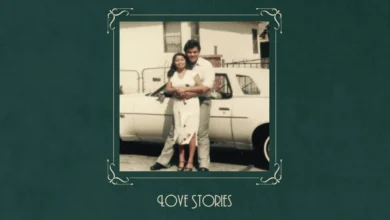
Seu Jorge Redefines His Global Sound with The Other Side and a Bold Reimagining of Nick Drake’s River Man


The international music community has turned its attention toward the latest release from Brazilian polymath Seu Jorge, whose new album, The Other Side, represents a significant milestone in a career that has spanned more than two decades. Released via Amor in Sound, the album is being hailed as Jorge’s most ambitious and personal work to date, characterized by its meticulous production and a standout collaboration with American alternative icon Beck on a cover of Nick Drake’s "River Man." This release marks the culmination of a sixteen-year creative process, signaling a profound shift from the funk-soul-samba fusion that first brought Jorge global acclaim to a more contemplative, sophisticated exploration of jazz, bossa nova, and classic Música Popular Brasileira (MPB).
The Long Road to The Other Side
The genesis of The Other Side dates back nearly sixteen years, a period during which Seu Jorge transitioned from a rising star of Brazilian cinema and music to an established global icon. Jorge, perhaps most widely recognized for his role in the Academy Award-nominated film City of God and his haunting Portuguese-language David Bowie covers in Wes Anderson’s The Life Aquatic with Steve Zissou, has often been a bridge between Brazilian traditions and Western pop sensibilities. However, The Other Side represents a departure from the "pop" expectations of his earlier work.
In statements regarding the album’s lengthy gestation, Jorge emphasized the necessity of artistic restraint. "Above all, this album represents patience," Jorge remarked, reflecting on the decade-and-a-half spent refining the tracks. He noted that the project required a specific type of discipline—the ability to resist the industry’s pressure for frequent releases in favor of waiting until the sonic architecture of the record was fully realized. This patience is evident in the album’s texture, which draws heavily on the orchestral language of Claus Ogerman—the legendary arranger for Tom Jobim and João Gilberto—and the minimalist, high-fidelity aesthetic often associated with the ECM Records catalog.
Reimagining the Folk Canon: The Nick Drake Connection
At the heart of the album’s initial reception is the reimagining of "River Man," originally released by British folk singer-songwriter Nick Drake on his 1969 debut, Five Leaves Left. Covering Drake is a task often met with scrutiny by folk purists, given the original artist’s cult-like status and the delicate, singular nature of his compositions. The Seu Jorge and Beck rendition, however, has been received as a transformative piece of art that respects the original’s melancholic 5/4 time signature while infusing it with a rhythmic fluidity characteristic of Brazilian jazz.
The choice of "River Man" was driven by producer Mario Caldato Jr., a longtime collaborator of Jorge’s and a devoted enthusiast of Drake’s catalog. Caldato Jr., who also produced Jorge’s seminal debut album Cru, is well-known for his work with the Beastie Boys on landmark albums such as Check Your Head and Ill Communication. His ability to blend gritty, urban textures with refined acoustic elements provides the perfect backdrop for Jorge’s deep, velvety baritone.
The inclusion of Beck on the track adds a layer of cross-cultural synergy. Beck’s own career has frequently touched upon folk and Brazilian influences, most notably on his 1998 album Mutations and the bossa nova-inflected "Tropicalia." Together, Jorge and Beck create a version of "River Man" that bridges the gap between the grey, misty landscapes of Drake’s England and the lush, atmospheric beauty of high-concept Brazilian jazz. This performance is being compared to other legendary Drake covers, such as Lisa Hannigan’s visceral 2010 rendition of "Black Eyed Dog" at the Barbican’s "Way to Blue" tribute concert, suggesting that Jorge’s version may become a new benchmark for interpreting Drake’s work.
Collaborative Depth and Production Pedigree
The Other Side is not merely a vehicle for covers; it is a sophisticated tapestry of original compositions and carefully curated reinterpretations. The album features a prestigious lineup of guest artists who represent the past, present, and future of Brazilian and global music.
Among the notable collaborators is Marisa Monte, a titan of contemporary MPB, who lends her vocals to the original track "Quando Chego." Her involvement underscores the album’s deep roots in the Brazilian musical aristocracy. Similarly, Maria Rita—daughter of the legendary Elis Regina—joins Jorge on "Vento de Maio." This track is particularly significant as it is rooted in the Minas Gerais tradition, a movement famously spearheaded by Milton Nascimento and the Clube da Esquina collective. The presence of Maria Rita serves as a bridge to the golden era of Brazilian music, grounding Jorge’s experimentalism in historical excellence.
Expanding the record’s geographical scope, Belgian-Congolese singer Zap Mama features on "Far From the Sea." This collaboration highlights the "Atlantic" nature of the project, connecting South America, Europe, and Africa through shared musical DNA. Of the eleven tracks on the album, five are covers, with three performed in English. This strategic choice broadens the record’s reach beyond Jorge’s traditional Brazilian canon, positioning him as a truly international crooner in the vein of Joe Henderson or Johnny Hartman.
Archival Context and the Broader Folk Revival
The release of The Other Side coincides with a period of renewed interest in folk archives and traditional music, as seen in the recent unveiling of the Martin Carthy archival boxset, Along The Road Forever: Live at the BBC. Carthy, a cornerstone of the English folk revival, represents the traditionalist end of the spectrum that Nick Drake once subtly disrupted. The juxtaposition of Jorge’s modern, globalized folk with Carthy’s 1970s recordings highlights the enduring versatility of the folk genre.
Furthermore, the discovery and release of a 1960 concert recording by Jean Ritchie, the "Mother of Folk," adds another layer of historical context to the current musical landscape. These archival releases provide a backdrop against which contemporary artists like Jorge are measured. While Carthy and Ritchie preserved the "pure" folk tradition, artists like Seu Jorge, Elanor Moss, and Jake Xerxes Fussell are currently engaged in a process of recontextualization.
The "Monday Morning Brew" series by Klof Mag, which recently featured Jorge’s "River Man," also highlighted several rising figures in this movement. Artists such as Mama’s Broke and Hana Stretton are exploring the darker, more experimental fringes of folk, much like Nick Drake did decades ago. Jorge’s inclusion in this conversation suggests that his new work is being viewed not just as a Brazilian pop release, but as a significant contribution to the evolving global folk and experimental scene.
Timeline of Release and Technical Specifications
The rollout of The Other Side has been designed to cater to both digital audiences and audiophile collectors. The digital version of the album was made available on May 8, 2026, allowing for immediate global access. However, in keeping with the album’s emphasis on high-fidelity sound and the "ECM-style" aesthetic, a physical vinyl release is scheduled for July 10, 2026.
Industry analysts suggest that the staggered release is a tactical move to build momentum through streaming platforms before targeting the lucrative vinyl market, where Jorge’s fan base—which includes jazz aficionados and world music collectors—is particularly active. The production by Mario Caldato Jr. ensures that the vinyl pressing will be a sought-after item for those who value the warmth and depth of analog sound, particularly given the orchestral arrangements that define the record’s B-side.
Implications for the Global Music Market
Seu Jorge’s The Other Side arrives at a time when "Global Music" is moving away from being a niche category and into the mainstream of critical and commercial success. By blending the sophisticated arrangements of the 1960s bossa nova era with modern production and English-language covers, Jorge is successfully navigating the complexities of the international market without sacrificing his cultural identity.
The album also serves as a testament to the enduring influence of the late 1960s singer-songwriter movement. The fact that a Brazilian artist, produced by a hip-hop veteran, can find common ground with a British folk tragic like Nick Drake speaks to the universal language of melody and atmosphere. Jorge himself has described the album as "perhaps the album that best explains who Seu Jorge is," suggesting that the "other side" referred to in the title is the internal, reflective space he has inhabited during his sixteen-year journey toward artistic maturity.
As the music industry continues to grapple with the rapid pace of digital consumption, Jorge’s "patience" provides a counter-narrative, suggesting that long-form artistic development still holds immense value. The Other Side is expected to be a strong contender in upcoming awards cycles, particularly in categories involving global music and production excellence, further cementing Seu Jorge’s legacy as one of the most versatile and enduring artists of the 21st century.