Stacey Kent Delivers Masterful Performance at London’s Cadogan Hall for the Serious Summer Jazz Series 2026

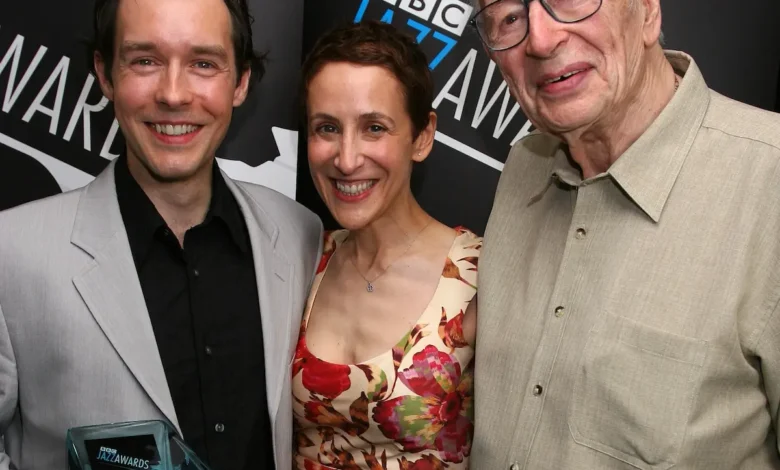
The return of Stacey Kent to the London stage on July 16, 2026, marked a significant milestone for the international jazz community and her dedicated British following. Performing at Cadogan Hall as part of the Serious Summer Jazz Series, Kent’s appearance was the first of two scheduled evenings, signaling a triumphant return to a city that has long served as a pivotal hub for her career. For many in attendance, the evening represented a long-awaited reunion with an artist whose career has spanned over three decades, characterized by a seamless blend of the Great American Songbook, Brazilian bossa nova, and original contemporary compositions.
Cadogan Hall, located in the heart of Chelsea, provided an ideal setting for Kent’s nuanced vocal style. With a seating capacity of approximately 950, the venue sits at the optimal intersection of grand scale and acoustic intimacy. Formerly a Church of Christ, Scientist, the building’s Byzantine Revival architecture and exceptional natural resonance served to amplify the subtle textures of Kent’s voice and the intricate arrangements of her quartet. The production utilized a restrained yet effective lighting design that complemented the understated elegance of the performance, ensuring that the musical delivery remained the central focus of the evening.
The Performance and Quartet Dynamics
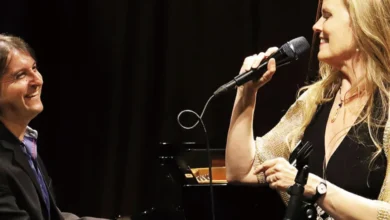
The evening commenced with a warm reception from a capacity crowd, following an introduction by the evening’s compere. The quartet featured Stacey Kent on vocals, her long-time collaborator and husband Jim Tomlinson on saxophones and flute, Art Hirahara on piano and keyboards, and Tom Hubbard on bass. The chemistry between the musicians was immediately apparent, reflecting years of shared stage experience and a deep understanding of Kent’s specific aesthetic requirements.
Kent’s vocal performance demonstrated a remarkable preservation of the qualities that first brought her to international prominence in the late 1990s. Her delivery remains characterized by a "feathery" yet precise enunciation, a technical trait that allows her to convey complex lyrical narratives with clarity. Critics and observers have often noted her ability to inhabit a song, drawing comparisons to the mid-century sophistication of actresses like Fenella Fielding, while occasionally dipping into lower registers that evoke the controlled, earthy resonance of Eartha Kitt. This versatility allowed Kent to navigate a diverse setlist that bridged the gap between classic standards and modern, melancholic ballads.
The instrumental contribution of Jim Tomlinson was a cornerstone of the evening’s success. Tomlinson, who has frequently cited Stan Getz as a primary influence, displayed a mastery of the tenor saxophone that echoed the "cool jazz" era while maintaining a modern edge. His ability to transition from a breathy, fluttering upper register to a robust, grounded low end provided a rich harmonic counterpoint to Kent’s vocals. In addition to his work on the tenor, Tomlinson’s proficiency on the soprano saxophone and flute added layers of texture to the arrangements, particularly during the more atmospheric segments of the concert.
The Tomlinson-Ishiguro Creative Partnership
A significant portion of the concert was dedicated to the unique songwriting partnership between Jim Tomlinson and the Nobel Prize-winning author Kazuo Ishiguro. This collaboration, which began in the mid-2000s, has become a defining element of Kent’s repertoire, offering a literary depth rarely seen in contemporary jazz. Ishiguro’s lyrics, often observational and quietly philosophical, are tailored specifically for Kent’s voice, focusing on themes of memory, travel, and the subtleties of human relationships.
During the performance, "Breakfast On The Morning Tram"—the title track of Kent’s 2007 Grammy-nominated album—stood out as a highlight. The song’s quirky, narrative-driven lyrics and Tomlinson’s swirling soprano saxophone lines drew stylistic comparisons to the sophisticated pop-jazz hybrids of artists like Sting. The lyrical content, reminiscent of the atmospheric detective fiction of Georges Simenon, showcased Kent’s ability to act as a storyteller as much as a vocalist.
The setlist also featured material from Kent’s 2026 release, A Time For Love. The new composition "What Goodbye Is For," written by Tomlinson and Cliff Goldmacher, offered an exploration of melancholy that resonated deeply with the audience. These newer works demonstrate Kent’s ongoing commitment to expanding the jazz canon through original material that maintains the harmonic sophistication of the past while addressing contemporary emotional landscapes.
Technical Excellence and Repertoire
The breadth of the evening’s repertoire was a testament to Kent’s global influences. The performance included interpretations of works by Michel Legrand, Brian Wilson, and the legendary duo of Burt Bacharach and Hal David. Kent’s affinity for the French chanson and Brazilian bossa nova was also on display, highlighting her linguistic fluidity and her ability to adapt her phrasing to different cultural idioms.
Art Hirahara, on piano and keyboards, provided what was described as an "outstanding" foundation throughout the night. His ability to cushion Kent’s vocals, particularly on fragile ballads like the closing number "Hushabye Mountain," was instrumental in maintaining the evening’s intimate atmosphere. Tom Hubbard’s bass work provided a steady, melodic pulse that allowed the lead instruments the freedom to improvise without losing the rhythmic core of the compositions.
Background Context: The Serious Summer Jazz Series
The Serious Summer Jazz Series is a staple of the London cultural calendar, produced by Serious, one of the UK’s leading producers and curators of live music. The series is known for bringing high-caliber international talent to the capital, often utilizing venues that offer a high degree of acoustic integrity. The 2026 iteration of the series has been noted for its focus on vocalists who bridge the gap between traditional jazz and contemporary adult-contemporary styles.
Stacey Kent’s inclusion in the series is a reflection of her enduring status in the industry. Since her debut album Close Your Eyes in 1997, Kent has navigated the changing tides of the music industry with a consistent focus on quality and emotional honesty. Her career trajectory—moving from a New Jersey native to a knighted figure in the French Order of Arts and Letters—underscores the universal appeal of her "quietly powerful" approach to jazz.
Chronology of the Evening
The concert followed a logical emotional arc, beginning with upbeat, welcoming numbers that established the quartet’s rapport with the audience. The mid-section of the performance delved into the more complex Tomlinson-Ishiguro compositions, requiring a higher degree of focus from both the performers and the listeners. The latter half of the show introduced more familiar favorites from Kent’s extensive back catalogue, leading to a crescendo of appreciation.
The evening concluded with a delicate rendition of "Hushabye Mountain," a song originally from the film Chitty Chitty Bang Bang but reimagined here as a sophisticated, depth-filled ballad. The choice of a lullaby-like closer served to emphasize the "soufflé-like" lightness and precision that defines Kent’s late-career style. The resulting standing ovation from the 950-strong audience was a clear indication of the performance’s impact.
Broader Implications for the Jazz Genre
The success of Stacey Kent’s performance at Cadogan Hall illustrates a continuing trend in the jazz world: the sustained demand for "intimate jazz" in an era often dominated by high-decibel spectacle. Kent’s ability to command a large hall through subtlety and nuance suggests that there remains a significant audience for music that prioritizes lyrical clarity and harmonic sophistication.
Furthermore, the integration of literary figures like Kazuo Ishiguro into the songwriting process points to a maturation of the jazz vocal genre. By moving beyond the repetition of standard songbooks and investing in new, high-concept songwriting, Kent and Tomlinson are ensuring the longevity of the genre. This approach provides a blueprint for how jazz artists can remain relevant in the 21st century by honoring tradition while aggressively pursuing original creative avenues.
As the Serious Summer Jazz Series continues, Kent’s performance sets a high benchmark for the remaining acts. The concert served not only as a showcase for her current work but as a celebration of a career that has remained remarkably consistent in its pursuit of excellence. For the London audience, the evening was a reminder of Kent’s unique position as a bridge between the American jazz tradition and a more European, literary sensibility—a position she continues to occupy with grace and technical mastery.