Ben Folds’ Stark Warning: The Politicization of the Kennedy Center and Its Chilling Effect on American Arts

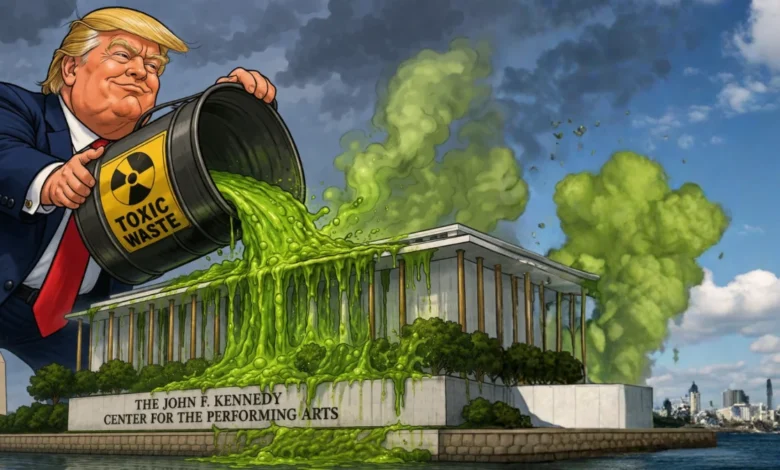
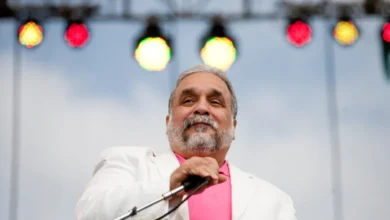
Singer-songwriter Ben Folds delivered a scathing indictment yesterday regarding the politicization of the John F. Kennedy Center for the Performing Arts in Washington D.C. during the administration of former President Donald Trump. Folds, who served as artistic advisor to the US National Symphony Orchestra (NSO), an esteemed resident ensemble at the venue, revealed that the emergence of a "partisan toxic environment" directly compelled his resignation from the pivotal role. His testimony, delivered before a US Congressional committee, painted a grim picture of compromised artistic integrity, heightened political pressure on performers, and a deliberate erosion of institutional independence at one of America’s most revered cultural landmarks.
The Kennedy Center: A Legacy of Bipartisanship and Artistic Freedom
To fully grasp the gravity of Folds’ allegations, it is essential to understand the foundational principles and historical context of the Kennedy Center. Established in 1971 as a living memorial to President John F. Kennedy, the institution was conceived as a national center for the performing arts, dedicated to presenting a wide array of music, dance, and theater from the United States and around the world. It serves as a symbol of American cultural achievement and a beacon for artistic expression, fostering education, innovation, and international exchange.
Although owned by the US federal government, the Kennedy Center has traditionally operated with a significant degree of independence from direct political interference. Its governance structure typically involves a bipartisan board of trustees, comprising presidential appointees, members of Congress, and private citizens, all serving to ensure that artistic and operational decisions are made based on merit, artistic vision, and the institution’s mission, rather than political expediency. This model of quasi-governmental autonomy has long been considered crucial for maintaining the center’s credibility and its ability to attract top-tier talent and diverse audiences. Federal appropriations cover a portion of its operating costs and maintenance, while substantial private donations and earned revenue from ticket sales and events contribute to its robust programming. This blend of public and private support underscores its unique position as both a national treasure and a vibrant, independent arts organization.
A Shift in Governance: The Trump Administration’s Interventions
The traditional balance of power and independence at the Kennedy Center, according to Folds, faced an unprecedented challenge during the Trump administration. The original article refers to "the start of his second presidency," which is likely a misstatement, as Donald Trump served only one term (2017-2021). However, the core assertion — that significant changes were initiated during his presidency — remains central to Folds’ account. During this period, the administration was accused of attempting to exert an unusual degree of political control over federal cultural institutions, including the Kennedy Center.
One of the most contentious actions involved the composition of the board of trustees. Reports indicated that a significant portion of the existing board members were either replaced or pressured to resign, making way for new appointees who were perceived as politically aligned with the sitting president. The article specifically notes Trump "sacking half the board" and "appointing himself as Chair." While the President of the United States appoints members to the Kennedy Center’s board, the actual chair is typically elected by the board members themselves. Therefore, the claim of Trump "appointing himself as Chair" should be interpreted as his administration exerting unprecedented influence over the board’s leadership and strategic direction, effectively positioning loyalists in key decision-making roles, thereby asserting a de facto leadership presence. This move was widely seen by critics as a deliberate attempt to dismantle the bipartisan nature of the board and inject partisan politics directly into the institution’s governance.
Further fueling concerns about politicization was the widely reported, albeit ultimately unsuccessful, attempt to add "Trump" to the name of the building. While details surrounding the specific proposal and its origin remain somewhat murky, the mere suggestion of renaming a revered national monument dedicated to a former president, especially one with strong political associations, sparked immediate outrage within the arts community and among political observers. Critics argued that such a move would not only be disrespectful to the legacy of John F. Kennedy but would also irrevocably compromise the non-partisan image and historical significance of the institution. This proposed name change, alongside the restructuring of the board, became emblematic of what many perceived as a broader strategy to imprint the administration’s political agenda onto federal cultural assets.
Ben Folds’ Resignation and Congressional Testimony
Against this backdrop of escalating political interference, Ben Folds made the difficult decision to resign from his role as artistic advisor to the National Symphony Orchestra. His departure, announced via social media in December 2020, was terse but pointed. At the time, Folds stated, "given developments at the Kennedy Center, effective today I am resigning as artistic advisor to the NSO," adding unequivocally that a Trump-led version of the venue was "not for me." His resignation sent ripples through the classical music and broader arts communities, signaling that the concerns about politicization were deeply felt by those actively working within these institutions.
Folds reiterated and expanded upon these concerns yesterday during his appearance before a session in US Congress. The hearing, provocatively titled "Monumental Waste – How Donald Trump is spending millions destroying American landmarks," specifically placed the Kennedy Center under scrutiny as one of several federal institutions allegedly impacted by the previous administration’s policies. Folds’ testimony provided a firsthand account of the tangible consequences of political intrusion on artistic programming and the environment for performers.
He articulated a profound concern for the safety and freedom of expression for artists. "With the new partisan toxic environment under the current administration," Folds told Congress members, "I could not trust that artists I booked at the Kennedy Center would be safe from retribution if they said or sung something that might displease the president or his political lackeys who now controlled the Center." This fear of reprisal, he explained, was not merely hypothetical but a genuine deterrent to inviting artists who might hold dissenting views or whose art might be interpreted as critical of the administration. The implicit threat of political backlash, whether in the form of funding cuts, public condemnation, or professional blacklisting, created a chilling effect that undermined the very essence of artistic freedom and expression.
Beyond the direct threat of retribution, Folds highlighted the "political headaches" faced by musicians and performers simply by being associated with the politically charged venue. He explained, "These days, if an artist agrees to perform at the Kennedy Center, they risk being seen as explicitly endorsing the Trump administration and all of its policies. Declining an invitation to perform at the Kennedy Center will have an equal and opposite political effect." This created an untenable dilemma for artists: perform and be perceived as complicit, or decline and be seen as politically oppositional. Both choices carried significant professional and public relations risks, forcing artists to navigate a minefield of political optics rather than focusing solely on their craft.
Folds concluded this point by observing the inevitable consequence: "There may be certain artists who will thrive in this environment — comedians come to mind — but most want nothing to do with it, and will choose to create and perform their art elsewhere, and they are, and audiences are following." This indicates a potential exodus of talent and a fragmentation of the audience, ultimately diminishing the Kennedy Center’s stature and its ability to serve as a national hub for diverse artistic expression.
Debunking Financial Justifications
One of the justifications frequently cited by the Trump administration for intervening in the governance of institutions like the Kennedy Center was the purported need to address financial inefficiencies or mismanagement. However, Ben Folds vehemently disputed this narrative during his congressional testimony.
According to The Hollywood Reporter, Folds directly countered these claims, stating, "We had straight, sold-out shows on our programmes, and as far as I knew, at least a few years came up in the black there. It is really, really impressive, and so no, I think the Kennedy Center was going through some golden years, in my opinion." This firsthand account from an artistic advisor intimately involved in programming and audience engagement directly contradicts the idea of a struggling institution in need of drastic intervention.
Prior to the period of alleged politicization, the Kennedy Center had indeed demonstrated robust financial health and strong artistic programming. It regularly hosted sold-out performances by world-renowned artists and ensembles, attracting a diverse audience base. Its educational outreach programs, a core part of its mission, also thrived, reaching thousands of students annually. The center’s ability to secure significant private donations, often seen as a barometer of public trust and approval, further underscored its perceived success. Folds’ assessment suggests that the narrative of financial distress was a convenient, albeit unfounded, pretext for asserting political control, rather than a genuine concern for the institution’s fiscal well-being.
Broader Implications for American Arts and Culture
The issues raised by Ben Folds extend far beyond the specific case of the Kennedy Center; they highlight profound implications for the entire landscape of American arts and culture, particularly for institutions that rely on federal funding or operate under governmental oversight.
-
Erosion of Artistic Freedom and Institutional Integrity: The most immediate and alarming implication is the chilling effect on artistic freedom. When artists fear retribution for their expressions or when cultural institutions are pressured to align with political agendas, the very purpose of art — to challenge, reflect, and inspire — is compromised. This can lead to self-censorship, a reduction in diverse programming, and a general decline in the vitality and relevance of cultural offerings. It also undermines the integrity of institutions that are meant to be stewards of culture, not instruments of political propaganda.
-
Impact on Audience Engagement and Trust: As Folds noted, audiences follow artists. If top-tier talent shies away from performing at politically tainted venues, the quality and diversity of programming will suffer. This, in turn, can alienate audiences who seek authentic artistic experiences free from political baggage. Public trust in national cultural institutions, built over decades of non-partisanship, could be irrevocably damaged, leading to decreased attendance and reduced public support.
-
Funding and Philanthropy Challenges: Politicization can have severe financial repercussions. Private donors, who often provide critical funding for arts organizations, are typically wary of associating their philanthropy with partisan politics. If a cultural institution is perceived as a political tool, it risks losing significant private support. Federal appropriations, while a steady source, can also become a battleground if institutions are seen as out of step with the prevailing political winds, further jeopardizing their financial stability.
-
Precedent for Other Federal Cultural Institutions: The actions taken at the Kennedy Center could set a dangerous precedent for other federally supported cultural bodies, such as the Smithsonian Institution, the National Endowment for the Arts (NEA), and the National Endowment for the Humanities (NEH). The politicization of one major institution could signal to others that their autonomy is vulnerable, potentially leading to a broader campaign of political interference across the cultural sector.
-
The Role of Arts in National Identity: Cultural institutions like the Kennedy Center play a crucial role in shaping and reflecting national identity. By presenting diverse artistic voices and promoting cultural exchange, they contribute to a nuanced and inclusive understanding of what it means to be American. When these institutions are used for partisan purposes, they fail in their broader mission to represent and serve all citizens, instead becoming instruments of division.
Concluding his powerful testimony, Ben Folds issued a clear call for restoration. He told the Congress members, "We need a vibrant Kennedy Center, whose leadership once again understands how to run its business, who will keep politics checked at the doors, and who will ensure that only the most qualified arts administrators are in charge." His words underscore the urgent need to reaffirm the principles of artistic independence, bipartisan governance, and professional administration at the Kennedy Center and indeed across all of America’s vital cultural institutions. The debate surrounding the politicization of such a significant national landmark highlights the ongoing struggle to safeguard the arts from partisan capture and ensure they remain a space for free expression, creativity, and public enrichment.