Ayumi Tanaka Thomas Morgan and Thomas Strønen Announce Collaborative Trio Album Windflower Recorded at Studios La Buissonne

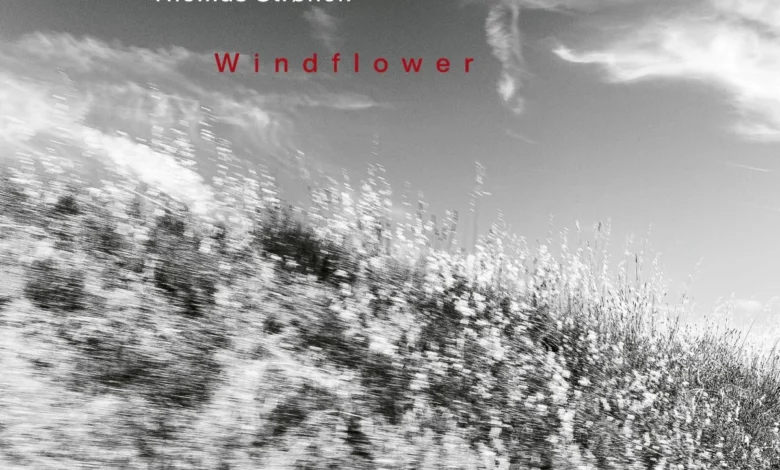
The contemporary jazz landscape is set to expand with the announcement of Windflower, a new collaborative studio album featuring Japanese pianist Ayumi Tanaka, American double bassist Thomas Morgan, and Norwegian drummer Thomas Strønen. Scheduled for release following its May 2025 recording sessions at the renowned Studios La Buissonne in Pernes-les-Fontaines, Southern France, the album represents a significant intersection of international improvisational styles. Produced by ECM Records founder Manfred Eicher, the project documents a new trio configuration that merges the disciplined aesthetics of chamber music with the fluid, reactive nature of modern jazz and spontaneous composition.
The album comprises nine tracks in total, eight of which are entirely freely improvised, alongside an open-ended interpretation of Tanaka’s original composition, “La Source.” The recording serves as a testament to the "ECM sound"—a sonic philosophy characterized by spatial awareness, high-fidelity transparency, and a focus on the resonance of acoustic instruments. By bringing together three artists from distinct geographical and stylistic backgrounds, Windflower explores the boundaries of the piano trio format, emphasizing collective dialogue over traditional soloist-accompanist hierarchies.
Profiles of the Collaborative Artists
The trio is composed of three musicians who have each established significant reputations within the avant-garde and contemporary jazz circuits. Their individual histories provide the necessary context for the synergistic sound captured on Windflower.
Ayumi Tanaka: Bridging Japanese and Nordic Aesthetics
Originally from Japan but based in Oslo, Norway, for over a decade, Ayumi Tanaka has become a pivotal figure in the Norwegian jazz scene. Her musical language is frequently described as "crystalline," reflecting a deep interest in the use of silence and the natural decay of notes. Tanaka first gained international attention through her work with the Ayumi Tanaka Trio and her debut as a leader on the ECM label with the 2021 album Subaqueous Silence. Her educational background under the late Misha Alperin at the Norwegian Academy of Music has heavily influenced her approach to "spontaneous composition," a method where the structural integrity of a piece is maintained even during total improvisation.
Thomas Morgan: The Melodic Anchor
American bassist Thomas Morgan is widely regarded as one of the most sought-after bassists of his generation. Known for his minimalist yet deeply melodic approach, Morgan has a storied history of collaboration with jazz legends and contemporary innovators alike. His long-standing partnership with guitarist Bill Frisell and his work in the final ensembles of drummer Paul Motian have solidified his reputation for precision and harmonic sensitivity. In the context of Windflower, Morgan’s role transcends mere timekeeping; his bass lines function as counter-melodies that challenge and support Tanaka’s piano explorations.
Thomas Strønen: Percussive Textures and Architecture
Norwegian drummer Thomas Strønen is a veteran of the European improvisational scene, perhaps best known for his ensemble Time Is a Blind Guide. Strønen’s approach to the drums is architectural, focusing on texture, color, and subtle detail rather than traditional rhythmic propulsion. His previous recordings on the ECM label have showcased his ability to integrate percussion into chamber-like settings, making him an ideal partner for the delicate and intense dynamics found in the Windflower sessions.
The Recording Environment: Studios La Buissonne and Manfred Eicher
The production of Windflower in May 2025 at Studios La Buissonne marks a continuation of a long-standing tradition in European jazz recording. Located in the quiet countryside of Southern France, the studio is celebrated for its exceptional acoustics and its ability to capture the nuance of acoustic instruments. The choice of location is strategic, as the isolation and atmosphere of the Vaucluse region often contribute to the focused, intimate nature of the performances recorded there.
Manfred Eicher, the founder of ECM Records, served as the producer for the sessions. Eicher’s role in the studio is often described as that of an "invisible fourth member," guiding the artists toward a cohesive sonic identity. His involvement ensures that the album adheres to the label’s rigorous standards for clarity and spatial depth. The collaboration between Eicher and the trio focused on capturing the "fleeting beauty of musical discovery," a core tenet of the ECM philosophy that prioritizes the first take and the authentic moment of creation.
Compositional Structure and Improvisational Philosophy
While most jazz albums utilize a "head-solos-head" structure based on pre-written standards, Windflower leans heavily into the realm of spontaneous composition. This approach requires a high level of mutual trust and an acute sense of listening among the performers.
The Significance of "La Source"
The inclusion of "La Source," a composition by Ayumi Tanaka, provides the album’s only pre-determined thematic material. However, the trio treats the piece as an "open-ended interpretation," using the written melody as a springboard for further exploration rather than a rigid framework. This piece serves as a focal point for the album, bridging the gap between Tanaka’s formal compositional style and the trio’s collective improvisational instincts.
Spontaneous Composition vs. Free Jazz
Unlike "free jazz," which can sometimes prioritize high energy and dissonance, the spontaneous compositions on Windflower are characterized by spacious textures and quietly evolving rhythms. The trio balances delicacy with intensity, ensuring that even the most abstract moments retain a sense of lyrical beauty. The eight improvised pieces are described as "luminous," suggesting a focus on light, resonance, and harmonic clarity.
Historical Context and Evolution of the Piano Trio
The piano trio—consisting of piano, bass, and drums—is one of the most enduring formats in jazz history. From the swing of Oscar Peterson to the revolutionary interplay of the Bill Evans Trio, the format has undergone several transformations. In the 21st century, the "ECM trio" style has emerged as a distinct sub-genre, emphasizing a more egalitarian relationship between the three instruments.
Windflower fits into this evolutionary timeline by further deconstructing the traditional roles of the rhythm section. In this recording, Thomas Morgan’s bass and Thomas Strønen’s percussion are equal voices to Tanaka’s piano. This democratization of the ensemble allows for a more complex web of sound, where a rhythmic figure from the drums might trigger a melodic response from the piano, or a low-register drone from the bass might shift the entire harmonic direction of an improvisation.
Chronology of the Project
The timeline of the Windflower project reflects a deliberate and careful curation process:
- Pre-2025: Ayumi Tanaka, Thomas Morgan, and Thomas Strønen develop individual relationships through various European jazz festivals and session work.
- Early 2025: Conceptualization of the new trio under the guidance of Manfred Eicher.
- May 2025: The trio convenes at Studios La Buissonne in Southern France for the recording sessions.
- Post-Production: Eicher and the artists oversee the mixing and mastering process, ensuring the "crystalline" quality of the sound is preserved.
- Release Announcement: The album is officially announced as Windflower, highlighting its themes of nature, fragility, and spontaneous growth.
Industry Implications and Critical Analysis
The release of Windflower carries several implications for the broader music industry and the jazz community. First, it reinforces the trend of "globalized jazz," where artists from diverse cultural backgrounds (Japan, USA, Norway) converge to create a unified language that transcends regional styles. This synthesis is particularly relevant in the current cultural climate, where cross-border collaboration is increasingly facilitated by international labels like ECM.
Furthermore, the album’s reliance on spontaneous composition highlights a growing interest among audiences for "authentic" and "unrepeatable" musical experiences. In an era dominated by digital precision and highly produced tracks, the raw, real-time interaction of Windflower offers a counter-narrative of human connection and vulnerability.
From a technical standpoint, the recording at Studios La Buissonne continues to set the benchmark for acoustic fidelity. The "subtly detailed percussion" and "crystalline touch" mentioned in early reports of the album suggest that the recording will be a primary reference for audiophiles and jazz enthusiasts who value the physical properties of sound.
Projected Impact on the Jazz Circuit
Upon its release, Windflower is expected to be a major contender in the contemporary jazz and chamber music charts. The reputation of the individual musicians, combined with the prestige of the ECM label and the legendary status of producer Manfred Eicher, ensures a high level of critical attention.
The trio is also expected to embark on an international tour following the album’s release. Observers in the jazz community anticipate that the live performances will differ significantly from the recorded versions, as the nature of spontaneous composition allows the music to evolve with every performance. This "living" quality of the music ensures that Windflower is not just a static document of a recording session, but a starting point for an ongoing musical dialogue.
In conclusion, Windflower stands as a significant addition to the discographies of Ayumi Tanaka, Thomas Morgan, and Thomas Strønen. By capturing three distinctive artists listening and responding as one, the album celebrates the beauty of musical discovery. It remains an intimate yet expansive work that reinforces the piano trio’s potential for innovation in the modern era, balancing the intellectual rigors of composition with the emotional immediacy of the present moment.