Pop Sensation D4vd Faces First-Degree Murder Charges in Tragic Case of Alleged Teenage Victim

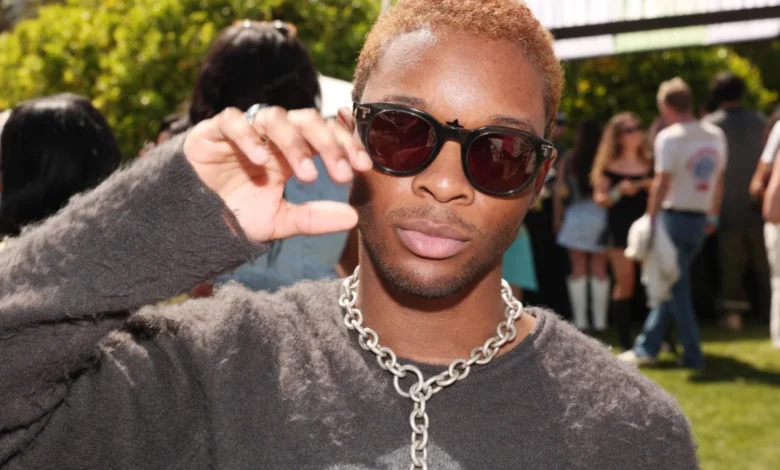
The music world has been rocked by the unfolding legal saga involving D4vd, the 21-year-old pop singer known for his breakout 2022 hit "Romantic Homicide." Born David Anthony Burke, the artist is currently facing grave first-degree murder charges, accused of killing and dismembering the body of 14-year-old Celeste Rivas Hernandez. Prosecutors assert that Burke was engaged in an illegal sexual relationship with the minor and committed the murder after she allegedly threatened to expose his criminal conduct, which could have devastatingly impacted his burgeoning musical career. This high-profile case has not only cast a dark shadow over D4vd’s career but has also ignited broader discussions within the music industry regarding accountability, ethics, and the profound impact of criminal allegations on public figures.
The Rise and Sudden Fall of D4vd’s Musical Career
David Anthony Burke, performing under the moniker D4vd, quickly ascended to prominence in the music industry, particularly through the viral success of his 2022 single "Romantic Homicide." The track, characterized by its melancholic lyrics and lo-fi aesthetic, resonated deeply with a global audience, especially on platforms like TikTok, where short-form content can rapidly catapult artists into the mainstream. This digital phenomenon led to significant label interest, culminating in his signing with Darkroom/Interscope Records. His debut album, Withered, was highly anticipated, arriving on April 25, 2025, just two days after the alleged murder. Despite the looming tragedy, Withered managed to debut at an respectable No. 13 on the Billboard 200 chart, indicating the considerable commercial momentum D4vd had built. His career trajectory was, by all accounts, on a steep upward curve, marked by critical acclaim, a growing fanbase, and significant industry backing.
However, this rapid ascent was abruptly halted by the shocking allegations and subsequent legal action. The gravity of the charges has had an immediate and severe impact on D4vd’s professional life. His headlining Withered tour, intended to support the album’s release and connect with fans, was unceremoniously cut short. Plans for a deluxe version of Withered were shelved indefinitely, signifying a complete halt to new music releases and promotional activities. Furthermore, major industry players swiftly distanced themselves from the artist. D4vd was reportedly dropped by Darkroom/Interscope Records, his record label, as well as Sony Music Publishing, which handled his songwriting rights, and The Team (formerly Wasserman), his talent agency. These actions underscore the music industry’s increasing intolerance for severe criminal allegations, often triggered by "moral clauses" in contracts that allow for termination in cases of reputational damage or criminal charges. The financial and reputational fallout from these terminations is immense, effectively dismantling a career that was once considered one of the most promising in contemporary pop.
Chronology of a Tragic Allegation
The timeline of events, as pieced together from prosecution claims and official reports, paints a grim picture:
- April 23, 2025: The Los Angeles District Attorney’s Office alleges that the murder of Celeste Rivas Hernandez occurred on this date. This date is particularly poignant as it was just two days before the scheduled release of D4vd’s debut album, Withered.
- April 25, 2025: D4vd’s debut album, Withered, is officially released, eventually charting at No. 13 on the Billboard 200. Unbeknownst to the public, the alleged crime had already taken place.
- Months Later (Unspecified): Police discover the decomposed and dismembered body of Celeste Rivas Hernandez. The discovery was made inside an impounded Tesla, which was registered to David Anthony Burke (D4vd). The exact duration between the alleged murder and the discovery of the body remains a critical point in the investigation, potentially impacting evidence and forensic analysis.
- Subsequent Arrest and Charges: Following the discovery and forensic investigation, David Anthony Burke is arrested and formally charged with first-degree murder. The specific date of arrest has not been widely publicized but would have occurred after the body’s identification and the establishment of a probable cause linking Burke to the crime.
- Plea and Defense Statement: D4vd enters a plea of not guilty to all charges. His legal team issues a strong statement, asserting their client’s innocence and promising a "vigorous defense." They emphasize that "the actual evidence in this case will show that David Burke did not murder Celeste Rivas Hernandez and he was not the cause of her death."
- Career Consequences (Post-Discovery/Arrest): In the immediate aftermath of the body’s discovery and D4vd’s arrest, the artist’s Withered tour is canceled, and the planned deluxe version of his album is shelved. He is subsequently dropped by his record label, publishing company, and talent agency.
The Weight of the Allegations: First-Degree Murder
The charges brought against D4vd are among the most serious in the legal system. First-degree murder in California, where the alleged crime occurred, involves the unlawful killing of a human being with malice aforethought, and with premeditation and deliberation. The prosecution’s claim that Burke allegedly murdered Celeste Rivas Hernandez after she threatened to expose an illegal sexual relationship suggests a motive linked to avoiding severe personal and professional consequences, fitting the criteria for premeditation and deliberation. Furthermore, the allegation of dismemberment adds another layer of horror to the case, often implying an attempt to conceal the crime, destroy evidence, or prevent identification.
If convicted of first-degree murder in California, the penalties are exceptionally severe, typically involving a sentence of 25 years to life in state prison, with the possibility of parole after a minimum of 25 years. Aggravating factors, such as the age of the victim and the alleged dismemberment, could lead to even harsher considerations during sentencing or impact the likelihood of parole. The District Attorney’s office, by pursuing these charges, clearly believes it has substantial evidence to present to a jury.

Legal Battle Ahead: The Defense’s Stance
D4vd’s legal team has unequivocally stated his innocence and their intention to mount a robust defense. A "not guilty" plea signifies the commencement of a protracted legal battle, likely involving several stages:
- Arraignment: Where the charges are formally read, and the defendant enters a plea. This has already occurred.
- Preliminary Hearing: A judge determines if there is enough evidence to proceed to a full trial. The prosecution presents some of its evidence, and the defense may cross-examine witnesses.
- Discovery: Both sides exchange evidence, witness lists, and other relevant information.
- Pre-Trial Motions: Attorneys file motions to exclude evidence, change venue, or address other procedural issues.
- Trial: If a plea agreement is not reached, the case proceeds to trial, where a jury (or judge, in rare cases) will hear evidence from both the prosecution and defense before rendering a verdict. The burden of proof lies entirely with the prosecution to prove guilt beyond a reasonable doubt.
The defense’s assertion that "the actual evidence in this case will show that David Burke did not murder Celeste Rivas Hernandez and he was not the cause of her death" suggests they may challenge the forensic evidence, the chain of custody, the interpretation of circumstantial evidence, or present an alternative theory regarding the victim’s death. Given the complexity and severity of the charges, this trial is expected to be meticulously scrutinized by legal experts and the public alike.
Industry Reckoning: Moral Clauses and Accountability
The music industry’s swift reaction to the allegations against D4vd, particularly the termination of multiple contracts, highlights a growing trend of labels and agencies implementing "moral clauses" or "bad boy clauses" more rigorously. These contractual provisions allow companies to sever ties with artists who engage in behavior that brings disrepute to the company or the artist’s brand. In an era of heightened social awareness and rapid information dissemination, the reputational risk associated with supporting an artist accused of such heinous crimes is immense.
For Darkroom/Interscope Records, Sony Music Publishing, and The Team, continuing their association with D4vd would have exposed them to significant public backlash, potential boycotts, and damage to their corporate image. The decision to terminate contracts, while financially impactful for the artist, is often a calculated move to protect the broader enterprise and its other artists. This case serves as a stark reminder that while artistic expression is celebrated, it does not absolve individuals of personal accountability, especially when facing criminal charges of this magnitude. The financial implications for D4vd are catastrophic, losing not only future earnings but potentially facing legal battles over advances and contractual obligations.
The Unseen Victim: Celeste Rivas Hernandez
Amidst the legal proceedings and career discussions surrounding D4vd, it is crucial not to lose sight of the alleged victim, Celeste Rivas Hernandez. A 14-year-old girl, her life was tragically cut short, and her family and community are undoubtedly grappling with immense grief and trauma. While details about Celeste’s life are not extensively provided in public records related to the case, her age underscores the vulnerability of the victim and the profound tragedy of the situation. Her story, though less documented in the initial reports, remains central to the case, and her memory deserves respect and acknowledgment throughout the legal process.
The Road Ahead: A Long and Painful Journey
As Billboard continues to track developments, the D4vd case is poised to become one of the most closely watched legal battles in the entertainment world. The proceedings will likely be lengthy, complex, and emotionally charged. Each piece of evidence, every witness testimony, and every legal maneuver will be scrutinized. The outcome will not only determine the fate of David Anthony Burke but will also send a powerful message about justice, accountability, and the boundaries of behavior within the public eye. The music industry, still reeling from the shock, will continue to grapple with its responsibility to vet artists, manage risks, and uphold ethical standards in an ever-evolving landscape. The journey ahead for all parties involved will be arduous, marked by profound legal challenges and enduring public scrutiny.