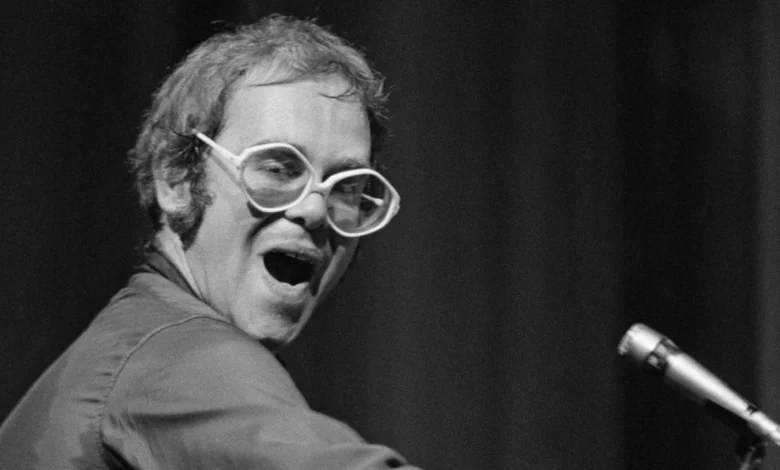
The trajectory of a legendary musical career is rarely a straight line of ascending success; rather, it is often defined by the artist’s ability to recognize a plateau and execute a decisive pivot. In the early 1970s, Elton John stood at such a crossroads. Despite possessing undeniable talent and a burgeoning reputation, he faced the very real danger of becoming pigeonholed as a niche, overly orchestrated singer-songwriter. His decision to abandon the ornate arrangements of his early work in favor of a lean, band-driven sound resulted in the 1972 masterpiece Honky Chateau. This transition not only saved his commercial prospects but also initiated one of the most dominant runs in the history of the Billboard charts, fundamentally altering the landscape of popular music.
The Commercial Stagnation of the Baroque Period
By late 1971, Elton John was a respected artist, but he was far from the global icon he would soon become. His fourth studio album, Madman Across the Water, had been released to critical acclaim, yet its commercial performance in the United States was underwhelming compared to the expectations of his label, Uni Records. While the album featured now-classic tracks like "Tiny Dancer" and "Levon," neither song achieved significant chart success upon their initial release. "Tiny Dancer," for instance, only reached number 41 on the Billboard Hot 100 in 1972, a far cry from the top-ten status John craved.
The primary characteristic of this era was the heavy involvement of arranger Paul Buckmaster. Under Buckmaster’s direction, John’s compositions were draped in complex, cinematic orchestrations. While these arrangements provided a sense of "high art," they also created a sonic barrier between the artist and the burgeoning rock-and-roll audience. The music was beautiful but stationary—it lacked the kinetic energy required for the stadium-filling superstardom that John and his lyricist partner, Bernie Taupin, envisioned. John, a self-confessed "chart obsessive," recognized that if he did not simplify and "earth up" his sound, he risked being left behind by the more visceral movements of the early 70s, such as glam rock and the singer-songwriter boom led by more stripped-back artists.
The Strategic Relocation to Château d’Hérouville
The catalyst for change was a radical shift in recording environment. Traditionally, John had recorded at Trident Studios in London, a facility that, while state-of-the-art, enforced a rigid professional atmosphere. To break the mold of his previous records, John and producer Gus Dudgeon sought a "residential" recording experience. They chose the Château d’Hérouville, an 18th-century manor in the Val-d’Oise region of France, which had been converted into a studio by film composer Michel Magne.
This move was significant for several reasons. First, it removed the "clock-watching" pressure of London studios. Second, it allowed the musicians to live and breathe the music 24 hours a day. Known colloquially as "Strawberry Studios" (a name later adopted by another studio in Stockport), the Château became a site of intense creative alchemy.
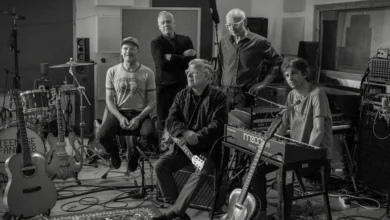
The recording sessions for Honky Chateau, which took place in January 1972, were remarkably brief, lasting only about two weeks. This speed was a direct result of the chemistry between John and his touring band. For the first time, John insisted on recording with his live lineup: bassist Dee Murray and drummer Nigel Olsson. They were joined by Davey Johnstone, a multi-instrumentalist who had played on Madman Across the Water as a session musician but was now integrated as a core member of the band. Johnstone’s ability to switch between electric guitar, acoustic guitar, mandolin, and banjo gave the group a versatile, "rootsy" edge that the previous orchestrated albums lacked.
A New Creative Methodology
The workflow at the Château was spontaneous and prolific. Bernie Taupin would typically spend the mornings typing out lyrics in his room, which he would then leave on John’s piano. John, often in a matter of minutes, would compose the melodies and chord structures. The band would then immediately begin rehearsing the new material, with Gus Dudgeon capturing the energy of these fresh arrangements on tape.
This "on-the-fly" approach stripped away the pretension of the "Madman" era. Instead of waiting for complex string charts to be written and recorded by a separate orchestra, the sound was built from the ground up by four men in a room. The result was a record that felt lived-in, organic, and vastly more accessible.
One of the most critical elements of this new sound was the development of the "Elton John Band" vocal harmony. Murray, Olsson, and Johnstone discovered they possessed a unique vocal blend that could emulate the lush, California-style harmonies of groups like The Beach Boys or Crosby, Stills, Nash & Young. This became a signature element of the Honky Chateau sound, most notably on the album’s lead single.
The Anatomy of a Hit: Rocket Man and Honky Cat
The success of Honky Chateau was anchored by two disparate but equally effective singles. "Rocket Man (I Think It’s Going to Be a Long, Long Time)" was the bridge between the old Elton and the new. While it retained some of the atmospheric space-rock sensibilities of the era—inevitably drawing comparisons to David Bowie’s "Space Oddity"—its production was grounded by Nigel Olsson’s heavy, delayed drumming and the band’s soaring backing vocals. It was a sophisticated pop song that managed to feel intimate yet grand, reaching number 2 in the UK and number 6 in the US.
Conversely, "Honky Cat" showcased the "earthier" direction John had intended. Drawing on New Orleans R&B and the funky piano stylings of Dr. John and Allen Toussaint, the track featured a prominent brass section and a syncopated, rhythmic drive. It was a stylistic departure that signaled John was no longer just a "balladeer" but a versatile rock performer.
Beyond the singles, the album’s depth was evidenced by tracks like "Mona Lisas and Mad Hatters." Inspired by a trip to New York City, the song remains one of Taupin’s most poignant lyrical achievements and John’s most understated performances. The use of Davey Johnstone’s mandolin provided a folk-inflected texture that was entirely new to John’s discography, further proving the value of the band-centric approach.
Commercial Impact and the Start of the "Seven-Album Streak"
The commercial response to Honky Chateau was nothing short of a phenomenon. Released in May 1972, the album became Elton John’s first number-one album in the United States, reaching the top of the Billboard 200 on July 15, 1972. It held the top spot for five non-consecutive weeks.
This was not merely a one-off success; it was the start of an unprecedented era of chart dominance. Honky Chateau began a streak of seven consecutive number-one albums in the U.S. (including the 1974 Greatest Hits compilation). This run, which lasted through 1975’s Rock of the Westies, cemented Elton John as the biggest rock star in the world.
Data from the era illustrates the scale of this achievement. Between 1972 and 1975, Elton John accounted for approximately 2% of all record sales globally—a staggering statistic for a single artist. The transition from the "ornate" style to the "Chateau" style had effectively unlocked a mass-market appeal that crossed demographic lines, appealing to rock fans, pop listeners, and AM radio programmers alike.
Chronology of the Honky Chateau Era
- October 1971: Release of Madman Across the Water. While critically liked, sales are slow, and John feels the need for a change.
- January 1972: John, Taupin, and the band move to Château d’Hérouville in France to begin recording.
- April 1972: "Rocket Man" is released as a single, quickly climbing the charts and creating immense anticipation for the album.
- May 19, 1972: Honky Chateau is officially released.
- July 15, 1972: The album hits Number 1 on the Billboard 200, displacing The Rolling Stones’ Exile on Main St.
- August 1972: "Honky Cat" is released as the second single, peaking at number 8 in the U.S.
- Late 1972: John returns to the Château to record the follow-up, Don’t Shoot Me I’m Only the Piano Player, utilizing the same successful formula.
Historical Analysis and Legacy
The legacy of Honky Chateau lies in its role as a blueprint for the "Superstar" era of the 1970s. It proved that an artist could maintain integrity and complex songwriting while embracing a more commercial, rhythmic production style. It also established the "residential studio" as a preferred method for major rock acts, with the Château d’Hérouville later hosting artists like Pink Floyd, David Bowie, and T. Rex.
Furthermore, the album solidified the partnership between Elton John and his band. The "classic lineup" of Johnstone, Murray, and Olsson became as integral to the Elton John sound as the E Street Band was to Bruce Springsteen. Their ability to provide high-quality backing vocals and intuitive instrumental support allowed John to focus on his flamboyant stage persona, which began to evolve rapidly during the 1972 tour.
In retrospect, Honky Chateau was the moment Elton John stopped being a "promising talent" and became a "cultural force." By trusting his instincts to pivot away from the orchestral safety of his early work, he found a sound that was both timeless and perfectly suited to the burgeoning FM rock radio format. The "French cooking" at the Château had provided the perfect recipe for a career that would span more than half a century, but it all began with the realization that sometimes, to move forward, an artist must first get back to the basics of the band.