For Christopher Walters, the spirit of the landmark Pat Metheny Group lived on as his youthful Side-Eye project reprised classic PMG material

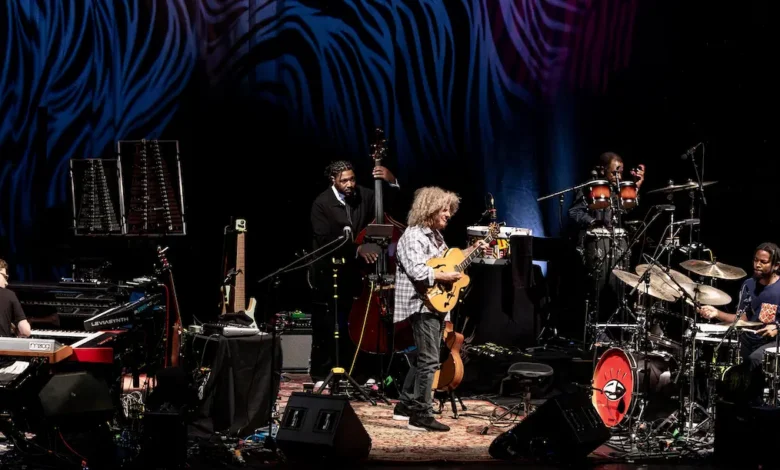
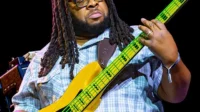
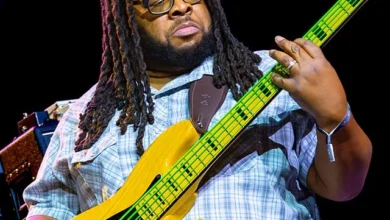
The London Barbican became a focal point for the international jazz community on July 18, 2026, as Pat Metheny launched the first of three sold-out dates in the UK capital. Performing as part of the prestigious Summer Jazz Series, the 20-time Grammy Award winner introduced a newly expanded iteration of his Side-Eye project, designated as Side-Eye III+. This performance marked a significant evolution in Metheny’s recent touring strategy, shifting from the intimate trio format that defined earlier Side-Eye cycles to a robust quintet. The ensemble featured returning collaborators Chris Fishman on keyboards and Joe Dyson on drums, alongside new additions Jermaine Paul on bass and Leonard Patton on percussion and vocals. For longtime observers and critics like Christopher Walters, the evening served as more than a standard concert; it was a sophisticated bridge between Metheny’s pioneering past with the Pat Metheny Group (PMG) and his ongoing commitment to mentoring the next generation of jazz virtuosos.
The Evolution of the Side-Eye Project
The Side-Eye concept was originally conceived by Metheny as a platform to interact with younger musicians who had grown up listening to his music. Recognizing the cyclical nature of jazz, Metheny sought to learn from the fresh perspectives of players who were influenced by his own harmonic language while bringing modern sensibilities to the stage. Since its inception, Side-Eye has functioned as a revolving door for elite talent, but the 2026 quintet configuration represents the most ambitious version of the project to date.
By expanding the lineup to five pieces, Metheny has effectively reclaimed the "cinematic" and "symphonic" textures that were the hallmark of the original Pat Metheny Group, which rose to prominence in the late 1970s and 1980s. The addition of Leonard Patton is particularly noteworthy in this regard. Patton’s ability to provide wordless vocal melodies—a stylistic signature popularized by past Metheny collaborators like Pedro Aznar and Richard Bona—allows the ensemble to perform complex arrangements from the PMG catalog that require a specific melodic and percussive density.
Performance Analysis and Setlist Dynamics
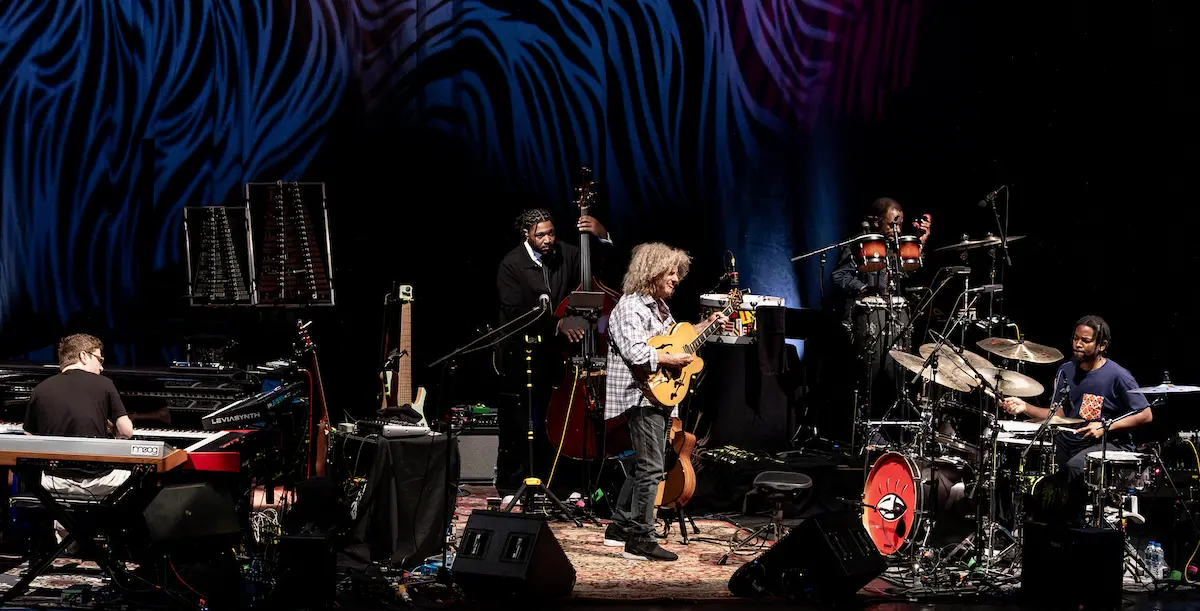
The Barbican concert lasted approximately two and a half hours, a testament to Metheny’s legendary stamina and the depth of his repertoire. The performance was structured to showcase the breadth of the Side-Eye III+ album while weaving in deep cuts from Metheny’s five-decade career. The interaction between the veteran guitarist and his younger counterparts was characterized by a high degree of improvisational risk-taking, balanced by the disciplined execution of Metheny’s intricate compositions.
The quintet’s chemistry was evident from the opening movements. Chris Fishman, whose work on keyboards and synthesizers often mirrors the late Lyle Mays’ ability to provide both atmospheric padding and sharp melodic counterpoint, provided a lush foundation for Metheny’s various instruments. Metheny utilized his signature Ibanez hollow-body guitar, his Roland GR-300 guitar synthesizer, and the custom 42-string Pikasso guitar, each offering a different tonal color to the set.
Joe Dyson’s drumming provided a modern, polyrhythmic edge that pushed the older material into contemporary territory. Unlike the more traditional fusion drumming of the 1980s, Dyson’s approach incorporated elements of modern gospel and neo-soul rhythms, which Jermaine Paul’s grounded and melodic bass lines complemented. This rhythmic section allowed Metheny to explore longer, more adventurous solo flights during the PMG-era classics, which were received with significant enthusiasm by the London audience.
A Chronology of the London Residency
The July 18 performance kicked off a high-profile residency in London, part of a broader European tour that has seen Metheny performing in major cultural hubs. The Barbican, known for its challenging acoustics and sophisticated audience, has long been a preferred venue for Metheny.
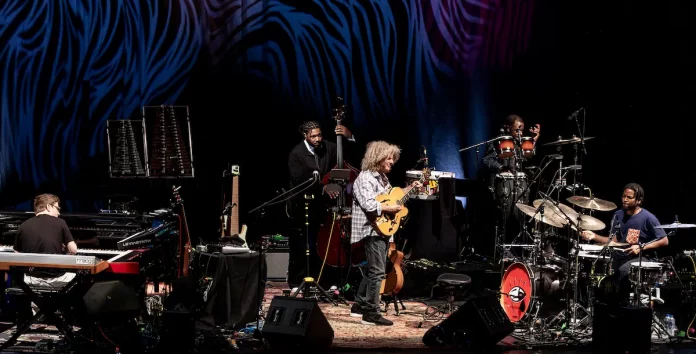
- Opening Segment: The concert began with Metheny solo, showcasing his acoustic fingerstyle technique before the full quintet joined for a series of high-energy pieces from the Side-Eye III+ collection.
- The Core Set: The middle of the performance focused on the interplay between the new material and the PMG "spirit." This included reinterpretations of tracks that defined the jazz-fusion era, updated with the quintet’s unique textures.
- The Encores: Perhaps the most discussed aspect of the night was the series of four encores. Metheny and his band returned to the stage repeatedly, driven by sustained standing ovations. These encores moved from delicate duets to a final, full-band crescendo that left the audience in a state of visible collective appreciation.
The Significance of the Quintet Lineup
The transition from a trio to a quintet is not merely a change in personnel but a strategic shift in Metheny’s artistic presentation. Data from his previous "Unity Band" and "Orchestrion" tours suggest that Metheny frequently oscillates between stripped-down improvisational settings and large-scale, orchestrated productions.
In the quintet format, Jermaine Paul’s role is crucial. As a bassist, Paul manages the transition between the electric fusion sound and more traditional jazz sensibilities. Similarly, Leonard Patton’s contributions on percussion and vocals fill a sonic gap that has been present in Metheny’s smaller groups over the last decade. By reintroducing the vocal element, Metheny is able to tap into the "Americana" and "World Music" influences that made the original Pat Metheny Group a crossover success, reaching audiences far beyond the traditional jazz demographic.
Market Reception and Cultural Context
The 2026 Summer Jazz Series at the Barbican has been marked by a resurgence of interest in veteran jazz icons who continue to innovate. Metheny, at this stage of his career, remains one of the few instrumentalists capable of selling out multiple nights at major international venues. Industry analysts point to Metheny’s "Side-Eye" branding as a masterclass in brand longevity; by aligning himself with rising stars, he maintains relevance with younger listeners while satisfying his core fanbase’s desire for the classic PMG sound.
Ticket sales for the London dates were reportedly exhausted within hours of release, reflecting a broader trend in the UK music market where high-quality, live instrumental music continues to command premium pricing and high attendance. The Barbican’s programming of Metheny alongside other contemporary jazz innovators underscores the venue’s role as a premiere destination for the genre in Europe.

Technical Mastery and Mentorship
Metheny’s technical proficiency remains undiminished after 50 years on the professional circuit. His use of the "Side-Eye" project as a mentorship program is a deliberate act of cultural stewardship. In various interviews throughout the tour’s progression, Metheny has emphasized that the younger musicians bring a "fearlessness" to the stage that prevents him from falling into the trap of nostalgia.
However, for the audience at the Barbican, the nostalgia was a welcome component. The reprisal of PMG material was not a carbon copy of the original recordings but a reimagining. The spirit of the landmark group—characterized by its melodic accessibility and complex harmonic structures—was maintained through Metheny’s rigorous leadership and the quintet’s technical excellence.
Broader Implications for the Jazz Genre
The success of the Side-Eye III+ tour suggests a healthy future for jazz fusion and contemporary improvisational music. Metheny’s ability to draw large crowds in a major global city like London indicates that there is a sustained appetite for complex, long-form instrumental compositions.
Furthermore, the "Side-Eye" model provides a blueprint for other veteran artists. Rather than relying on "legacy" tours with aging contemporaries, Metheny’s infusion of "youthful energy" (as noted by Walters) ensures that the music remains a living, breathing entity. The performance at the Barbican demonstrated that the "Metheny Sound"—a unique blend of Midwest Americana, Brazilian rhythms, and avant-garde jazz—is robust enough to be interpreted by different generations without losing its core identity.
Conclusion and Future Outlook
As Pat Metheny continues his three-date London residency, the impact of the opening night at the Barbican resonates as a highlight of the 2026 jazz calendar. The 2.5-hour display of musicality reaffirmed Metheny’s status as a legend of the guitar while highlighting the immense talent of Chris Fishman, Joe Dyson, Jermaine Paul, and Leonard Patton.
The concert proved that the spirit of the Pat Metheny Group is not a relic of the past but a foundational element that continues to evolve. With four encores and a setlist that spanned a half-century of innovation, Metheny showed no signs of slowing down. As the Side-Eye III+ project moves forward, it stands as a testament to the enduring power of mentorship, the evolution of jazz harmony, and the timeless appeal of one of the most distinctive voices in modern music. For the attendees at the Barbican, it was an evening of "pure excellence," confirming that after 50 years, Pat Metheny remains at the vanguard of the global jazz scene.