Album Review: Philipp von Steinaecker and the Mahler Academy Orchestra Tackle Symphony No. On Period Instruments

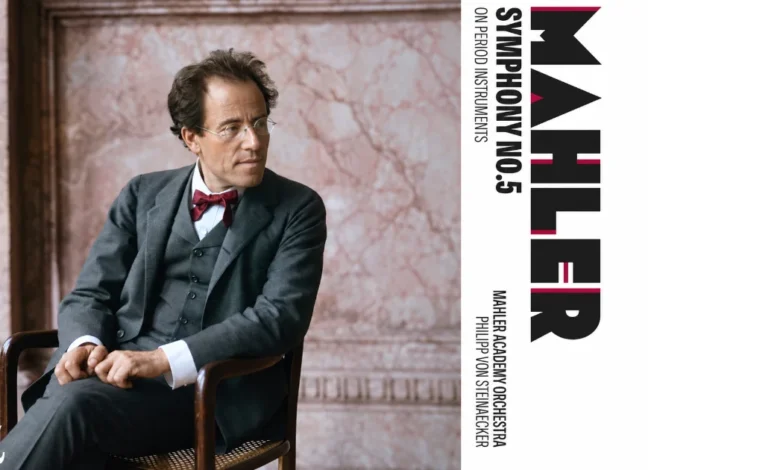
The ongoing debate surrounding historical performance practice in late-Romantic orchestral repertoire has entered a new phase with the release of Mahler: Symphony No. 5 on Period Instruments. Issued by Alpha Classics under catalogue number ALPHA1257, the recording features the Mahler Academy Orchestra under the direction of conductor Philipp von Steinaecker. This release follows the ensemble’s 2024 recording of Mahler’s Symphony No. 9, which similarly sought to reconstruct the sonic environment of the composer’s era through rigorous musicological research. While the project demonstrates meticulous scholarship regarding period-appropriate instruments, vibrato, bowings, articulation, and portamento, the resulting performance continues to divide critics regarding its musical efficacy versus established interpretations.
Historical Context and Research Methodology
The Mahler Academy Orchestra’s core mandate is to investigate and recreate the specific performance practices of Gustav Mahler’s time, roughly spanning the late 19th and early 20th centuries. According to the liner notes provided by Steinaecker, the ensemble undertook extensive scholarly work to align every technical aspect of performance with the instrumental capabilities and stylistic conventions familiar to Mahler. This includes the utilization of period-specific instruments—such as gut strings, which offer a less resonant yet distinctively colored timbre—alongside historical approaches to portamento (sliding between notes), constrained vibrato usage, and specialized bowing techniques.
Proponents of this methodology argue that modern orchestras, with their homogenous tone profiles, steel strings, and continuous, heavy vibrato, obscure the distinct transparency and textural clarity that composers like Mahler would have heard during rehearsals and performances. However, musicological purism in late-Romantic music has long faced skepticism from critics who argue that composers frequently desired emotional extremes and expressive flexibility that transcended the technical limitations of their period.
Musical Analysis of the Movements
The tension between musicological demonstration and spontaneous emotional expression is immediately apparent in the opening movement. Following the trumpet fanfare, the strings introduce the primary theme utilizing minimal vibrato, heightened articulation, shortened bow strokes, and calculated portamento. Rather than conveying the profound, numbed grief found in benchmark recordings by conductors such as Leonard Bernstein or Klaus Tennstedt, the execution can occasionally resemble a lecture-demonstration.
Furthermore, Steinaecker maintains strict control throughout the faster middle section of the opening movement, preventing any sense of structural destabilization. This approach contrasts sharply with historical evidence, such as piano rolls capturing Mahler’s own playing of his transcriptions, which reveal a volatile wildness suggesting that derailment is perpetually imminent. Historical documentation consistently indicates that Mahler prioritized extreme emotional arcs over absolute technical polish.
Similar interpretive choices shape the second movement. While the tempo is brisk and the orchestral playing is undeniably proficient, the performance lacks the raw, unbridled fury demanded by the score. When the initial fury subsides, Steinaecker adopts a markedly slower tempo that disrupts the movement’s momentum, marginalizing the expressive weight of the cellos’ subsequent lament. It is only following the chorale climax that the opening material returns with the unhinged intensity that should have characterized the movement from its onset.
Tempo fluctuations and Architectural Challenges in the Scherzo and Adagietto
The Scherzo highlights ongoing challenges regarding structural momentum. Steinaecker establishes wide tempo contrasts intended to heighten the music’s impassioned character; however, the slower sections frequently suffer from a dissipation of energy. By comparison, conductors like Bernstein and Tennstedt execute similarly expansive tempos without sacrificing internal tension. Consequently, sections of the Scherzo risk prioritizing "authentic" stylistic markers at the expense of the overarching symphonic arc.
The Adagietto presents an even more pronounced interpretive contradiction. Clocking in at 9 minutes and 5 seconds, Steinaecker’s tempo is notably broad. This duration sits in stark contrast to historical recordings left by Mahler’s own disciples within decades of the composer’s death. Willem Mengelberg’s 1926 recording runs to approximately seven minutes, while Bruno Walter’s 1938 reading takes roughly eight minutes. Both conductors worked directly with Mahler. Given that the entire premise of the Mahler Academy Orchestra is adherence to historical practice, the adoption of a slower tempo—particularly when utilizing less resonant gut strings that might benefit from greater fluid movement—feels incongruous with the stylistic lineage of the composer’s inner circle.
Resolution and the Rondo-Finale
The performance finds its most assured footing in the Rondo-Finale. Here, Steinaecker finally relaxes structural controls, allowing the orchestra to execute the driven, high-velocity passages with palpable enthusiasm and power. The resulting energy recaptures the momentum missing from earlier movements, culminating in a Coda that is both distinctive and commanding.
Implications for Period-Instrument Mahler Performance
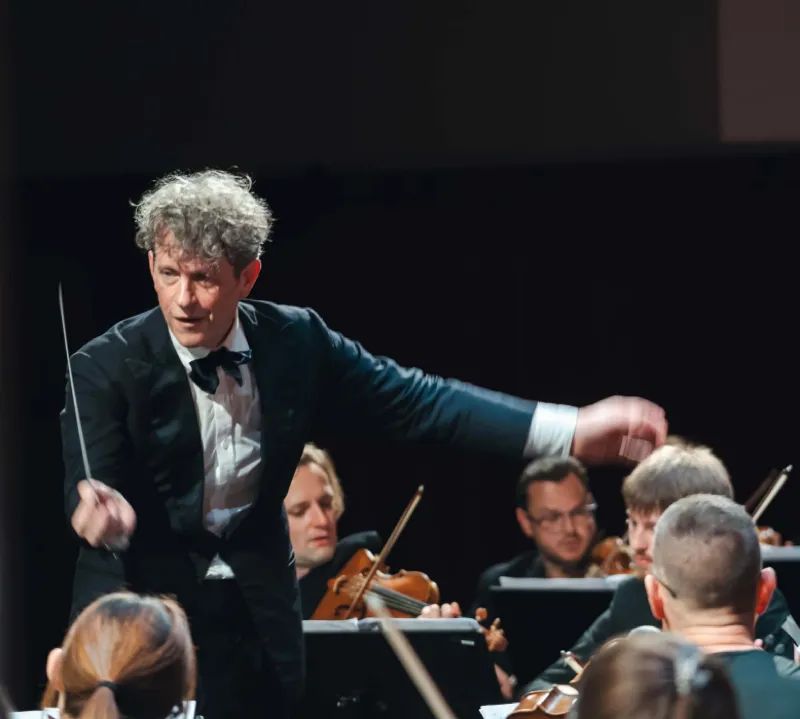
While this release demonstrates notable technical improvements over the ensemble’s previous recording of the Ninth Symphony, the fundamental premise of period-instrument Mahler remains a subject of intense debate. The recording successfully documents the physical realities of early 20th-century orchestral playing, offering listeners a window into the textural palette available to Mahler. Nevertheless, when evaluated against benchmark recordings by legendary interpreters—including Michael Tilson Thomas in San Francisco, Riccardo Chailly in Amsterdam, and Claudio Abbado in Berlin—Steinaecker’s interpretation does not eclipse the expressive depth of modern-instrument traditions.
Album Details and Accessibility
Mahler: Symphony No. 5 On Period Instruments is released by Alpha Classics (Catalogue No. ALPHA1257) and is widely available for streaming and purchase across major classical music platforms, including Apple Music Classical and Presto Music. While essential listening for musicologists and collectors tracking the evolution of performance practice, the album serves primarily as a fascinating academic exercise rather than a definitive interpretation of the masterwork.