Nick Jonah Davis Returns with Rose Delta Rising a Masterclass in Modern Acoustic Guitar Exploration

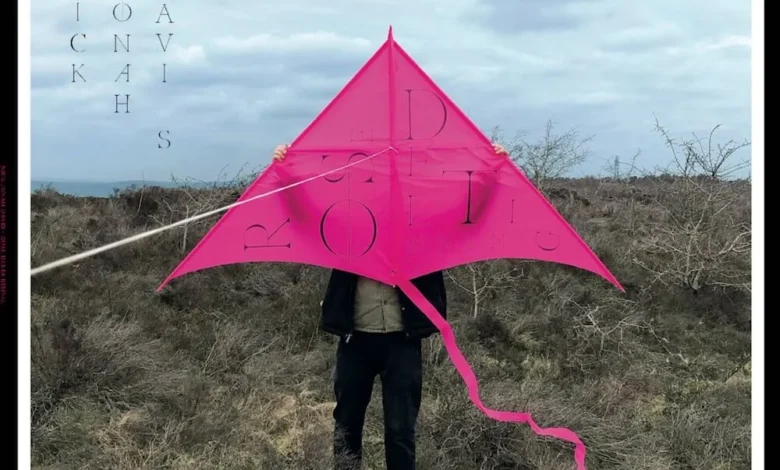
The contemporary landscape of instrumental acoustic music often struggles to balance technical virtuosity with genuine emotional resonance, yet composer and guitarist Nick Jonah Davis continues to bridge this divide with remarkable precision. His latest full-length studio recording, Rose Delta Rising, represents a watershed moment in his already celebrated catalog. Released to critical acclaim within underground and avant-folk circles, the album has drawn comparisons to historic cross-genre collaborations, positioning Davis not merely as a revivalist of traditional American and British folk forms, but as an active innovator expanding the vocabulary of the solo and ensemble guitar.
The album arrives at a time of renewed interest in instrumental folk, pastoral psychedelia, and improvised acoustic textures. By synthesizing elements of British folk-baroque, American primitive guitar traditions, and free-form experimentalism, Davis has crafted a work that resists easy categorization while inviting deep, analytical listening. Music critics and industry observers have noted that Rose Delta Rising transcends the traditional boundaries of guitar-nerd wish fulfillment, offering instead a deeply personalized, singular artistic statement that rewards repeated engagement.
Background Context and Evolution of the Artist
To understand the significance of Rose Delta Rising, one must examine the trajectory of Nick Jonah Davis within the broader ecosystem of independent and underground music. Over the past two decades, Davis has cultivated a reputation as a restless sonic explorer, moving fluidly between intricate solo fingerpicking, drone-based explorations, and loose ensemble improvisations. Operating largely away from the mainstream commercial apparatus, he has built a dedicated following through releases on respected independent labels, earning comparisons to luminaries of the Takoma Records lineage as well as the shadowy, atmospheric realms of UK folk-rock innovators.
Davis’s earlier works established his technical proficiency and deep reverence for folk traditions. However, Rose Delta Rising marks a distinct evolutionary leap. Rather than leaning solely on traditional song forms or standard cyclical patterns, Davis incorporates a wider palette of timbres, recording techniques, and dynamic arrangements. The album’s genesis can be traced back to a period of sustained isolation and intense compositional focus, during which Davis sought to dissolve the rigid boundaries separating structured folk composition from spontaneous, avant-garde improvisation. The resulting sessions capture an artist operating at the peak of his powers, supported by a coterie of sympathetic musicians who elevate the material without overshadowing its core intimacy.
Chronology and Production History
The creation of Rose Delta Rising spanned nearly two years of meticulous writing, arrangement, and recording. Initial writing sessions began in early phases of artistic regrouping, as Davis experimented with alternate tunings and polyrhythmic structures in his rural studio space. Unlike previous records that leaned heavily toward immediate live-to-tape tracking, this project involved a more layered and deliberate production approach, blending raw, unvarnished room acoustics with carefully curated textural overdubs.
By the mid-point of the production timeline, Davis began assembling a small ensemble of collaborators capable of translating his complex charts and open-ended melodic prompts into physical performances. The recording sessions took place over several months in acoustically rich environments designed to capture the natural resonance of wooden instruments. Post-production and mixing focused on preserving the organic transients of the guitars while creating a spacious, immersive soundstage. This careful attention to fidelity ensures that every nuance—from the squeak of wound strings against frets to the ambient decay of the room—remains audible, drawing the listener directly into the physical space of the performance.
Musical Analysis and Conceptual Framework
A primary challenge faced by reviewers attempting to categorize Rose Delta Rising is its uncanny ability to evoke legendary, albeit hypothetical, musical pairings. Critics have frequently invoked the cross-pollination of genres to describe the album’s sweeping scope, suggesting scenarios akin to Ry Cooder integrating with the intricate folk-jazz arrangements of Pentangle, or Peter Green lending his haunting, blues-inflected touch to the melancholic pastoralism of Nick Drake’s Bryter Layter. Others have pointed toward the avant-garde sensibilities of Sonic Youth reinterpreting the desolate, haunting acoustic soundscapes of John Fahey’s landmark composition Avocet.
Yet, these comparisons, while illustrative of the album’s stylistic breadth, ultimately fall short of capturing its true identity. Rose Delta Rising is not a pastiche of retro influences; rather, it is a forward-thinking synthesis of disparate sonic histories. Davis utilizes the acoustic guitar as a vehicle for narrative storytelling without the aid of traditional lyrics. The compositions are characterized by undulating modal shifts, intricate counterpoint, and sudden eruptions of textural noise that ground the pretty melodies in a gritty, authentic reality. The interplay between structured motifs and exploratory wandering gives the record a cinematic quality, making it feel simultaneously ancient and thoroughly modern.
Critical Reception and Industry Response
Upon its release, Rose Delta Rising received widespread critical praise from specialized music publications, high-end audio enthusiasts, and contemporary folk circles. Reviewers have lauded the album’s uncompromising artistic vision and its refusal to pander to contemporary streaming algorithms that favor short, punchy tracks designed for passive background listening. Instead, Davis demands the listener’s full attention, structuring the album as an uninterrupted journey that unfolds across multiple movements.
Independent music platforms and community-supported outlets have championed the record as a triumph of independent, artist-driven production. Publications such as Aquarium Drunkard have highlighted the album’s unique ability to satisfy sophisticated music aficionados while remaining deeply affecting on an emotional level. This critical acclaim has translated into strong physical media sales, particularly on vinyl, appealing to a dedicated demographic of collectors who value high-fidelity sound reproduction, liner notes, and tangible packaging.
Economic and Cultural Implications for Independent Music
The successful release and reception of Rose Delta Rising offer valuable insights into the current state of the independent music economy. In an era dominated by corporate-backed streaming services, algorithm-driven playlists, and rapid-fire content consumption, Davis’s album demonstrates that there remains a viable, sustainable market for uncompromising, high-craft instrumental music. The project’s financial viability has been significantly bolstered by direct-to-fan support models, community-funded platforms, and independent record stores that champion physical media.
Furthermore, the album highlights the growing appetite for music that requires active, mindful engagement. As audiences experience digital fatigue from endless loops of compressed, hyper-processed pop, works like Rose Delta Rising provide a restorative alternative. The intricate musicianship and acoustic warmth of the record serve as an antidote to modern digital sterility, proving that physical instruments played with human imperfections still hold profound cultural and emotional value.
Broader Impact on the Contemporary Acoustic Guitar Landscape
Within the specific domain of contemporary acoustic guitar music—often colloquially termed American Primitive or modern fingerstyle—Rose Delta Rising sets a new benchmark for ambition and execution. For decades, the genre risked becoming trapped in stylistic imitation, with younger players endlessly recycling the classic techniques of originators like John Fahey, Robbie Basho, and Leo Kottke. Davis’s work proves that the idiom is capable of dynamic growth and cross-genre fertilization.
By incorporating elements of free jazz, ambient drone, and British folk-baroque into his foundational fingerpicking framework, Davis has expanded the stylistic boundaries of what a solo or small-ensemble acoustic record can achieve. Educators and younger musicians studying the instrument will likely analyze Rose Delta Rising for its innovative use of alternate tunings, unusual time signatures, and textural arrangement. Its influence is expected to ripple through the independent guitar community, inspiring future generations of players to look beyond traditional genre constraints and embrace a more holistic, exploratory approach to their craft.
Future Outlook and Touring Plans
Following the release of Rose Delta Rising, Nick Jonah Davis has embarked on a series of live performances designed to bring the complex arrangements of the album to intimate concert spaces, art galleries, and specialized music festivals. Translating studio recordings characterized by rich textural layering into live solo or small-ensemble settings presents unique technical challenges, yet early reports from these performances indicate that Davis has successfully adapted the material for the stage, relying on masterful improvisation and dynamic control.
Industry analysts and fans alike will be watching closely to see how this artistic breakthrough shapes Davis’s subsequent creative endeavors. Whether Rose Delta Rising serves as a high-water mark or merely a stepping stone toward even more ambitious sonic territories, it has definitively cemented Nick Jonah Davis’s status as one of the most vital, uncompromising, and visionary guitarists working in modern music today.
Related posts: