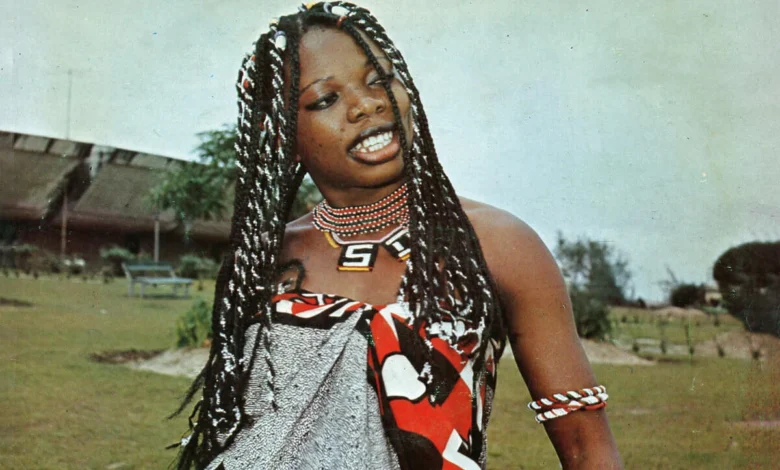
The cultural and sonic landscape of Nigeria during the late twentieth century underwent a profound metamorphosis that continues to reverberate through contemporary global music. Far from terminating with the conclusion of the 1970s, the aesthetic sensibilities, political fervor, and experimental instrumentation of that decade bled seamlessly into the 1980s, creating an elastic, highly fertile era of musical production. A definitive compilation and critical examination of this period, encapsulated by archival projects such as Strut Records’ Nigeria 80, captures Nigerian popular music during a magnificent and unruly transitional stretch. This pivotal window sat precisely between the international explosion of Afrobeat and the myriad stylistic mutations that followed, encompassing juju, funk, highlife, reggae, and proto-hip-hop in a continuous cycle of glorious cross-pollination.
To understand the weight of 1980s Nigerian music, one must examine the socio-political crucible from which it emerged. The preceding decade had been defined by post-independence optimism, economic buoyancy driven by the oil boom, and the radical cultural politics spearheaded by figures like Fela Anikulapo-Kuti. However, as the calendar turned to 1980, Nigeria faced mounting economic turbulence, shifting political regimes, and rapid urbanization. Lagos, in particular, solidified its status as a pulsating megacity where traditional West African rhythms collided with Western funk, soul, and jazz imported via records, touring musicians, and returning students. This environment fostered a music scene that was simultaneously deeply rooted in local indigenous traditions and radically outward-looking, utilizing modern electronic instrumentation, synthesizers, and studio production techniques to forge a distinct national identity on the global stage.
The Chronology of a Sonic Evolution: From Afrobeat to the 1980s Cross-Currents
The historical trajectory of Nigerian popular music in the twentieth century is marked by distinct phases of institutional growth, stylistic innovation, and political engagement. The 1960s established the groundwork following the nation’s independence in 1960, with highlife reigning supreme in the urban centers, championed by bands like Tunde Nightingale and Victor Olaiya. As the 1970s dawned, Fela Kuti synthesized highlife, jazz, and funk into Afrobeat—a complex, politically charged genre designed as a vehicle for social commentary and resistance against military authoritarianism.
By 1980, the musical ecosystem had diversified exponentially. The timeline of this era can be broken down into key developmental phases:
1980–1983 (The Second Republic Era): A brief return to civilian rule under President Shehu Shagari brought economic deregulation and a massive influx of foreign consumer goods, including advanced musical technology. Studios like EMI Nigeria, Decca West Africa, and Phonogram experienced heightened commercial activity. Artists experimented freely with synthesizers, drum machines, and electronic keyboards, blending them seamlessly with traditional percussion ensembles.
1984–1985 (The Military Resurgence and Economic Austerity): Following the military coup led by Major General Muhammadu Buhari, strict economic austerity measures were implemented, including the introduction of the Structural Adjustment Programme (SAP) later in the decade. Import duties on musical equipment skyrocketed, forcing local artists and producers to rely on ingenuity, local pressing plants, and homegrown distribution networks. Despite the economic hardship, creativity flourished as musicians channeled societal disillusionment into biting social critiques disguised as danceable grooves.
1986–1989 (Global Export and Genre Fragmentation): During the latter half of the decade, Nigerian music began making deeper incursions into international markets. Juju music, led by King Sunny Ade and Ebenezer Obey, achieved global recognition and major international record deals. Concurrently, younger generations of musicians began integrating American hip-hop, Jamaican dancehall, and bubblegum pop into their repertoires, laying the groundwork for the modern Afrobeats phenomenon of the twenty-first century.
Deconstructing the Sound: Genres, Instrumentation, and Cross-Pollination
The defining characteristic of the 1980s Nigerian soundscape was its refusal to adhere to rigid genre boundaries. While the international music community often sought to compartmentalize African music into neat categories like world music or Afro-fusion, artists operating within Lagos, Ibadan, and other cultural hubs were engaged in a continuous process of sonic hybridization.
Highlife evolved from its big-band origins into more streamlined, guitar-driven configurations, often incorporating synthesized horn sections. Juju music expanded its sonic palette by integrating pedal steel guitars, multi-layered vocal harmonies, and complex percussion sections featuring the talking drum (gangan). Simultaneously, the rise of Nigerian funk and disco—championed by artists such as Steve Monite, William Onyeabor, and Kris Okoh—demonstrated a mastery of analog synthesizers and drum machines that rivaled the output of Western electronic producers in Detroit, London, and New York.
Reggae also found a profound socio-political foothold in Nigeria during this period, mirroring the struggles against oppression and economic marginalization faced by the populace. Artists like Majek Fashek utilized the Jamaican rhythm style to address local realities, creating a hybrid sound that resonated deeply across West Africa. This porous boundary between genres meant that a single LP could effortlessly transition from a highlife groove to a disco-inflected funk jam, followed by a roots-reggae meditation, all underpinned by the unmistakable syncopated rhythms of Nigerian percussion.
Supporting Data and Archival Insights
Archival projects and musicological research into 1980s Nigerian recordings reveal the sheer volume and economic scale of the industry during this period. According to historical data from the Performing Musicians Employers Association of Nigeria (PMAN) and regional record label archives, Lagos alone hosted dozens of independent recording studios and pressing plants at its peak in the mid-1980s.
Despite the logistical challenges posed by infrastructural deficits, erratic electrical grids, and economic inflation, Nigerian record labels produced thousands of vinyl LPs and cassettes annually. A statistical breakdown of genre distribution during the 1980–1989 decade indicates:
- Highlife and Juju: Comprised approximately 45% of commercial releases, maintaining a dominant grip on mainstream radio and wedding/social events.
- Afrobeat and Afro-Funk: Represented roughly 25% of output, heavily favored by university student populations, intellectuals, and urban youth movements.
- Reggae and Indigenous Folk Fusions: Accounted for 20% of the market, experiencing a rapid surge in popularity toward the latter half of the decade.
- Proto-Hip-Hop, Disco, and Experimental Electronic: Comprised the remaining 10%, serving as a cutting-edge avant-garde that pointed toward the future of African popular music production.
Statements and Cultural Perspectives from Industry Historians
Musicologists, producers, and cultural historians who have studied the era emphasize that the 1980s should not be viewed merely as a postscript to the glory days of 1970s Afrobeat, but as a golden age of technological adaptation and artistic autonomy.
Music historians and crate-diggers who specialize in West African vinyl culture often point out that the production techniques developed during this era were remarkably forward-thinking. Producers working with limited analog gear achieved unprecedented warmth and spatial depth in their mixes. The deployment of synthesizers was not merely an imitation of Western trends, but a deliberate indigenization of technology, where electronic frequencies were tuned to complement traditional microtonal vocal styles and polyrhythmic structures.
Cultural analysts note that the music served as a crucial psychological outlet for a population navigating rapid modernization and political instability. As government censorship tightened under successive military administrations, artists mastered the art of double-entendre, embedding revolutionary political commentary within danceable, seemingly innocuous party anthems. This tradition of socially conscious popular music became a hallmark of the Nigerian creative sector, establishing a direct lineage to contemporary artists who continue to use their platforms to address governance, corruption, and social justice.
Broader Impact and Global Implications
The ripples of the 1980s Nigerian sound world extend far beyond the geographical borders of West Africa, shaping contemporary global pop culture in profound ways. In recent years, the global resurgence of interest in vintage African vinyl—spearheaded by labels such as Strut Records, Luaka Bop, and Soundway—has introduced a new generation of international listeners to the sophisticated production values and compositional brilliance of 1980s Nigerian artists.
Furthermore, the technological and stylistic blueprints established during this era directly enabled the rise of modern Afrobeats. The seamless blending of local idioms with global genres, the mastery of studio production as an instrument in its own right, and the establishment of an independent, self-sustaining distribution and promotional network all trace their origins back to the resilient hustle of 1980s Nigerian musicians and producers.
As contemporary music industries in Lagos and Abuja continue to dominate global charts, a retrospective glance at the explosive sound world of the 1980s provides essential context. It demonstrates that the current global prominence of Nigerian music is not an overnight phenomenon, but the culmination of decades of tireless experimentation, cross-pollination, and an unyielding commitment to rhythm and groove. The elastic sounds of the 1980s did not merely preserve the legacy of the past; they engineered the future of global popular music.