DC JazzFest 2026 Transforms the Nation’s Capital into a Global Epicenter for Jazz Innovation and Cultural Heritage

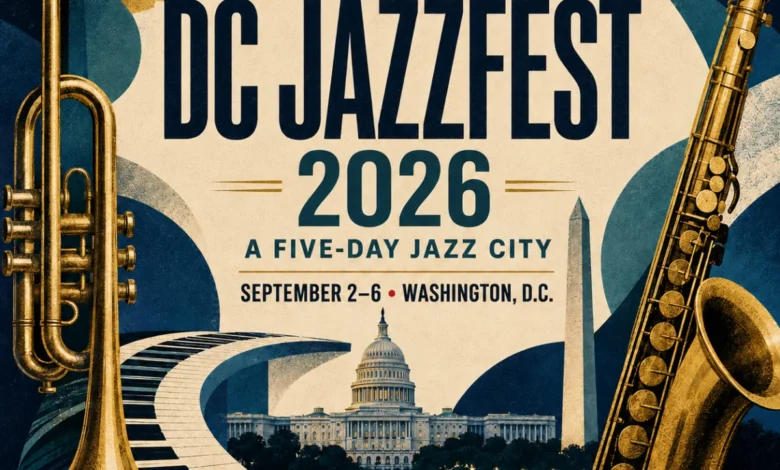
From September 2 through September 6, 2026, Washington, D.C. will undergo a comprehensive transformation as the 22nd annual DC JazzFest takes hold of the city. Moving beyond the traditional limitations of a single-venue event, this year’s festival will span over 20 distinct venues across a dozen neighborhoods, effectively turning the District of Columbia into a sprawling, interconnected campus of improvisational music. By integrating historic institutions, intimate neighborhood clubs, and large-scale waterfront stages, the festival seeks to articulate a portrait of Washington as a living, breathing jazz metropolis.
The programming, which features a roster of international headliners alongside the District’s own deep bench of talent, is designed to serve as both an educational platform and a high-caliber performance series. As the festival prepares for its two-day grand finale at The Wharf, the event stands as a significant marker in the local cultural calendar, bolstered by the broader momentum of the America250 and DC250 commemorative initiatives.
A Chronological Expansion of Sound
The festival’s structure follows a strategic progression, starting with intimate, hyper-local showcases before expanding into the multi-stage sensory experience of The Wharf. On Wednesday, September 2, the festival kicks off at The Hamilton Live. The opening night serves as a testament to local pride, featuring the JazzDC All-Stars Orchestra, led by educator and saxophonist Paul Carr. The ensemble will be augmented by the technical prowess of vocalist Christie Dashiell and the legendary NEA Jazz Master Jason Marsalis.
By Thursday, September 3, the festival broadens its geographic footprint. A free program at Anthem Row highlights the genre-fluid experimentation of Richmond-based collective Butcher Brown, accompanied by D.C. stalwarts Marshall Keys and bassist Corcoran Holt. Simultaneously, the festival’s decentralized nature becomes apparent as disparate corners of the city, from the Kreeger Museum to St. Vincent Wine, host specialized performances, ensuring that the jazz narrative is not confined to the city’s downtown core.
Friday, September 4, brings a focus on the sonic history of the instrument, specifically the B-3 organ. The second annual B-3 Organ Summit at Westminster Church will feature Charles Covington and Mike LeDonne, anchoring the festival in the tradition of the jazz organ trio. This focus on heritage is balanced by performances at historic venues like Mr. Henry’s on Capitol Hill, where the ensemble led by vocalist Heidi Martin will provide a contemporary interpretation of the jazz vocal tradition.
The Wharf: A Panoramic View of Modern Jazz
The focal point of the 2026 festival shifts on Saturday and Sunday, September 5 and 6, to The Wharf. This waterfront development will host an expansive array of performances from noon until 10 p.m. daily. The programming here is intentionally eclectic, designed to showcase the fluidity of contemporary jazz.
NEA Jazz Master Dee Dee Bridgewater will anchor the weekend with her “We Exist” project, a performance emphasizing the vital contributions of women in jazz, supported by a rising ensemble including pianist Alexis Lombre, bassist Liany Mateo, and drummer Shirazette Tinnin. This focus on legacy and continuity is echoed in the appearance of the Bill Frisell Trio, which continues to blur the lines between jazz, folk, and Americana.
The inclusion of artists such as Cory Henry & The Funk Apostles and the Yellowjackets—who will be joined by Kurt Elling for a tribute to the fusion pioneers Weather Report—signals the festival’s commitment to high-energy, crossover appeal. Furthermore, the “PanaMonk” trio led by Danilo Pérez offers a sophisticated look at global influence, bridging the gap between Thelonious Monk’s American canon and Panamanian rhythmic structures.
Centennial Reflections: The Legacy of 1926
A central theme for the 2026 iteration is the celebration of the centennial of three monumental figures: Miles Davis, John Coltrane, and Randy Weston. Rather than relying on archival presentations, the festival has curated a series of “reactive” performances. Festival artist-in-residence Emmet Cohen will headline “Miles and Trane at 100,” a performance intended to re-contextualize the influence of these figures for a 21st-century audience.
The African Rhythms Alumni Quintet will provide a similar service for the legacy of Randy Weston, highlighting the pianist’s lifelong pursuit of integrating African musical heritage with the American jazz idiom. These programs are deeply symbolic within the context of the America250 commemorations. By centering the conversation on these three titans, the festival organizers are positioning jazz as a progressive, evolving art form that remains foundational to the American identity.
Supporting the Future: The DCJazzPrix and Beyond
A critical component of the festival’s long-term strategy is the 11th annual DCJazzPrix, a competition that has gained national recognition for its unique approach to talent development. Held on Saturday at Union Stage, the competition evaluates bands as cohesive working units rather than collections of soloists. Finalists for the 2026 edition—the Amina Scott Quintet, the Bokani Dyer Trio, the James Fernando Trio, and Luther S. Allison & Poiesis—represent a cross-section of emerging global talent.
The winner will receive a $15,000 cash prize, professional development resources, and a guaranteed performance slot at the 2027 festival. This investment in the next generation is complemented by “Meet the Artist” sessions at Arena Stage, which provide a bridge between the festival’s headliners and the public. These discussions cover topics ranging from technical improvisation to the socio-political history of the genre, reinforcing the festival’s role as an educational hub.
Economic and Cultural Implications
The festival functions as a significant economic engine for the District. By activating indoor venues such as Arena Stage, Union Stage, and Pearl Street Warehouse in tandem with the outdoor spaces at The Wharf, the event ensures that local businesses benefit from the influx of visitors. Furthermore, the inclusion of the Chuck Brown Band and NEA Jazz Master Donald Harrison for a closing-day collaboration between New Orleans traditions and Washington’s own go-go music highlights a strategic effort to validate the city’s unique cultural contributions on an international stage.
Official data from the DC Jazz Festival organization suggests that the reach of the event extends well beyond the five days of performances. By partnering with international cultural ministries, the festival has secured participation from artists representing Sweden, South Korea, Lithuania, the Czech Republic, and Venezuela. This global connectivity is essential for maintaining the relevancy of the festival in an increasingly interconnected musical landscape.
Artistic Director Willard Jenkins has consistently framed this year’s festival as a demonstration of jazz as a "living, breathing entity." The implications for the city are clear: the DC JazzFest is not merely a seasonal event but a critical piece of infrastructure for the District’s cultural economy. It provides a platform for dialogue, reflection, and artistic advancement that sustains the city’s jazz scene throughout the remainder of the year.
Logistical Information
The 2026 DC JazzFest is designed to be accessible to a wide demographic. While the main stage at The Wharf offers significant free viewing areas from the waterfront promenade, the festival has implemented a tiered ticketing system for access to performance piers and indoor venues. Detailed information regarding the full performance schedule, transportation logistics, and the extensive FAQ section—which addresses the complexities of attending a citywide, multi-venue event—is available through the official festival portal at dcjazzfest.org.
As the city prepares for the September 2 start date, the overarching sentiment is one of anticipation. Through a synthesis of historical reverence, emerging talent, and community-based programming, the 2026 DC JazzFest seeks to solidify its position as the premier jazz gathering in the United States, providing a definitive roadmap for how a modern city can honor its past while actively cultivating the sounds of the future.