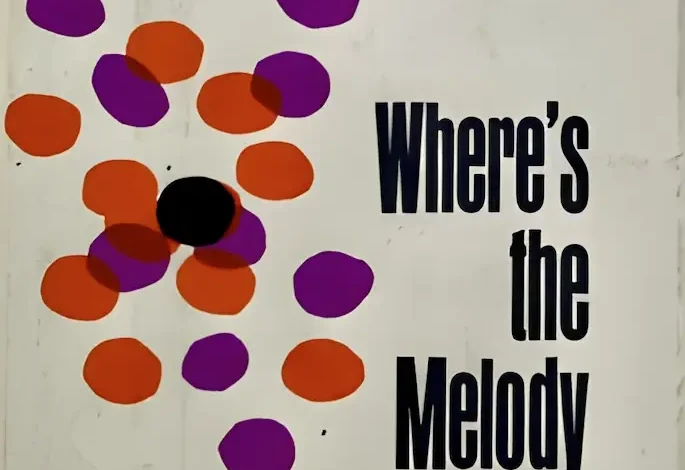
Sixty years ago, the release of Martin Williams’ book, Where’s the Melody?, prompted a critical reassessment of how jazz literature should introduce the genre to the public. Published by Pantheon Books in 1966 with a retail price of $4.95, the work was intended as a comprehensive guide to the art form. However, a review published in the September 1966 issue of Jazz Journal by Don Lindon offered a sharp critique of the book’s structure, characterizing it as a collection of disjointed, recycled articles rather than a cohesive pedagogical introduction. This retrospective analysis examines the reception of Williams’ work, the landscape of jazz criticism in the mid-1960s, and the broader implications for music journalism of that era.
The Landscape of Jazz Literature in the 1960s
During the mid-1960s, jazz criticism was evolving from the romanticized, often biographical narratives of the 1940s and 50s toward a more analytical, musicological approach. Martin Williams was a central figure in this transition. As a co-founder of The Jazz Review in 1958, he championed a serious, academic perspective on jazz, often focusing on the structural components of composition and improvisation.
However, Where’s the Melody? arrived at a time when the market for jazz education was expanding. Publishers were increasingly interested in "introductory" texts that could guide the growing number of enthusiasts entering the genre through the popularity of modern jazz and post-bop. Williams, a critic of significant standing, was expected to provide a definitive guidebook. Instead, his decision to compile previously published essays and fragmented studies created a disconnect between his reputation and the utility of the volume for the average reader.
Structural Breakdown and Critical Reception
The book’s architecture is divided into three distinct sections, a design that proved controversial upon its release. The first section, "On the Music," attempted to outline the fundamental characteristics of jazz, including analyses of blues structures and a chapter on composition. While these efforts were grounded in technical rigor, critics at the time—most notably Lindon—argued that the inclusion of a "basic jazz library" list was overly demanding. By catering to the "dedicated student" rather than the casual listener, the book arguably alienated the very audience it intended to cultivate.
The second section, "On the Scene," focused on profiles of specific musicians: Thelonious Monk, Milt Jackson, Big Joe Williams, and Jimmy Giuffre. This segment highlighted a stylistic choice that became a focal point of contemporary criticism. Williams employed a narrative, almost prose-heavy style to document the working habits of these artists. Critics viewed these descriptive passages as "precious" or overly stylized, arguing that the space would have been better utilized for substantive musical theory or historical context. The reliance on atmospheric anecdotes in the Giuffre chapter, for instance, was seen by many as a diversion from the serious analysis expected of a critic of Williams’ caliber.
Finally, the third section—a collection of studies on Horace Silver, Billie Holiday, Gene Krupa, and others—drew criticism for its perceived lack of depth. The four-and-a-half-page section on Gene Krupa, which concludes with a focus on Roy Eldridge, was cited as an example of the book’s lack of focus. Furthermore, the inclusion of brief, dismissive critiques of popular figures like George Shearing, Oscar Peterson, Ahmad Jamal, and Dave Brubeck was viewed as a missed opportunity to engage with the breadth of the jazz spectrum.
Chronology of Publication and Editorial Intent
To understand the friction between the book’s intent and its reception, one must look at the timeline of Williams’ editorial output. By 1966, Williams had spent nearly a decade refining his critical voice. The material included in Where’s the Melody? represents a cross-section of his work during the most prolific years of The Jazz Review and his subsequent contributions to other journals.
- 1958: Founding of The Jazz Review. Williams begins establishing a reputation for intellectual rigor.
- 1960–1965: Williams publishes numerous essays, critiques, and liner notes that reflect the content eventually found in his 1966 compilation.
- September 1966: Where’s the Melody? is released by Pantheon Books.
- Late 1966: The critical reception in publications like Jazz Journal highlights a growing divide between elite music critics and the general reading public.
The primary conflict, as inferred from the contemporary critique, was the assumption that a compilation of independent essays could function as a structured textbook. While each essay possessed individual merit, their synthesis into a single volume failed to provide the "narrative thread" necessary for a novice reader to understand the evolution of jazz history.
The Problem of Stylistic Fragmentation
The "basic conception" of the book—to present jazz through its music and musicians rather than through rigid, era-based stylistic divisions (e.g., Swing vs. Bebop)—was considered a progressive idea at the time. However, the execution was hampered by the fragmentary nature of the source material.
By avoiding a chronological or stylistic framework, the book risked losing the reader in a sea of technical jargon and disparate biographical sketches. For a reader seeking to understand the progression of the genre, the lack of a clear through-line was detrimental. Lindon’s critique emphasized that while the ambition was "praiseworthy," the material simply did not support the weight of an introductory text.
Broader Implications for Music Journalism
The controversy surrounding Where’s the Melody? serves as a case study for the challenges of music journalism in the 20th century. During this era, critics were often tasked with both educating the public and maintaining the integrity of the art form. When these two goals conflicted, the resulting literature often fell into the trap of being either too dense for the novice or too disjointed for the scholar.
The "disappointing" nature of the book, as viewed by early reviewers, highlights the importance of editorial curation in the transition from periodical essays to book-length monographs. Simply amalgamating past work, even high-quality work, does not automatically result in a coherent educational tool. The success of such a volume requires a dedicated synthesis that acknowledges the gaps between individual pieces.
Legacy and Final Assessment
Despite the criticism leveled against Where’s the Melody?, it remains a notable artifact of the Martin Williams bibliography. Williams would go on to write more successful and influential works, including The Jazz Tradition (1970), which refined his approach to analyzing the history of the music.
The primary takeaway from the 1966 reception of this book is that a critic’s authority is not always transferable across different formats. For the reader of 1966, the disappointment was not necessarily in the quality of Williams’ writing—which was often lauded for its precision—but in the lack of a cohesive "introduction" to the subject. For contemporary students of jazz history, the book serves as a reminder of the tension between the analytical depth of the critic and the pedagogical needs of the audience.
Ultimately, the book failed to achieve its goal of being the quintessential introductory guide. However, it stands as a testament to the high expectations held for jazz writers of the time, who were viewed as the gatekeepers and interpreters of a rapidly evolving American art form. As the record shows, the task of translating the complex, improvisational nature of jazz into a written, introductory format remains one of the most difficult challenges in musicology. Williams, while perhaps missing the mark in 1966, played a crucial role in the development of the very critical standards that were used to evaluate his work.