This assessment, originally published in the September 1966 issue of Jazz Journal, serves as a historical case study in the tension between the burgeoning avant-garde movement of the 1960s and the established standards of the British jazz scene. The record in question, a CBS release (BPG 62409), captured a unique moment in jazz history: an American avant-garde musician collaborating with a cadre of highly regarded British sidemen. While the project aimed to bridge the gap between traditional jazz structures and the experimentalism emerging from the United States, the critical reception at the time suggests a profound disconnect in artistic expectations.
The Context of the 1966 Recording Session
The mid-1960s represented a period of significant transition for jazz. In the United States, the influence of musicians like Eric Dolphy—to whom Prince Lasha was closely linked—had begun to push the boundaries of harmonic and melodic structure. Prince Lasha, a multi-instrumentalist known for his work on alto saxophone and flute, arrived in England during a time when British jazz musicians were increasingly seeking to integrate these modern influences into their own playing styles.
The session, which took place in London in 1966, featured a rotating lineup of distinguished British talent, including trumpeter Chris Bateson, trombonist John Mumford, and pianists Stan Tracey and Mike Carr. The presence of two bassists—a common experimental technique of the era to provide a thicker harmonic floor—further signaled an attempt at a modern, avant-garde sound. However, the choice of material, which relied heavily on traditional standards such as "Just Friends," "Body and Soul," and "Out of Nowhere," created an immediate friction between the performer’s intent and the resulting execution.
Critical Dissection of the Performance
The critique provided by Shera focused heavily on Lasha’s inability to navigate these standards with the coherence expected by the jazz establishment of the time. In his assessment of "Nuttin’ Out Jones," Shera noted a lack of structural continuity, describing the phrases as short and disconnected. Such criticisms were common during the 1960s, a decade marked by the "jazz wars" between traditionalists who valued melodic phrasing and the avant-garde movement that prioritized emotional intensity and abstract exploration.
The specific technical shortcomings cited—such as Lasha’s struggle to maintain melodic reference on "Just Friends" or his limited contribution on "Body and Soul"—highlight a broader issue regarding the transition from bebop to free jazz. For the contemporary reviewer, the avant-garde approach appeared as a "refuge for the untalented," a perspective that reflected the skepticism many critics held toward the deconstruction of established jazz norms.
The Role of the British Accompanists
While the primary subject of the critique was Prince Lasha, the review offered a counter-narrative by praising the technical proficiency of the supporting musicians. The British contingent was largely portrayed as the stabilizing force of the session. Musicians like Chris Bateson and Mike Carr were lauded for their ability to deliver "fluent and swinging" performances that stood in stark contrast to the leader’s contributions.
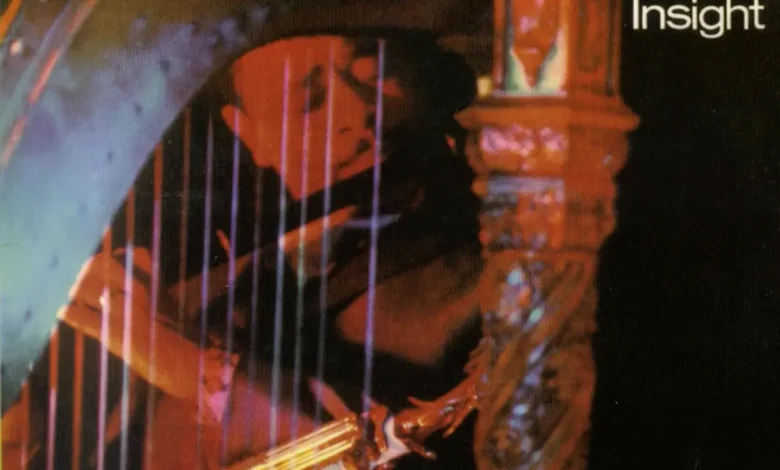
The session notably included David Snell on harp, an instrument rarely featured in jazz settings during that period. The decision to include a harpist reflects the experimental spirit of the 1966 sessions, yet the critical reception remained skeptical, questioning whether the instrument’s tonal qualities were suited for the rigors of jazz improvisation. This inclusion, alongside the use of two bassists, indicates that the production team was likely aiming for an atmospheric, textured soundscape that prioritized color over traditional swing dynamics.
Chronological Overview of the Project
The recording sessions, held in London, were part of a broader trend of international collaborations that defined the 1960s.
- 1964-1965: Prince Lasha builds his reputation in the U.S. through his association with Eric Dolphy and the avant-garde scene in New York and the West Coast.
- Early 1966: Planning for the British recording sessions begins, aiming to highlight Lasha’s compositions and his interpretations of standards.
- 1966 (Mid-year): The sessions are recorded in London, featuring the core personnel of Bateson, Mumford, Tracey, Carr, and the dual-bass rhythm section.
- September 1966: The album is released on the CBS label, shortly followed by the publication of Shera’s review in Jazz Journal.
- Post-1966: The record remains a historical footnote, often cited in discussions about the clash between American avant-garde experimentation and the disciplined requirements of the European jazz scene.
Data and Personnel Analysis
The discography of the 1966 sessions reveals a deliberate attempt to vary the instrumental textures of each track. The lineup was not static; it changed based on the demands of the specific arrangement.
The inclusion of both Stan Tracey and Mike Carr at different points shows a preference for pianists who were capable of holding the melodic center against the more volatile horn work. The reliance on two bassists—involving a rotation between Rick Laird, Dave Willis, Bruce Cale, and Jeff Clyne—was intended to provide a bedrock of sound, yet as the critique noted, the technical limitations of the era’s stereo/mono mixing often rendered this effort less effective than intended.
The Broader Implications of the 1966 Critique
The severity of the critique directed at Prince Lasha serves as a microcosm of the jazz world’s fragmentation during the late 20th century. At the time, "avant-garde" was a polarized term. Critics like Shera viewed the move away from standard melody and rhythm as a decline in quality, whereas supporters saw it as a necessary liberation of the genre.
This incident also highlights the expectations placed upon American musicians touring or recording in Britain during the 1960s. There was an unspoken expectation that visiting American artists would perform with a level of technical mastery that justified their status as international headliners. When an artist failed to meet this standard—or when their aesthetic choices conflicted with the audience’s expectations—the backlash was immediate and often severe.
Furthermore, the record stands as evidence of the high standard of the British jazz scene at the time. By 1966, British musicians had moved well beyond the role of mere imitators of their American counterparts. The praise heaped upon the sidemen in this record suggests that the British jazz community was beginning to recognize its own prowess and was becoming increasingly critical of American musicians who arrived without the requisite level of discipline or preparation.
Conclusion
The 1966 Prince Lasha record remains an interesting, if controversial, artifact. While the critical reception at the time was undeniably harsh, focusing on the disconnect between the leader’s avant-garde leanings and the traditional standards, the album provides a unique look at the collaborative spirit of the mid-60s. It captures a moment where jazz was actively attempting to redefine itself, even if those attempts were not universally embraced by the guardians of the tradition.
Today, the record serves as a reminder that artistic movements are rarely linear. The "unbelievably bad" solo work described by Shera is, in the eyes of contemporary listeners, perhaps more reflective of an era in flux than a lack of talent. By examining this session, we gain insight into the high-stakes environment of the 1960s jazz scene, where every note was scrutinized against the rigid standards of a fading era and the uncertain potential of a new, experimental future. The legacy of the record is less about the success of the individual tracks and more about the cultural dialogue it sparked—a dialogue that continues to influence how we evaluate the intersection of technique, tradition, and the avant-garde.