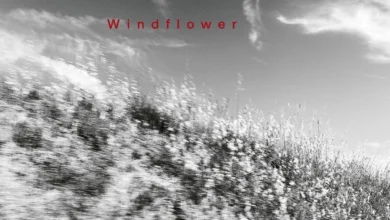
The Intersection of Mathematics and Modern Jazz: Alessandro Fadini Releases Stunner Debut Album


The contemporary jazz landscape has long been a canvas where intellectual rigor and emotional expression intersect, yet few artists embody this duality quite as literally as Italian pianist and composer Alessandro Fadini. A formally trained mathematician who came to the piano entirely self-taught, Fadini bridges the seemingly disparate worlds of quantitative logic and creative improvisation on his critically anticipated debut album. Mentored by renowned jazz luminary Marc Copland, Fadini approaches the piano not merely as an instrument of percussion and harmony, but as a vehicle for complex structural equations translated into a deeply expressive musical language. Released to critical acclaim within the transatlantic jazz community, the album serves as both a personal milestone for the composer and a compelling statement on the vitality of modern acoustic jazz.
The Mathematical Mind Meets the Modern Keyboard
To understand Fadini’s compositional style is to understand the inherent mathematical architecture of music itself. Pythagoras famously discovered the numerical ratios underlying musical intervals, and centuries of subsequent composers—from Johann Sebastian Bach to contemporary avant-garde artists—have utilized mathematical principles to structure their work. For Fadini, however, this relationship is deeply intuitive and operational. His approach to improvisation is characterized by a precipitate urgency, wherein rhythmic and harmonic phrases unfold with the precision of higher-level mathematical proofs.
This unique methodology is immediately apparent on tracks such as "Starting Something," where interlocking rhythmic patterns and harmonic shifts create a sense of logical inevitability without sacrificing emotional resonance. Critics and listeners alike have noted that Fadini’s phrasing feels less like traditional theme-and-variation and more like the step-by-step unfolding of a complex theorem, rendered entirely accessible through a lush harmonic vocabulary.
The album’s sequencing further highlights Fadini’s dynamic range as a composer and performer. On "All the Rest Is Boredom," the ensemble engages in a masterclass of contrasting textures. Fadini juxtaposes dissonant, staccato keyboard phrases against sweeping, melodically pleasing passages that steadily accumulate momentum. This structural tension provides ample breathing room for expansive up-tempo improvisation, demonstrating a sophisticated command of pacing and space.
Conversely, the beautifully crafted "Elegy for the Living Dead" offers a stark emotional counterweight, conveying a solemn, introspective atmosphere centered on rigorous self-examination. Meanwhile, the track "No Thrills" opens with a gentle, flowing solo piano introduction that underscores Fadini’s artistic maturity through a disciplined adherence to the "less is more" philosophy. Yet, true to his complex style, the piece does not remain quiet for long; it evolves into a frenetic build punctuated by dramatic, calculated stops, resulting in a tightly woven, exploratory listening experience.
An Ensemble of Distinction: Supporting Talent and Collaborative Synergy
While Fadini’s conceptual framework anchors the project, the album’s ultimate success relies heavily on the profound synergy of an exceptionally qualified supporting quartet. Chief among these collaborators is saxophonist Josiah Boornazian, whose contributions on alto and soprano saxophones—as well as clever use of overdubs—add a sharp, contemporary edge to the ensemble’s sound.
Boornazian is introduced on the album’s opening diptych, "Introduction to a Dark and Stormy Day" and "It Was a Dark and Stormy Day," where he establishes himself as a deft, dynamic player possessing an almost slicing tone. What distinguishes Boornazian’s performance across the record is his chameleon-like ability to mutate his tonal quality to serve the immediate needs of each individual composition. Whether cutting through the mix with a piercing brightness or blending smoothly into the background textures, Boornazian acts as a vital creative foil to Fadini’s keyboard explorations.
The rhythm section provides a resilient, responsive foundation for the front line. Drummer Luke Markham and bassist Jakob Dreyer exhibit a remarkable rapport that translates directly into the cohesive momentum of the music. Fadini and Markham, in particular, share a locked-in rhythmic sensibility. Markham’s nuanced command of texture—his ability to simultaneously push and pull the tempo—infuses the arrangements with organic vitality. This interplay is vividly displayed on Markham’s own composition, "Mayall’s Object," as well as Boornazian’s "Window Ledge."
Simultaneously, bassist Jakob Dreyer delivers a masterclass in subtlety. In many jazz ensembles, the bassist is frequently overshadowed by the dynamic interplay of the piano and horns. However, Dreyer’s meticulous note choices and sophisticated harmonic underpinnings provide a rich canvas upon which Fadini and Boornazian can paint. Dreyer and Markham maintain a delicate balance, constructing rhythmic and harmonic complexities that never overpower the melody, yet unfailingly drive each tune forward with compelling energy.
Background Context and the Evolution of the Contemporary Jazz Scene
The release of Fadini’s debut album arrives at a fascinating juncture in the history of jazz music. Over the past decade, the genre has witnessed the passing of numerous towering trailblazers who defined the mid-to-late 20th-century jazz canon. This generational shift has left a profound void in the global jazz marketplace, prompting industry analysts and critics to closely monitor the emergence of young, internationally minded collectives capable of carrying the tradition forward.
Fadini’s project represents a growing transatlantic movement wherein artists from diverse academic and cultural backgrounds converge in major creative hubs—frequently New York City and European capitals—to synthesize classical composition, avant-garde improvisation, and modern rhythmic sensibilities. By integrating his background in mathematics with the historic lineage of post-bop and contemporary jazz, Fadini positions himself within a lineage of intellectual composers who view the genre not as a static museum piece, but as a living, evolving science.
Industry observers have noted that debut releases of this caliber are increasingly vital for sustaining independent jazz labels and niche markets. In an era dominated by streaming algorithms and homogenized pop production, albums that demand active, intellectual engagement from the listener serve as crucial cultural anchors. Fadini’s ability to secure a tight-knit, highly skilled ensemble for his maiden voyage signals a high degree of professional foresight, suggesting that this lineup is not merely a pickup band for a single recording session, but a cohesive creative unit with substantial long-term potential.
Comprehensive Track Listing and Personnel Breakdown
The meticulous structuring of the album reflects a deliberate narrative arc, moving seamlessly from atmospheric tension to intricate rhythmic workouts and meditative ballads. The complete track listing comprises:
- Introduction to a Dark and Stormy Day
- It Was a Dark and Stormy Day
- Juno
- No Thrills I
- No Thrills II
- Elegy for the Living Dead
- Window Ledge
- Love in the Age of Mechanical Reproduction
- Starting Something
- Mayall’s Object
- All the Rest Is Boredom
The ensemble features a lean, highly agile configuration of four musicians, each contributing distinct sonic signatures to the collective sound:
- Alessandro Fadini: Piano
- Josiah Boornazian: Alto and soprano saxophones, overdubs
- Jakob Dreyer: Bass
- Luke Markham: Drums
Broader Market Impact and Future Implications
As this young ensemble steps onto the international stage, the broader implications for the jazz marketplace are decidedly positive. The fusion of rigorous academic disciplines—such as mathematics—with the inherently emotional and improvisational nature of jazz points toward new pedagogical and compositional frontiers. Artists who can fluidly translate structural equations into compelling auditory experiences expand the boundaries of what contemporary instrumental music can achieve.
For Fadini, the critical reception of this debut album establishes a high benchmark. Industry analysts suggest that the true test for emerging groups of this caliber will lie in their ability to translate studio sophistication into compelling live performances, thereby building a dedicated touring base across Europe and North America. Given the tight interplay demonstrated between Fadini, Boornazian, Dreyer, and Markham on foundational tracks like "Mayall’s Object" and "Starting Something," the group appears well-equipped to meet this challenge.
Ultimately, Alessandro Fadini’s debut stands as a testament to the enduring power of collaborative musicianship guided by a visionary composer. By honoring the structural traditions of jazz while fearlessly incorporating personal eccentricities and complex mathematical frameworks, Fadini and his collaborators have delivered a work of lasting artistic significance. As the jazz community continues to seek out fresh voices capable of sustaining its rich heritage, this talented young group has firmly established itself as an essential entity to watch in the years to come.