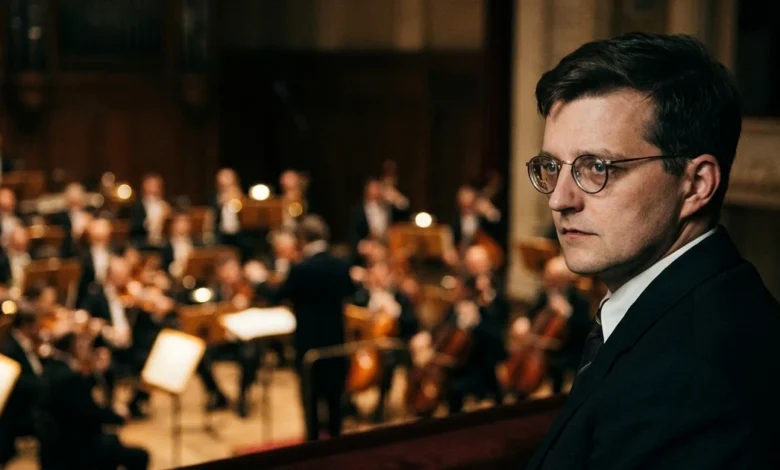
Dmitri Shostakovich was just thirty years old in 1937 when he introduced his Symphony No. 5 in D minor, Op. 47, to the musical world. The work arrived at a perilous juncture in the composer’s life, serving as both a monument of twentieth-century orchestral literature and a high-stakes survival strategy under the oppressive cultural regime of the Soviet Union. Just a year prior, in January 1936, the official Communist Party newspaper Pravda published a devastating, anonymous editorial titled "Muddle Instead of Music," which savagely attacked his expressionist opera Lady Macbeth of the Mtsensk District. The censure carried implicit threats of arrest and silencing. Under immense state pressure, Shostakovich quietly withdrew his experimental Fourth Symphony during rehearsals, publicly framing the cancellation as his own voluntary decision.
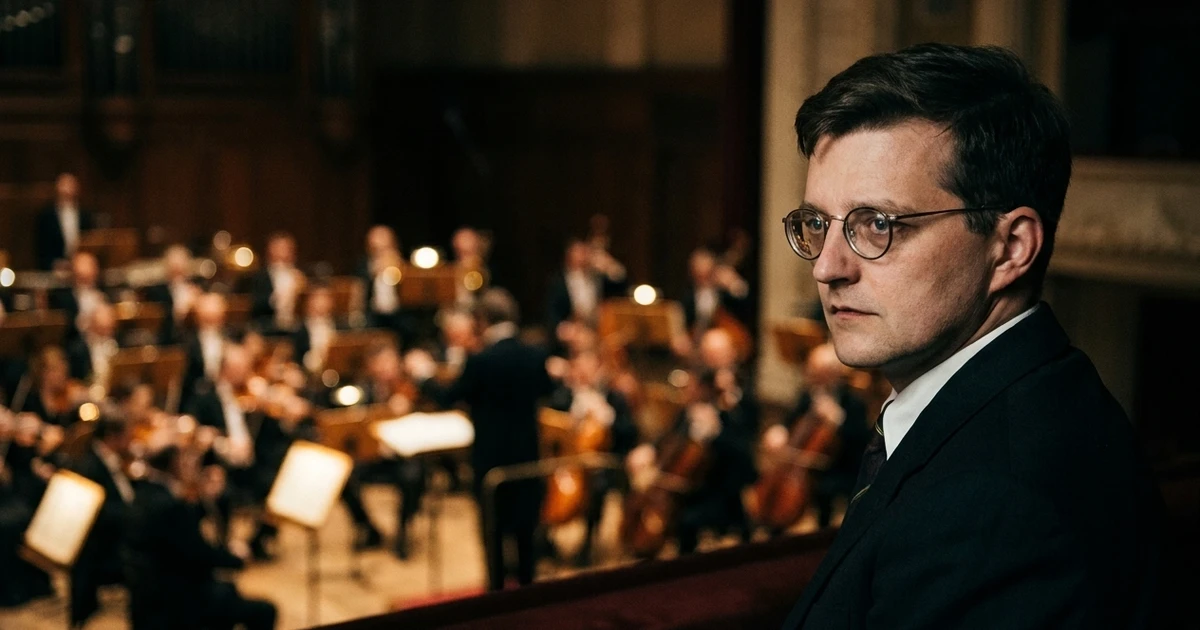
The Fifth Symphony was designed to be his artistic rehabilitation. Premiered in Leningrad on November 21, 1937, by the Leningrad Philharmonic Orchestra under the baton of Yevgeny Mravinsky, the piece scored an immediate and overwhelming triumph. The audience reportedly responded with a twenty-minute standing ovation, and cultural authorities were appeased. The state press quickly dubbed the symphony "a Soviet artist’s creative reply to just criticism"—a politically convenient label that Shostakovich never penned yet prudently chose never to disown. Decades later, the true meaning of the work remains a subject of intense musicological debate, centering chiefly on whether the blaring D-major conclusion of the final movement represents genuine patriotic jubilation or forced, tragic compliance.
To help listeners navigate the complex performance history of this masterpiece, The Classic Review editorial team has curated a definitive guide to the ten greatest recordings of Shostakovich’s Symphony No. 5.
Historical Chronology and Musical Architecture
Scored for a massive late-romantic orchestra featuring a full percussion section, two harps, celesta, and piano, the symphony is structured in four distinct movements. It journeys from a sweeping, broad Moderato opening, through a concise, sardonic Scherzo, a deeply emotional Largo that pointedly leaves the brass section silent, and finally to a volatile, driving Allegro non troppo finale.
The structural crux of the performance history lies in how conductors handle the ambiguous coda of the final movement. While traditional Soviet-era interpretations treated the rapid concluding D-major fanfare as an unvarnished expression of triumphant socialist victory, post-Soviet analyses—bolstered by the controversial memoirs Testimony—frequently interpret the bombast as a mask of forced rejoicing under totalitarian duress. Conductors ultimately settle this philosophical divide through timing, articulation, and pacing.
The Ten Essential Recordings
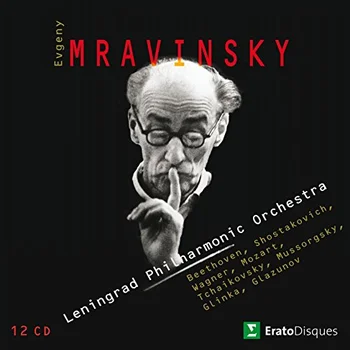
1. Leningrad Philharmonic Orchestra, Yevgeny Mravinsky (Recorded live, 1983)
Yevgeny Mravinsky possessed a historic connection to the work, having led its world premiere in 1937. Captured forty-six years later in a live concert setting, this recording represents his final, definitive statement on the score. Age had done nothing to blunt his authoritative grip on the music. The Leningrad Philharmonic plays with a fierce, uncompromising intensity, maintaining absolute clarity through dense textures. Mravinsky launches the finale at a breathtaking, near-dangerous velocity before broadening the tempo at the close into an implacable, monolithic wall of sound. He completely ignores the printed metronome markings in the final bars, and the performance is vastly superior for it. While audience coughs and minor ensemble blemishes betray the live setting, no other recording matches its historic and artistic authority.
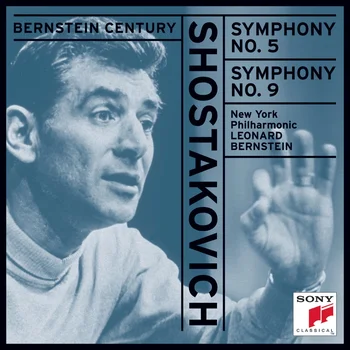
2. New York Philharmonic, Leonard Bernstein (1959)
For listeners seeking unbridled virtuosity and theatrical thrill, Leonard Bernstein’s landmark 1959 studio recording remains peerless. Just weeks prior to the recording sessions, Bernstein had performed the work in Moscow with Shostakovich sitting in the audience, visibly moved and delighted by the interpretation. Capitalizing on that momentum, Bernstein treats the score as an absolute showpiece. The finale is taken at a blistering pace, treating the closing pages as an unambiguous, triumphant climax devoid of ironic subtext. While purists occasionally debate whether this approach flattens the symphony’s psychological nuance, Bernstein’s commitment to pure sonic excitement makes it an electrifying listening experience.
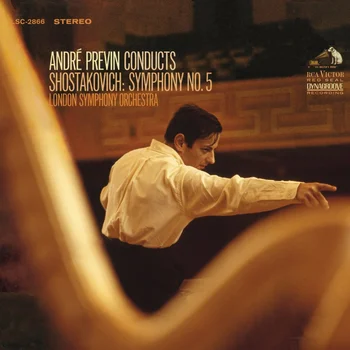
3. London Symphony Orchestra, André Previn (1965)
Refinement and raw drive rarely coalesce effectively in performances of the Fifth Symphony, yet André Previn managed a brilliant synthesis in his 1965 recording with the London Symphony Orchestra. Previn achieves a rich, full-bodied orchestral tone without ever sacrificing forward momentum. He reserves his greatest interpretive weight for the third-movement Largo, allowing the music to stretch outward and drop down to a delicate, fragile whisper. The Scherzo is similarly effective, driven by deep-toned, biting cellos and basses. Though older LP transfers result in slightly flattened climaxes and minor rumble during the opening movement, Previn’s reading remains one of the high-water marks of mid-century Shostakovich interpretation.
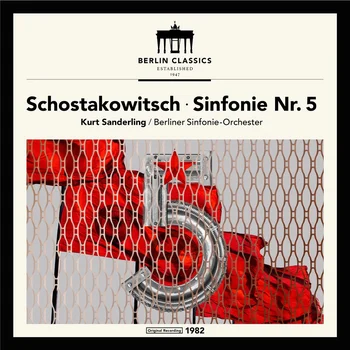
4. Berlin Symphony Orchestra, Kurt Sanderling (1982)
Kurt Sanderling offered an analytical, deeply intimate perspective on the score. Having attended a Moscow performance shortly after the 1937 premiere and later conducting the 1949 concert that officially reintroduced the piece to the Soviet repertoire, Sanderling possessed rare interpretive lineage. Rather than leaning on theatricality or sheer volume, he emphasizes transparent textures. The first movement unfolds at a measured, deliberate pace, with loud passages carefully balanced so that inner woodwind and string lines—frequently buried in standard performances—are laid bare. Though the high strings can occasionally sound glassy, Sanderling provides perhaps the closest window into the private mind of the composer.
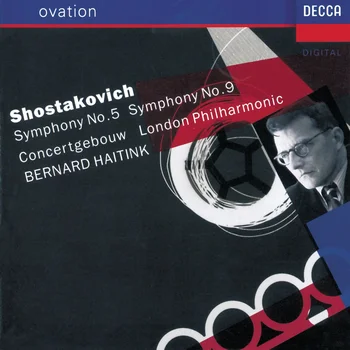
5. Royal Concertgebouw Orchestra, Bernard Haitink (1981)
Bernard Haitink’s 1981 traversal with the legendary Royal Concertgebouw Orchestra prioritizes structural steadiness over overt terror. Benefiting from warm, expansive acoustics, the orchestra delivers pristine instrumental execution, and the opening movement strikes with immense architectural impact. Haitink deliberately withholds menace, maintaining a level emotional baseline where other conductors inject high drama. The woodwind interventions in the Largo are handled with understated dignity, and the coda is managed with classical poise rather than defiant exhaustion. While listeners searching for existential horror may find this approach too polite, the sheer caliber of the orchestral playing is undeniable.
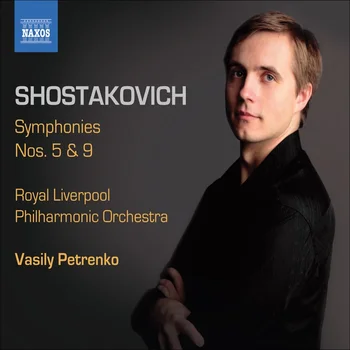
6. Royal Liverpool Philharmonic Orchestra, Vasily Petrenko (2008)
Vasily Petrenko constructs his entire 2008 interpretation around the thesis of the tragic, unbroken ending. Utilizing extreme dynamic contrasts between whispering pianissimos and thunderous fortissimos, Petrenko uncovers startling architectural details along the way. The finale features a central developmental passage steeped in profound regret, leading into a coda that slows to an agonizing, defiant crawl. It is a grueling, uncomfortable listen by intentional design, making a powerful artistic statement in favor of the hollow, coerced interpretation of the symphony’s conclusion.
7. Pittsburgh Symphony Orchestra, Manfred Honeck (Recorded live, 2013)
Conductor Manfred Honeck treats the dynamic and balance instructions in Shostakovich’s score with uncompromising literalism. In this 2013 live recording with the Pittsburgh Symphony Orchestra, neglected textures—such as the prominent harp lines in the first movement and the striking piano contributions at the emotional climax of the Largo—emerge with crystalline clarity. Honeck’s unhurried tempos grant the music profound dignity and quiet grief, bypassing cheap emotional effects in favor of total fidelity to the printed page.
8. Boston Symphony Orchestra, Andris Nelsons (2015)
Andris Nelsons and the Boston Symphony Orchestra deliver a spacious, modern sonic canvas characterized by magnificent brass playing and rich acoustic resonance. Nelsons establishes an undercurrent of palpable unease from the opening bars that persists even during lyrical interludes, such as the haunting dialogue between flute and horn in the first movement. While the cavernous acoustic environment slightly blurs fast string articulations at the outset, no contemporary version matches the sheer scale and orchestral breadth of Nelsons’ vision.
9. London Symphony Orchestra, Maxim Shostakovich (1993)
As the son of the composer, Maxim Shostakovich brings a unique familial authenticity to his interpretation. Recorded with the London Symphony Orchestra, this traversal is notably expansive, running significantly longer than Mravinsky’s brisk benchmark. However, the musical pulse never flags. The slow movement avoids overt theatrical pleading, relying instead on emotional restraint to achieve maximum impact. The final march unfolds at an unhurried, monumental pace, allowing a fragile warmth to break through the otherwise rigid militaristic framework.
10. Moscow Philharmonic Orchestra, Kirill Kondrashin (1964)
For listeners demanding Shostakovich at his most volatile and dangerous, Kirill Kondrashin’s 1964 recording with the Moscow Philharmonic remains the mandatory choice. Kondrashin, a foundational figure in Soviet classical music who premiered several of the composer’s later symphonies, drives the outer movements with raw, abrasive urgency. Polish and refinement are sacrificed in favor of visceral impact, resulting in a terrifyingly forceful coda that smoother modern recordings simply cannot replicate. Despite dated Soviet-era engineering, it remains a monument of authentic performance practice.

Broader Implications and Legacy
Nearly ninety years after its Leningrad premiere, Shostakovich’s Symphony No. 5 continues to challenge performers and divide scholars. It stands as a profound testament to the resilience of artistic expression under systemic oppression. Whether interpreted as a sincere capitulation to Soviet ideology or a subversive cry of silent dissent encoded within major-key harmonies, the work retains its hypnotic hold on the global classical music canon. These ten recordings demonstrate that the true genius of Shostakovich’s masterpiece lies not in a single definitive meaning, but in its infinite capacity to mirror the complexities of the human condition.
Related posts: