The Forgotten Echoes of Innovation: Thomas Edison’s Talking Dolls and the Dawn of Recorded Sound

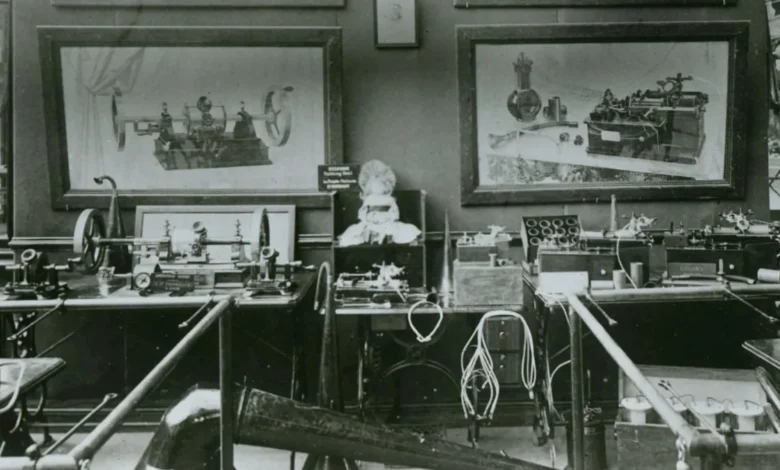
The intersection of historical technological ambition and consumer product failure is perhaps nowhere more visible than in the 1890 launch of Thomas Edison’s phonograph-integrated talking dolls. While modern audiences often view these early attempts at synthetic speech as uncanny or nightmarish, they represent a significant, albeit failed, milestone in the evolution of audio technology. Today, sound designers and archivists, including the team at Tempest Instruments led by composer Alex Davis, are revisiting these artifacts not merely as curiosities, but as vital pieces of 19th-century mechanical history that help map the development of modern sound sampling and playback.
A Chronology of Edison’s Auditory Ambition
The genesis of the talking doll dates back to the late 1880s, following Edison’s invention of the phonograph in 1877. Recognizing the potential to commercialize his recording technology, Edison founded the Edison Phonograph Toy Manufacturing Company in 1887. The goal was to miniaturize the complex recording mechanisms of the era and embed them into the chests of porcelain-headed dolls.
The dolls were formally introduced to the market in 1890. Each doll featured a hand-cranked phonograph mechanism housed within a tin cylinder. Because the technology of the time lacked the ability to produce high-fidelity sound, each wax cylinder had to be individually recorded by a human voice—often a woman reciting nursery rhymes—into a recording horn. The result was a product that stood roughly 22 inches tall and featured a fragile, mechanical apparatus that was notoriously difficult for a child to operate.
The market life of the product was remarkably brief. Within weeks of their introduction, the Edison Phonograph Toy Manufacturing Company ceased production. Reports from the era suggest that the dolls were expensive, prone to mechanical failure, and failed to capture the interest of the demographic they were intended for: children. By the end of 1890, the venture was effectively shuttered, leaving behind a limited number of units that have since become highly sought-after artifacts for historians of technology.
Mechanical Limitations and Technical Challenges
From an engineering perspective, the talking doll represented a significant challenge. The phonograph cylinders were composed of wax, a material sensitive to both temperature and physical handling. The mechanical drive system, operated by a small hand crank, was prone to misalignment, which often resulted in distorted, garbled, or nonexistent audio.
The Smithsonian Institution, which holds several of these units in its collection, describes the dolls as "expensive, heavy, non-functioning and a little scary looking." The technical difficulty of maintaining a consistent speed while cranking the mechanism meant that the pitch of the recorded voice would fluctuate wildly, often contributing to the "uncanny" effect that modern observers associate with them.
Beyond the technical failure, the project highlighted a disconnect between Edison’s engineering focus and consumer market realities. While Edison viewed the dolls as a revolutionary application of his phonograph, the public viewed them as an overpriced novelty. This failure served as a sobering lesson in the limitations of early sound technology, specifically regarding the durability of storage media and the complexity of user interfaces for non-expert operators.
Preservation and the Modern Sampling Movement
In recent years, the resurgence of interest in 19th-century audio has been driven by researchers and sound designers like Alex Davis. Through initiatives like Tempest Instruments, these individuals are working to digitize and preserve the sonic signatures of the Victorian era. By employing high-resolution recording techniques, they are able to extract the remaining fidelity from original wax cylinders and early recording devices, providing a window into how the human voice was captured before the advent of electrical recording.
This archival work goes beyond dolls; it encompasses the earliest known human vocal recordings, such as the phonautograms created by Édouard-Léon Scott de Martinville in the 1850s, and the voices of historical figures like Field Marshal Helmuth von Moltke the Elder, born in 1800. By analyzing the frequency responses and the specific character of these recordings, modern composers are integrating "found" historical sounds into contemporary digital audio workstations (DAWs) and orchestral libraries.
Broader Implications for Sound Design
The shift from mechanical playback to digital sampling represents a trajectory that began with Edison’s failed dolls. The desire to capture and replicate the human voice—and the subsequent failures and successes in doing so—has fundamentally shaped the landscape of modern media.
The use of "temp tracks" in film scoring, for instance, reflects a long history of repurposing existing audio to guide artistic direction. Just as filmmakers might use a temporary score to set the mood of a scene before a composer is hired, early audio pioneers were essentially "testing the limits" of what a recording could convey to an audience. The history of the talking doll is a precursor to the modern debates surrounding artificial intelligence and synthetic speech. When we look at these dolls today, we are observing the first iteration of the question that remains central to our era: how effectively can technology emulate the nuances of human communication?
Historical Context and Comparative Analysis
While Edison’s dolls are often categorized as a failure, they were consistent with the spirit of rapid innovation that defined the late 19th century. During this period, inventors were frequently driven by the possibility of "first-to-market" dominance rather than the refinement of the user experience. The contrast between these mechanical dolls and modern electronic toys—like the 1980s-era Teddy Ruxpin—is stark. Where Edison’s product relied on volatile wax and clockwork springs, modern equivalents utilize digital signal processing and solid-state memory.
However, the psychological impact remains surprisingly consistent. The "uncanny valley," a concept describing the unease felt by humans when observing near-human robots or synthetic voices, was arguably born during the 1890s as children encountered these mechanical dolls for the first time. The historical record indicates that the fear or dissatisfaction expressed by consumers was not merely a reaction to the technology’s failure to work, but to the nature of the artificial, repetitive voices themselves.
Legacy and Future Directions
The work being conducted by Tempest Instruments and other archivists serves as a reminder that technological history is not a linear path of progress, but a series of experiments. The "Sona/Chroma" project, which provides free access to sampled sounds from 19th-century instruments, demonstrates that there is a growing demand for the aesthetic of the past in modern creative fields.
As we move further into an era of high-fidelity artificial intelligence, the study of Edison’s failed dolls offers a grounded perspective. It reminds us that technological success is measured not just by the capability of the machine, but by its integration into the human experience. Whether it is a wax cylinder embedded in a porcelain doll or a complex neural network generating speech, the goal remains the same: the preservation and transmission of human expression.
For those interested in the technical history of these devices, the Edison Archive remains the definitive source for schematics and correspondence related to the production of the dolls. By synthesizing this data with modern digital preservation, we can ensure that the "failed" inventions of the past continue to contribute to the creative dialogues of the future. The legacy of the 1890s talking doll is not one of a broken toy, but one of a persistent, human-driven desire to capture the ephemeral nature of sound—a quest that continues to drive innovation today.
Related posts: