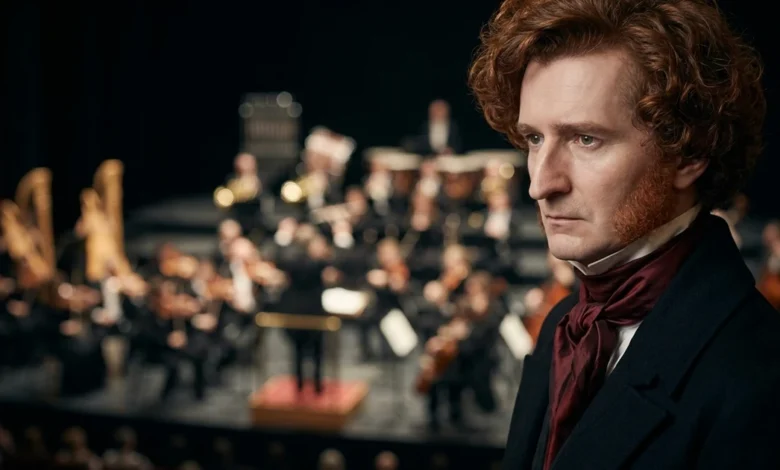
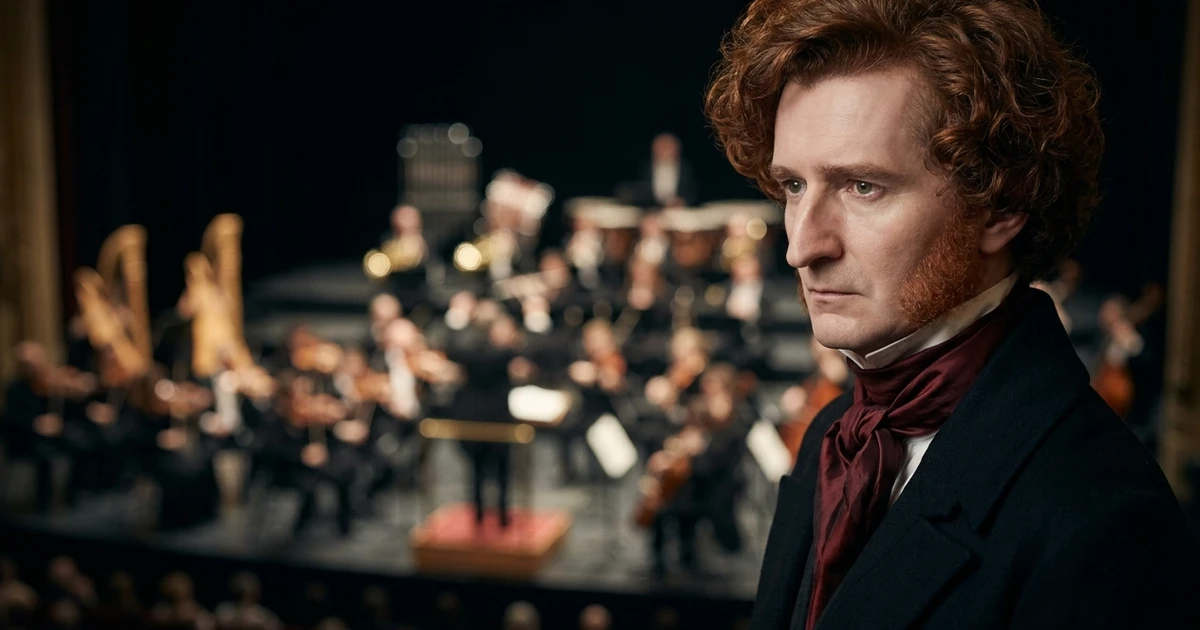
Hector Berlioz created one of the most radical and autobiographical works in the history of Western classical music when he composed the Symphonie fantastique in 1830. Written when the composer was only twenty-six years old, the symphony was born out of an all-consuming, unrequited obsession with the Irish actress Harriet Smithson. Berlioz had first seen Smithson perform the role of Ophelia in a Paris production of William Shakespeare’s Hamlet in September 1827. Captivated by her artistry, the young composer bombarded her with passionate letters that went entirely unanswered. Unable to channel his emotional turmoil into conventional courtship, Berlioz transformed his anguish into a groundbreaking orchestral masterpiece, charting a hallucinatory five-movement journey through the psyche of an artist poisoned by opium.
The Genesis of an Obsession and Historical Chronology
The creation and early performance history of the Symphonie fantastique represent a pivotal moment in the emergence of musical Romanticism. The chronology of the work’s conception highlights Berlioz’s rapid artistic development and unconventional approach to narrative composition.
In September 1827, Hector Berlioz witnesses Harriet Smithson perform Ophelia in Paris and falls into a profound infatuation. Between 1827 and 1830, facing continuous rejection and unanswered correspondence, Berlioz conceptualizes a programmatic symphony designed to dramatize his inner torment. By 1830, the composition is finalized. On December 5, 1830, the Symphonie fantastique receives its world premiere at the Paris Conservatoire, conducted by François-Antoine Habeneck. Significantly, Smithson is not in the audience for this initial performance. In 1832, Smithson hears the revised version of the score. By 1833, following a reconciliation facilitated by the success of his music, Berlioz and Smithson are married, though the union ultimately ends in separation years later.
Structural Framework and the Idée Fixe
Berlioz structured the Symphonie fantastique as an instrumental drama divided into five distinct movements, discarding traditional classical forms in favor of a narrative program distributed to audiences at performances. The protagonist, a young artist, experiences a series of visions, dreams, and nightmares, unified by a recurring melodic theme known as the idée fixe. This musical motif symbolizes the beloved woman, haunting every scene regardless of the protagonist’s physical or mental state.
The five movements comprise a psychological descent:
- Reveries – Passions: The artist experiences the spiritual anguish and soaring hope characteristic of first love before encountering the idée fixe.
- A Ball: The artist finds himself at a glittering social gathering, yet the beloved’s theme intrudes upon the festive waltz.
- Scene in the Country: Two shepherds converse with a melancholy ranh des vaches, but the artist’s agonizing premonitions of isolation are underscored by distant thunder.
- March to the Scaffold: Having poisoned himself with an overdose of opium in a fit of jealous despair, the artist dreams that he is witnessing his own execution for murdering his beloved.
- Witches’ Sabbath: The artist finds himself surrounded by a grotesque assembly of sorcerers, monsters, and spirits gathered for his funeral. The beloved’s theme returns, degraded into a vulgar, cackling dance on a shrill E-flat clarinet, accompanied by the tolling of funeral bells and the quotation of the traditional Dies irae chant from the depths of the orchestra.
Analytical Challenges and Interpretive Variations in Recorded Editions
Because Berlioz left an intricately detailed yet physically demanding score, recorded interpretations of the Symphonie fantastique vary wildly. Conductors must make critical editorial decisions regarding several performance practices: whether to observe the exposition repeat in the first movement, whether to include the optional cornet parts in the second movement waltz, how to execute the massive bell strokes in the finale, and whether to utilize modern symphony orchestras or period-authentic instruments that reflect the timbre of 1830s Paris.
Music critics and editorial teams evaluating the vast discography of the work generally divide interpretations into theatrical shock-value, structural classicism, psychological introspection, and historical authenticity.
Definitive Modern and Historical Recorded Interpretations
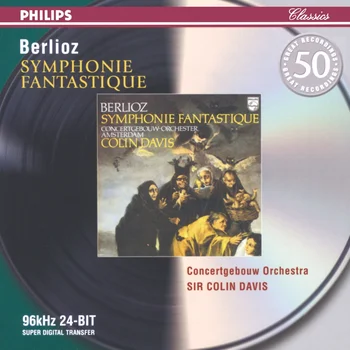
Royal Concertgebouw Orchestra, Colin Davis (1974)
Colin Davis provides the definitive, complete traversal of the score. Every written repeat is observed, the march incorporates its repeat, and the waltz features the optional cornet. Davis tightens the dramatic arc movement by movement, ensuring that Berlioz’s unconventional orchestrations register with maximum clarity. While the reading prioritizes structural integrity over unbridled chaos—leading to a controlled, orderly ball and disciplined final movements—this 1974 recording remains the gold standard benchmark for a comprehensive, uncompromised presentation of the text.
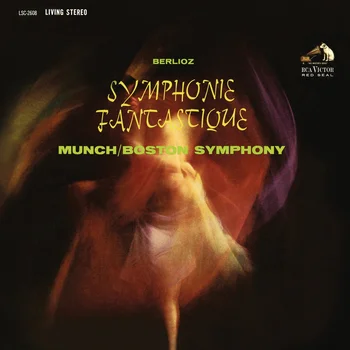
Boston Symphony Orchestra, Charles Munch (1962)
Where Davis builds architecture, Charles Munch unleashes pure theater. This 1962 recording is celebrated for its raw, visceral intensity. While the opening movements are ardently rendered, the performance truly combusts in the final two movements. The march and the witches’ sabbath erupt with a terrifying frenzy that pushes the Boston Symphony to its absolute limits. Although Munch’s earlier 1954 reading is even faster, superior stereo fidelity and polished execution make the 1962 version the ultimate document of Berlioz at his most untamed.
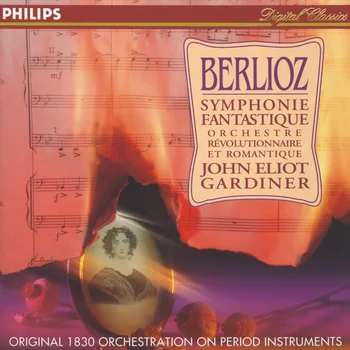
Orchestre Révolutionnaire et Romantique, John Eliot Gardiner (1991)
John Eliot Gardiner pioneered historical performance practice in this repertoire by taking his period-instrument orchestra into the very hall where the work premiered in 1830. Seating the violins split left and right in 19th-century fashion, Gardiner achieved a transparent, dynamically wide-ranging soundscape without compromising inner orchestral lines. Including both repeats and the optional cornet, the recording offers listeners a direct window into the exact sonic palette Berlioz heard during his lifetime.
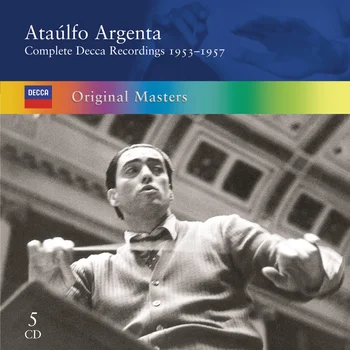
Paris Conservatoire Orchestra, Ataúlfo Argenta (1957)
Ataúlfo Argenta drives the score at a relentless, breathless tempo. Eschewing the first movement repeat while retaining the march’s repeat, Argenta treats the five scenes like a high-speed film reel. Despite occasional brass unevenness and unpolished ensemble passages, the performance’s impetuous, feverish energy sweeps the listener along in a continuous state of exhilaration.
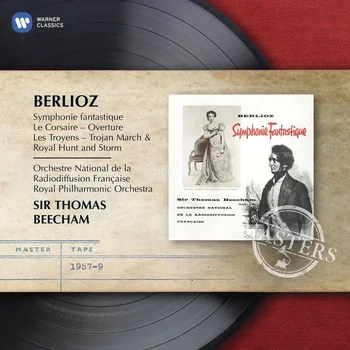
French National Radio Orchestra, Thomas Beecham (1959)
Sir Thomas Beecham approaches the score with a dark, psychological gravity. His march to the scaffold begins with deliberate slowness, allowing the threat of the procession to accumulate weight before accelerating. Skipping the first-movement repeat, Beecham builds a brooding, menacing atmosphere that culminates in a genuinely chilling witches’ sabbath.
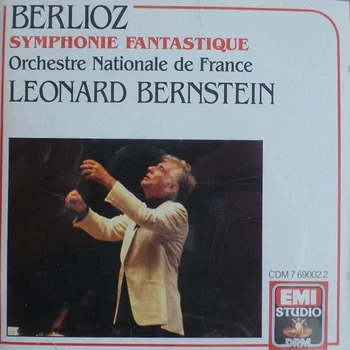
Orchestre National de France, Leonard Bernstein (1976)
Leonard Bernstein wears his heart on his sleeve, maximizing every emotional fluctuation in the score. He drives the opening movement furiously while honoring its quiet, hymn-like codas. The march to the scaffold is handled with deep tragic empathy, moving the listener from terror to profound pity in a deeply expressive, emotionally vulnerable reading.
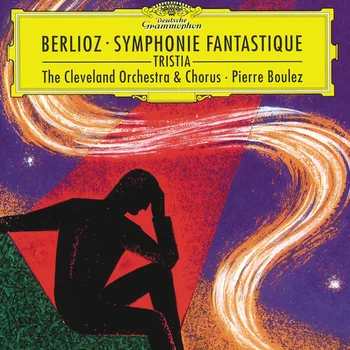
Cleveland Orchestra, Pierre Boulez (1996)
Pierre Boulez treats the score as an absolute symphony rather than a theatrical melodrama. Adhering strictly to Berlioz’s metronome markings, Boulez extracts crystalline clarity from the Cleveland Orchestra’s immaculate strings and brass. While lacking the theatrical hysteria of Munch, this recording lays out Berlioz’s structural and harmonic design with unprecedented architectural transparency.
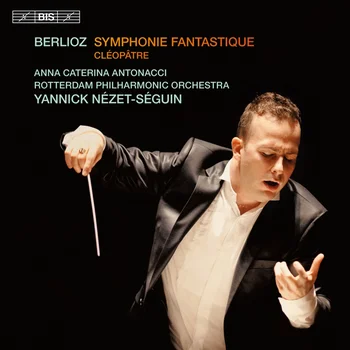
Rotterdam Philharmonic Orchestra, Yannick Nézet-Séguin (2010)
Yannick Nézet-Séguin internalizes the drama, reframing the symphony as an intimate psychological confession rather than an externalized public spectacle. The country scene is rendered with delicate restraint, and the horrors of the finale are treated as internal dreams. Paired with Anna Caterina Antonacci’s rendition of La mort de Cléopâtre, this recording offers a searching, deeply personal viewpoint.
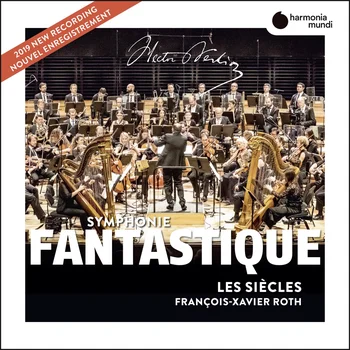
Les Siècles, François-Xavier Roth (2019)
Returning to original manuscript sources and period-specific instruments, François-Xavier Roth and Les Siècles provide a revelatory, meticulously researched interpretation. The period oboe and cor anglais impart reedy, distinct colors to the pastoral scene, while the finale utilizes authentic bells sourced from Berlioz’s birthplace of La Côte-Saint-André. The performance trades brute force for transparent, beautifully balanced textures.
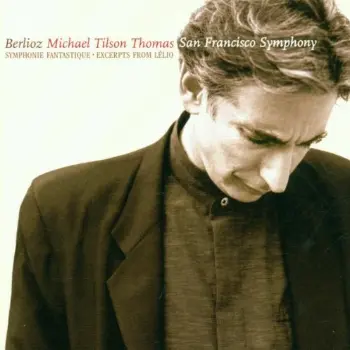
San Francisco Symphony, Michael Tilson Thomas (1997)
Michael Tilson Thomas elicits dazzling, precise, yet impassioned playing from the San Francisco Symphony. Balancing orchestral power with lyrical grace, the performance successfully bridges classical discipline with Romantic fervor. Enhanced by modern spatial audio remasters, this recording remains a towering modern achievement in the work’s recorded history.
Broader Cultural Impact and Legacy
The enduring popularity of the Symphonie fantastique lies in its invention of the modern psychological program symphony. By bridging classical structural forms with radical orchestration and intensely personal narrative content, Berlioz permanently expanded the expressive boundaries of the symphony orchestra. Today, the work serves as a vital touchstone for conductors and orchestras worldwide, continually re-evaluated through both modern virtuosic traditions and historical performance practices.