Preserving the Pulse of American Roots Music: The Legacy of Chris Strachwitz and Arhoolie Records

The passing of Chris Strachwitz on May 5, 2023, marked the end of an era for American vernacular music conservation. As the visionary founder of Arhoolie Records, Strachwitz dedicated more than four decades to capturing, archiving, and distributing the raw, unpolished sounds of the American cultural landscape. Operating largely as a passionate one-man enterprise beginning in 1960, Arhoolie produced upwards of four hundred albums, bringing blues, gospel, Cajun, zydeco, hillbilly, and Texas-Mexican norteño music to a broader public. Today, those invaluable master tapes and archives reside in the capable hands of Smithsonian Folkways, ensuring that Strachwitz’s lifelong mission of cultural preservation endures for future generations.
In the wake of his death, the publication of Arhoolie Records Down Home Music—a visual storytelling project featuring unseen and newly scanned photographs taken by Strachwitz himself—has renewed interest in his monumental contribution to ethnomusicology. Inspired by this retrospective, curators and music historians have expanded public listening archives into expansive four-hour streaming playlists spanning Arhoolie releases, Smithsonian Folkways catalogs, and Dust-to-Digital anthologies. This extensive preservation effort highlights not only the historical weight of mid-century field recordings but also the ongoing resonance of vernacular American music in the twenty-first century.
The Origins and Ethos of Arhoolie Records
The nomenclature of Arhoolie Records is deeply rooted in the history of African American folk expression. Suggested to Strachwitz by folklore researcher Mack McCormick—whose own seminal field recordings from 1958 to 1971 were collected in the Smithsonian Folkways release Playing for the Man at the Door—the term "arhoolie" refers to a traditional field holler. This linguistic choice reflected Strachwitz’s curatorial philosophy: he was not interested in commercial sanitization or pop-market crossover appeal.
As captured in Maureen Gosling and Chris Simon’s 2013 documentary This Ain’t No Mouse, Strachwitz’s methodology was direct and unpretentious. "My stuff isn’t produced; I just catch it as it is," he stated in the film, outlining an editorial stance driven entirely by personal authenticity rather than commercial viability. He famously recorded only the music that moved him, eschewing standard industry trends in favor of capturing regional artists in their natural environments—on front porches, in rural juke joints, and at community gatherings.
Throughout its operational lifetime, Arhoolie became a sanctuary for artists who otherwise would have been ignored by major record labels preoccupied with pop trends and slick studio production. Strachwitz traveled extensively across the American South and Southwest, dragging heavy recording equipment into remote areas to document musicians whose traditions were fading rapidly in a rapidly modernizing post-war America.
A Visual Chronicle: Photography and Cultural Documentation
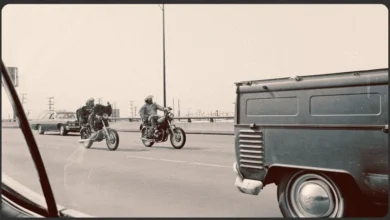
Strachwitz’s contributions extended far beyond audio engineering and record production; he was an avid and perceptive documentary photographer. His lens captured the socioeconomic realities, dignity, and joy of the communities that birthed America’s foundational musical genres. Chronicle Books’ publication, Arhoolie Records Down Home Music — The Stories and Photographs of Chris Strachwitz, compiled 150 of these rare images, many of which had never been published.
The volume is contextualized by extensive captions from Strachwitz and award-winning music journalist Joel Selvin, alongside a comprehensive 20,000-word essay examining the label’s institutional history. Through this visual medium, observers gain a profound understanding of the environment that inspired the bluesmen, zydeco accordionists, and border-music troubadours recorded on the Arhoolie imprint. The photographs serve as critical historical artifacts, complementing the sonic record with vivid depictions of mid-century working-class life, rural isolation, and vibrant cultural enclaves.
Chronology of Key Milestones in Independent Roots Preservation
To fully appreciate the scope of Strachwitz’s life work, it is necessary to examine the timeline of milestones that shaped Arhoolie Records and modern vernacular music archiving:
- 1931: Chris Strachwitz is born in Germany on July 1, later immigrating to the United States as a teenager and developing a deep fascination with American jazz and blues.
- 1960: Strachwitz officially founds Arhoolie Records in California, releasing early regional blues and folk records that establish the label’s reputation for authenticity.
- 1960s–1990s: Over four decades, Arhoolie expands its catalog to include Cajun, zydeco, Tex-Mex, country gospel, and regional folk, issuing more than 400 full-length albums.
- 2000s: Strachwitz transitions the day-to-day operations of the label while continuing to oversee historical reissues and archival projects.
- 2013: Filmmakers Maureen Gosling and Chris Simon release This Ain’t No Mouse, documenting Strachwitz’s field recording career. Legendary country blues artist Precious Bryant passes away, leaving behind a celebrated legacy documented partly through Arhoolie-associated projects.
- 2015: Contemporary roots revivalist Frank Fairfield, whose 2009–2014 releases on Tompkins Square and independent imprints kept traditional aesthetics alive for younger generations, officially exits the commercial music industry.
- 2023: Chris Strachwitz passes away on May 5 at the age of 91. Later that year, his extensive audio archives are officially integrated into Smithsonian Folkways, and the photobook Arhoolie Records Down Home Music is published.
The Continuing Evolution of Roots Music Preservation
While the core of the Arhoolie catalog preserves music from more than half a century ago, the lineage of traditional American folk and blues continues to influence contemporary artists. Performers like the Los Angeles-based multi-instrumentalist Frank Fairfield—who released acclaimed revivalist recordings between 2009 and 2014 before stepping away from the industry in 2015—demonstrate that the archaic sounds of banjos, fiddles, and resonator guitars retain cultural currency. Although Fairfield retreated from the professional music sphere, his work bridged the gap between early-twentieth-century vernacular recordings and twenty-first-century listeners.

Similarly, artists such as the late Precious Bryant, whose powerful guitar work and gospel-infused blues were captured in documentary projects like Neil Rosenbaum’s Sing My Troubles By, continue to find new audiences through streaming platforms and curated archival retrospectives. Bryant, who passed away in 2013, represents the caliber of regional talent that would have been entirely lost to history without dedicated independent producers like Strachwitz.
Broader Implications and Institutional Impact
The transition of Arhoolie’s archives to Smithsonian Folkways marks a vital shift from independent stewardship to institutional preservation. In an era dominated by algorithmic streaming and hyper-commercialized pop production, the preservation of vernacular field recordings serves as an essential counterweight, safeguarding the multicultural roots of modern popular music.
Musicologists note that genres like rock and roll, country, rhythm and blues, and soul cannot be understood without acknowledging the regional folk traditions documented by independent labels in the mid-twentieth century. By securing these recordings within the Smithsonian’s permanent collection, policymakers, educators, and cultural historians ensure that future generations can study the sociological and historical contexts from which American music emerged.
As contemporary listeners continue to explore curated streaming playlists featuring Arhoolie, Smithsonian Folkways, and Dust-to-Digital releases, the ethos established by Chris Strachwitz remains clear: the true pulse of American music lies not in corporate boardrooms or glossy commercial studios, but in the everyday lives, struggles, and celebrations of ordinary people captured authentically at the source.
Related posts: