Donald Trump told Bill Maher to stop calling in a 1,323-word rant after the HBO host discussed their second White House dinner.

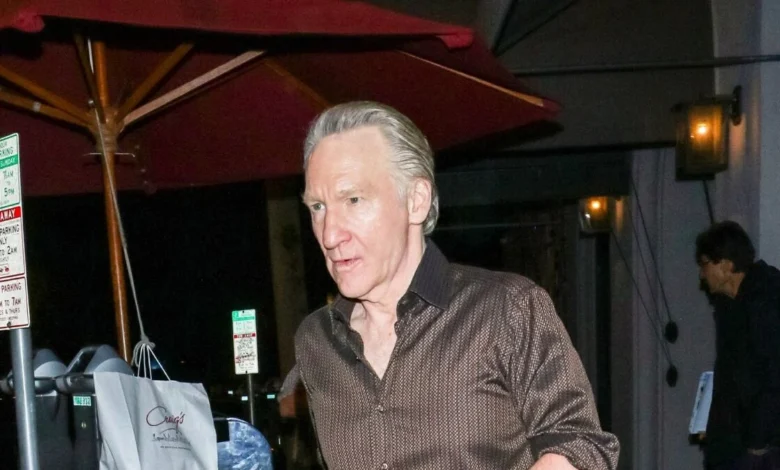
The former president unleashed a sprawling critique of the Real Time host on Truth Social this past Sunday, marking a sharp pivot from the cordiality that characterized the two men’s meeting earlier this month. The rebuke, which spanned over 1,300 words, served as a volatile coda to a high-profile dinner gathering that included television personality Stephen A. Smith and musician Kid Rock. This public escalation highlights the volatile nature of political engagement in the modern era, where private interactions are frequently subject to intense, real-time public scrutiny and subsequent revisionist narratives.
A Chronology of the Gathering and Its Aftermath
The dinner in question, which took place on October 15, was initially framed as an opportunity for open, cross-partisan dialogue. Bill Maher, a long-standing critic of Donald Trump, has frequently argued that personal engagement with political opponents is a vital component of a healthy democracy. According to accounts provided by the participants, the evening was intended to facilitate a frank exchange of ideas on topics ranging from judicial appointments to foreign policy and domestic social issues.
However, the divergence in narratives began almost immediately following the event. Maher, speaking on his HBO program on Friday, October 25, framed the dinner as a constructive, albeit intense, conversation. He noted that he used the private setting to voice concerns regarding the Supreme Court, immigration policy, and the treatment of Afghan allies who supported U.S. forces during the twenty-year war. Maher specifically claimed that he advised the former president that his association with Pete Hegseth was potentially detrimental to his political standing.
By contrast, Donald Trump’s reaction, issued via his social media platform, sought to diminish the significance of the meeting and characterize Maher as an unreliable narrator. Trump disputed the duration of the engagement, asserting it lasted "two hours, maybe less," directly contradicting earlier statements from Stephen A. Smith, who had previously estimated the duration to be closer to four hours and twenty minutes.
The Role of Media and Public Perception
The friction between the two men appears to be rooted in a fundamental disagreement over the "rules of engagement" regarding political discourse. Maher’s position—that private, face-to-face confrontation is more effective than public posturing—is a philosophy he has frequently articulated. In his defense of the dinner, he suggested that he preferred to speak directly to the former president rather than relying on written criticism that might never reach its intended target.
Conversely, public figures like Charlamagne Tha God have questioned the efficacy of such private meetings. As previously reported, Charlamagne noted that without a public record of these exchanges, the electorate is forced to rely on the subjective, and often conflicting, accounts of the participants. This lack of transparency has led to increased demand for "on-the-record" political discourse.
The requirement for guests to surrender their mobile phones during the dinner, a point confirmed by Stephen A. Smith, further complicated the public’s ability to verify the proceedings. Smith indicated that he would have preferred to record the conversation, noting that the absence of a verified transcript or video footage leaves the public to speculate on the substance of the dialogue.
Supporting Data and Participant Perspectives
The participants’ accounts provide a fragmented view of the evening. Stephen A. Smith, appearing on various media platforms following the dinner, focused his narrative on substantive policy discussions rather than the interpersonal dynamics that preoccupied Trump’s social media rant. Smith emphasized that he had raised the issue of funding for Historically Black Colleges and Universities (HBCUs) and the apprehensions of business leaders regarding Trump’s stated positions on diversity, equity, and inclusion (DEI). According to Smith, the former president expressed a willingness to examine these concerns, though he provided no concrete policy commitments.
The stark contrast between Smith’s policy-oriented report and Trump’s personal attack on Maher suggests that the dinner served different purposes for each attendee. For Maher, it was a test of his own rhetorical strategy; for Smith, it was a lobbying opportunity for specific institutional interests; for Trump, it appears the event has been repurposed into a political weapon to be used against a prominent media critic.
Analysis of Political Implications
The public spat serves as a case study in the risks associated with "off-the-record" political meetings in an era of hyper-partisanship. When private meetings are disclosed, they are almost inevitably subject to political spin. Trump’s 1,323-word diatribe, which included personal insults regarding Maher’s health and habits, functions as an attempt to reassert control over the narrative of the dinner. By labeling Maher a "total loser" and a "major pothead," the former president seeks to discredit the comedian’s account of the meeting, thereby neutralizing any political damage that might have stemmed from Maher’s claims of having successfully challenged him.
Furthermore, the escalation underscores the increasing difficulty of maintaining a civil, private dialogue between public figures. In a media landscape dominated by social media, the incentive structure heavily favors conflict over consensus. When a private dinner is subjected to a public "post-mortem" by the participants, the objective of mutual understanding is often sacrificed for the goal of media dominance or audience retention.
Fact-Based Context: The Evolution of the Dinner Narrative
The evolution of the dinner from a "good meeting" on October 16—as characterized by Trump shortly after the event—to a "waste of time" by October 25 is a critical data point. This transition suggests that the former president’s assessment of the meeting may be contingent upon how the participants portray it in the media.
When Maher used his platform to detail his challenges to Trump’s policies, the former president’s posture shifted from hospitable to hostile. This reactive pattern is consistent with Trump’s broader media strategy, which often employs aggressive social media counter-attacks to preemptively undermine critics.
Broader Impact on Political Discourse
The incident carries significant implications for the future of political journalism and the role of the "independent observer." As public figures continue to engage in private diplomacy, the disconnect between their private accounts and their public personae will likely continue to widen. The public is left to navigate a labyrinth of conflicting testimonies, none of which can be independently verified.
Ultimately, the breakdown of the relationship between Maher and Trump following this meeting reinforces the skepticism that many observers hold regarding the value of private, unrecorded meetings between journalists and political candidates. Without a verifiable record, such meetings are susceptible to the whims of the participants, leading to a cycle of accusations and rebuttals that does little to inform the public on substantive policy issues.
As the political landscape approaches further critical junctures, the episode involving Maher, Smith, and Trump serves as a cautionary tale. It demonstrates that in the modern information age, the bridge between personal interaction and public perception is increasingly fragile, and that even the most "constructive" private meetings can be dismantled by the pressure of public opinion and the inherent volatility of political discourse. The lasting legacy of this dinner will likely not be the policy discussions regarding HBCUs or Afghan allies, but rather the intensity of the subsequent public fallout, illustrating the profound challenges of maintaining professional decorum in an era of polarized, digital-first communication.